‘To laugh and cry’: New book combines biblical teachings with personal Oct. 7 reflections - review

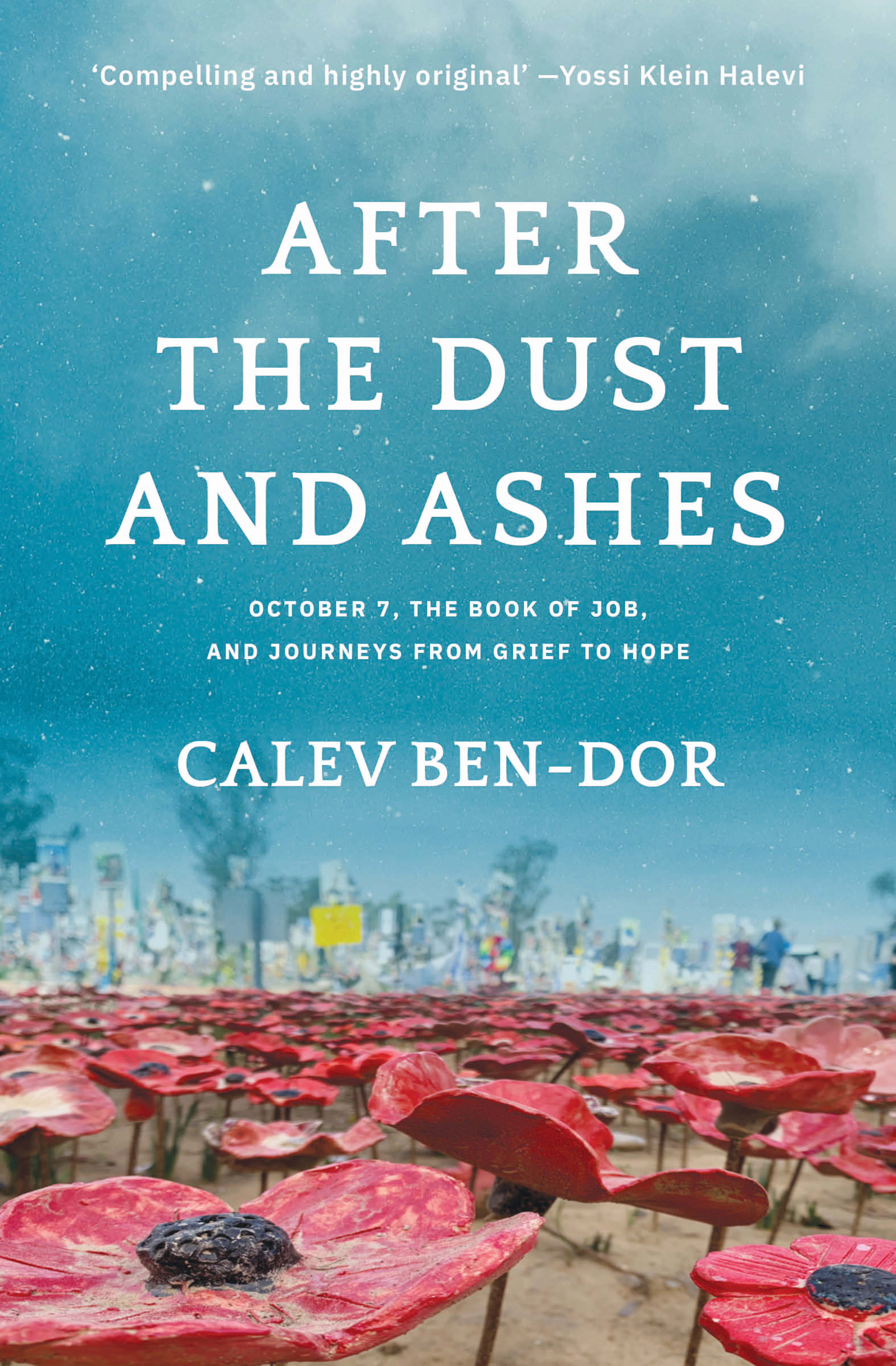
In his new book, After the Dust and Ashes, Fathom editor Calev Ben-Dor combines his own reflections and informed ruminations on October 7 with teachings on the Book of Job. Part biblical commentary, part Jewish approaches to grief, part literary reportage, and part personal memoir, the author describes how he seeks to provide a roadmap for finding meaning in the aftermath of the unimaginable: ways to live after the dust and ashes.
A member of the third cohort of Sacks Scholars, an initiative of the Rabbi Sacks Legacy, Ben-Dor teaches modern Israeli/Zionist thought and Jewish text at prestigious institutions in Israel and publishes essays at the Cardozo Institute. A former national security analyst at the Reut Institute and former Foreign Ministry policy planning analyst, he studied at the London School of Economics (LSE) and at Yeshivat HaKibbutz HaDati, among others.
Below is an extract from Dust and Ashes: October 7, the Book of Job, and Journeys from Grief to Hope, in which Ben-Dor quotes Rabbi Jonathan Sacks, saying: “It needs no courage to be an optimist, but it takes a great deal of courage to hope.”
From ‘After Dust and Ashes’
A quiet calmness had enveloped our Jerusalem neighborhood that Monday morning as I walked towards the hostage tent. The pizza store on the corner was closed, displaying the “Hersh Forever” bubble graffiti on its door. At the tent itself, dozens watched on a large screen as the remaining 20 live hostages were transferred from Hamas control to the Red Cross and then on to Israel, where in emotional scenes they reunited with their families. The names of all of them – both alive and dead – were written in chalk along the street.
A few days earlier, the Families’ Memorial Service had taken place in Tel Aviv’s HaYarkon Park. Organized by Kumu (Rise!), a movement founded by families of victims, hostages, and survivors, the memorial featured performances by artists and testimonies from bereaved families. One family was that of Gidi and Noa Chiel, who were killed near Mefalsim as they fled Nova. Their brother talked of how the loss had caused them and many other families to fall apart, but his mother quickly corrected him. “We have an incredibly deep hole in our hearts,” she said gently, “but we didn’t fall apart.”
As the event drew to a close, Kumu founder Yonatan Shimriz took the microphone. His own brother Alon had been a hostage before being tragically killed by IDF troops in Gaza along with Yotam Chaim and Samer Talalka in December 2023. To thunderous applause, he spoke directly to the hostages. “When you return, and the war ends,” he began, “our generation will take off its military uniform, shake off the dust from the burned houses, and wash off the debacles left by the previous generations. Our generation, that inherited a state bloodied, isolated, polarized and in pain, will be the one that will fix.”
Less than 48 hours later, as we awoke to heavy rain – the first of the season – the news emerged that a ceasefire deal had been achieved. The hostages were coming home.
For the first time in two years, there was a feeling that darkness was fading, that we could begin to breathe and to hope.
On Monday evening, as Sukkot ended and Simchat Torah began, my family returned to the Jerusalem hostage tent to celebrate in the place that had seen so much grief.
As we danced in circles in the car-less street, I thought of Hersh’s mother Rachel, who had recently spoken about Ecclesiastes, and its insight that a time and season exist for everything. “Yet now,” she said, “we are being asked to digest all of those seasons at that same second. It says there is a time to weep and a time to laugh and we have to do both right now … a time to tear and a time to heal, and we have to do both right now … a time to sob [and here she paused to sob deeply] and a time to dance and we have to do both right now.”
In the poem “A Man Doesn’t Have Time in His Life,” Yehuda Amichai wrote how Ecclesiastes was wrong. A man does not have time in his life for everything. “A man needs to love and to hate at the same moment, / to laugh and cry with the same eyes … to hate and forgive and remember and forget … to eat and to digest / what history / takes years and years to do.”
I thought too of Iris Haim, the mother of Yotam, killed by the IDF alongside Yonatan Shimriz’s brother, Alon. As I put my children on my shoulders to dance with the Torah, I tried to integrate Iris’ caution to “remember at every moment those who did not get to hug again. Those who starved and did not return, those who wanted and did not receive, the laughter of their fair-haired child.”
Sacks contrasted optimism with hope
In his book To Heal a Fractured World, Rabbi Jonathan Sacks contrasted optimism with hope. For Sacks, optimism was the belief that the world was changing for the better while hope was the belief that we could improve the world. “It needs no courage to be an optimist, but it takes a great deal of courage to hope.”
As we chanted the song “An Eternal People is not afraid of a Long Path,” I reflected how some families were rejoicing while others were marking the anniversary of their loved ones’ murder.
I tried to envision how we might hold these feelings together – the joy, grief, trauma, and relief, how to courageously choose hope in this yet unredeemed world, where even our joy is tempered.
I never imagined being able to laugh and cry with the same eyes, as Amichai suggested. But that night, on the streets of Jerusalem, it came naturally.
More details about the author at www.calevbendor.com
Calev Ben-Dror will be in conversation with Sarah Tuttle Singer at the launch of his book on October 7 at Begin Center. Public admission. Tickets available from the Begin Center.■
KioskNews shows a cleaned-up reading view extracted from the publisher’s page — the original always lives on their site, not ours.