With new AI tool, SGH can detect brain bleeding from CT scans in a few minutes
SINGAPORE – A new AI tool co-developed by Singapore General Hospital (SGH) can detect brain bleeding from scans in about six minutes, instead of the 30 minutes to an hour that radiologists at the hospital need for urgent cases.
The AI model named iScreen analyses the computed tomography (CT) scans and picks up white spots which signal bleeding in the brain, or locations of bleeding which might have more severe impact to the patient.
Acute cases may need surgery to stop the bleeding.
“Reduced reporting time can really make the difference between life and death, or between a full recovery and lasting disability,” said senior consultant Robert Chen, head of the neuroradiology department of SGH and National Neuroscience Institute (NNI@SGH).
Once the AI model flags a positive result, an SMS message will be sent to both the neuroradiologist and the attending doctor, said senior consultant Sarat Kumar Sanamandra from the same department.
This will nudge the neuroradiologist to prioritise reviewing the AI results of that patient, ahead of all other scans in the queue.
For cases assessed to be patients with haemorrhage, the radiologist will then report the case to the attending doctor.
SGH’s data on 3,475 CT brain scans in November and December 2025 showed that the sensitivity of iScreen is 93.1 per cent.
This means 6.9 per cent of the cases flagged as positive for bleeding turned out to be false positives.
The hospital’s data also showed that the proportion of bleeding cases that took more than an hour to be reported dropped from 14.6 per cent to 5 per cent with the use of iScreen.
Sarat emphasised the use of AI is meant to support its radiologists, rather than replace them. SGH has about 100 radiologists, of whom 21 are neuroradiologist.
SGH deals with thousands of CT scans each day, of which about 50 are head CT scans, and about 10 per cent of these show signs of bleeding.
There is no limit to the number of scans which iScreen can process concurrently.
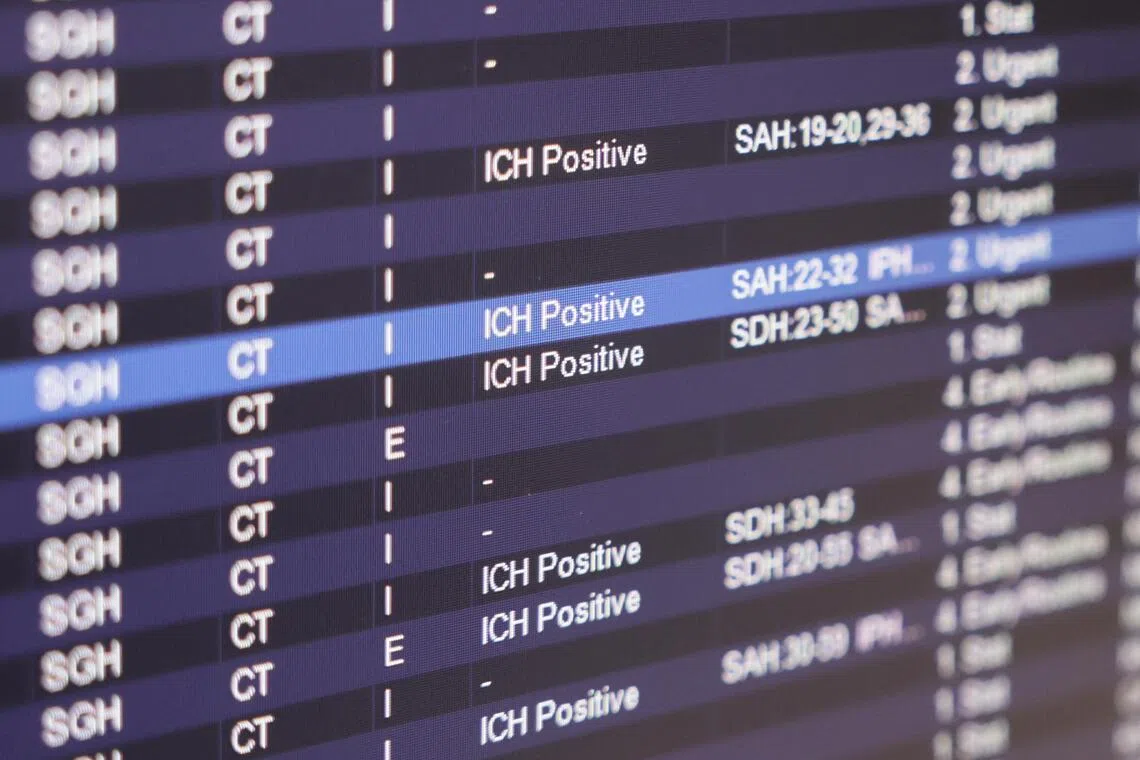
Scans which were picked up as positive for bleeding in the brain, or intracranial haemorrhage (ICH), by the AI tool would be clearly marked as “ICH positive”, whereas other scans will not show a reading.
ST PHOTO: GIN TAY
Bleeding in the brain, also known as intracranial haemorrhage, can happen in those who suffer from strokes, or experience a rupture of an aneurysm (bulge in the blood vessel) and tumours.
Traumatic head injury can also lead to brain bleeding, especially for seniors or those on certain blood-thinning medications.
Such patients could start to bleed in the brain even with minor physical impact, such as the head knocking against the door or slipping.
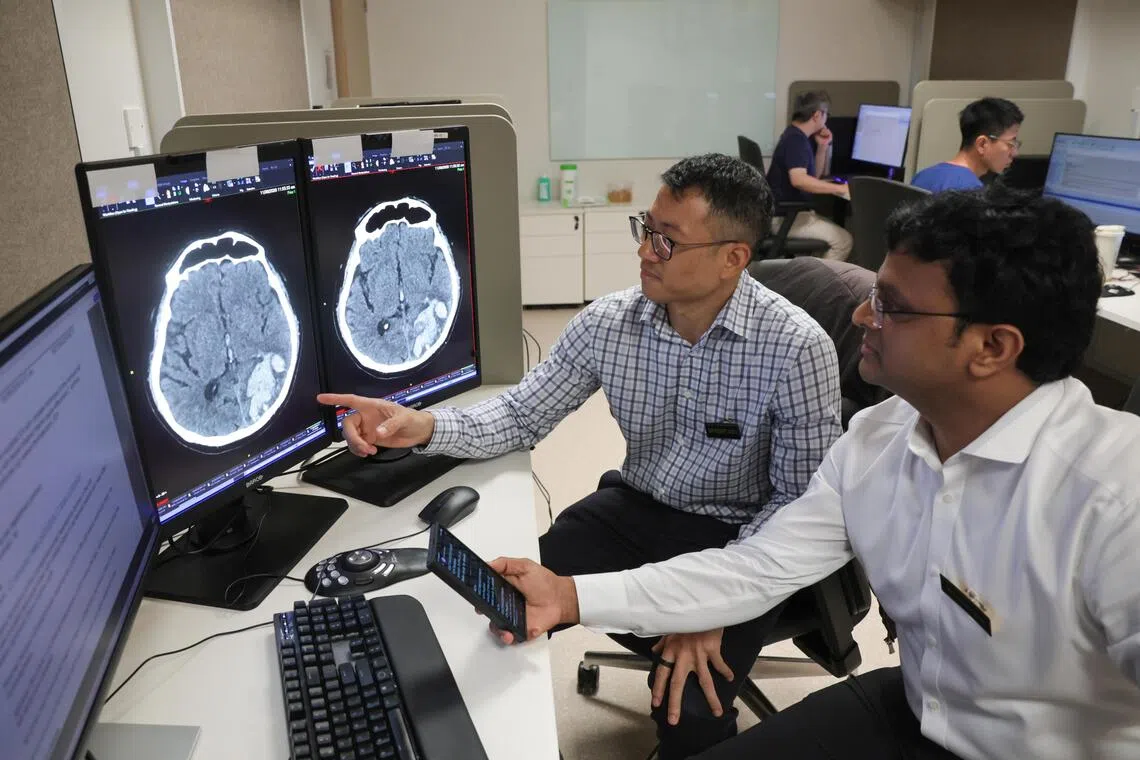
(From left) Robert Chen, head and senior consultant with the neuroradiology department of Singapore General Hospital and National Neuroscience Institute (NNI@SGH) reviewing the AI results and CT scans of patients together with Sarat Kumar Sanamandra, senior consultant of the same department.
ST PHOTO: GIN TAY
Local start-up Iota MedTech began its collaboration with NNI and SGH since 2019 to develop the AI model.
Justin Ker, consultant with the NNI’s neurosurgery department, said the model stemmed from his trainee days when he looked into possible ways to scale the precious resources involved in brain surgeries to help more patients.
“Timely interventions to these cases will determine how long the patient will stay in intensive care, in the hospital, and when he or she can return to work”, Ker added.
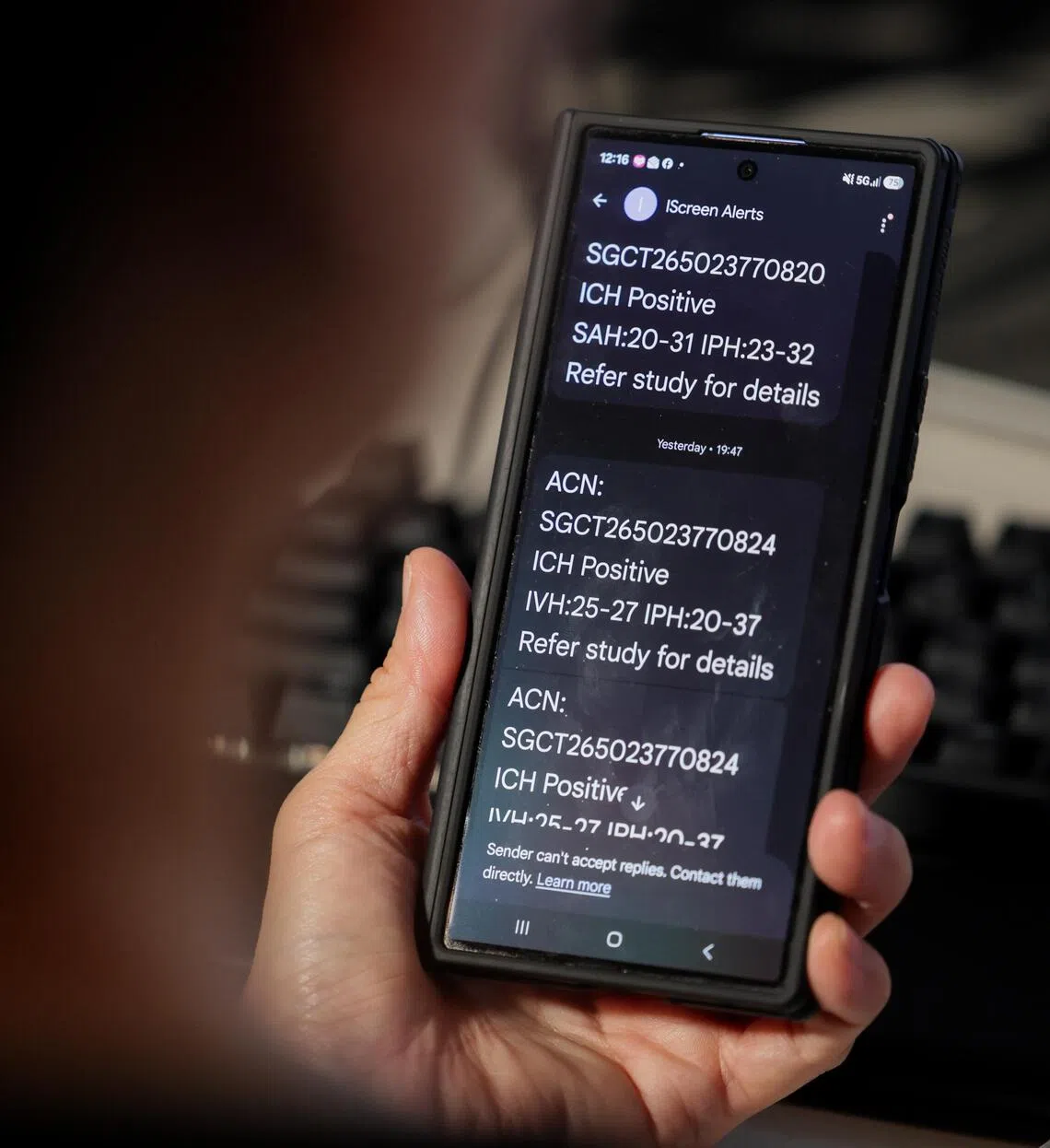
For scans which had been detected as positive for bleeding by the AI model, the system will automatically send off an SMS message to both the radiologist and attending doctor to alert them.
ST PHOTO: GIN TAY
Iota MedTech’s chief executive Benjamin Hong told The Straits Times that it will continue to work with SGH on developing other clinical usage for the AI model.
It is also currently in talks with other public hospitals to use iScreen.
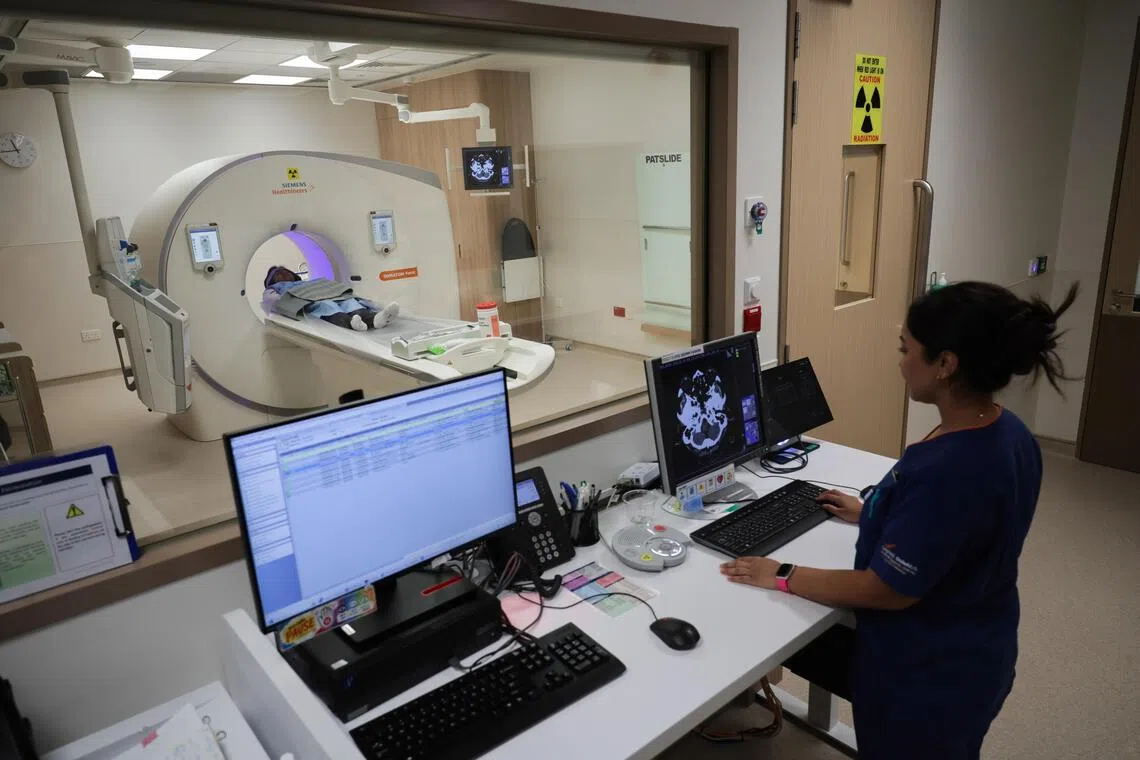
The AI model utilised at Singapore General Hospital could potentially be used for other types of scans.
ST PHOTO: GIN TAY
The model can be easily implemented in more hospitals as it is deployed on the national AI medical imaging platform AimSG – AI-enabled medical imaging platform for Singapore public healthcare.
It is the first AI model for head CT scans on AimSG, which allows different hospitals to switch between AI models on the platform, without having to utilise or stick to specific hardware or software.
Several other hospitals and NHG Polyclinics are already using AI models on AimSG, for clinical uses such as chest X-ray and thyroid ultrasound scans.
The platform was co-developed by the national HealthTech agency Synapxe, together with all three public healthcare clusters.
Synapxe’s director for innovation capabilities enablement Henry Kang said that when AI in medical imaging was first introduced, there was indeed a lot of scepticism and clinicians needed some time to better understand how to work with AI.
“I think we are at the crossroad now.... getting comfortable in terms of the use of AI... once that reached a state of comfort, scaling up is just a matter of time”, added Kang.
KioskNews shows a cleaned-up reading view extracted from the publisher’s page — the original always lives on their site, not ours.