Approval of biggest coal project in NSW planning commission’s history described as ‘infamous betrayal’
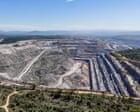
The New South Wales independent planner has approved the biggest coalmine project to ever go before it, allowing mining to continue until 2045 at a Hunter Valley project described by climate groups as a “carbon bomb”.
The Independent Planning Commission (IPC) has green lit the Hunter Valley Operations Continuation Project after a contentious assessment that drew in climate and environment groups, unions, state authorities and more than 10,000 public submissions.
On Wednesday, the commission said the greenhouse gas emissions from the mine, near Singleton, would “contribute to climate change impacts on the people, economy and environment of the Hunter region, NSW and globally.”
But these impacts had been “outweighed by its benefits to the Hunter region and NSW, including continued employment, economic activity, support for local business, ongoing royalties and taxation revenue”.
The IPC said the decision would “provide economic stability for the Hunter region and support a more orderly transition for workers, businesses and communities as the coal industry changes over time.”
In response, Georgina Woods, the co-national coordinator of the Lock the Gate Alliance, said: “There is no other way to describe this other than a catastrophic failure of the New South Wales planning system to protect the people of the state from the worst impacts of global warming.”
Climate campaigners had strongly opposed the project, saying it was out of line with Australia’s commitments under the Paris climate agreement and could affect extreme weather events.
Groups reacted with dismay at the approval, with Rising Tide describing it as the “largest climate policy failure in NSW history.”
The Climate Council had described the project as a “climate bomb that would supercharge climate disasters”. One of its councillors – former NSW Fire and Rescue Commissioner Greg Mullins – on Wednesday raised concerns over overseas emissions from the coal.
“What NSW exports as coal, we import back as bushfires, floods, heatwaves and droughts,” Mullins said. “Climate harm does not stop at the border, and neither does the responsibility for it.”
Woods said the process for considering fossil fuel projects in NSW was “the best in the country” – including with its climate change act and an independent and transparent planning authority.
“The law was in place, and I am frankly shocked. It will go down in history as an infamous betrayal of the public trust.”
Glencore and Yancoal – the joint owners of HVO – want to continue digging coal at the north mine site until 2045, and mine from 2030 to 2042 at the south mine.
The IPC said HVO would have to prepare a plan to manage the emissions from burning the coal overseas that would limit exports to “jurisdictions with greenhouse gas emissions policies consistent with the goals of the Paris Agreement.”
The project also requires federal environmental approval – a process expected to be decided before the end of the year.
HVO had said coal had been mined at the site for 75 years and the project, which it said had strong local support, provided for jobs to 1,500 people.
The state’s independent Net Zero Commission had warned the planning commission that approving the project could affect the state’s ability to meet climate targets in the future.
Over the life of the project, the company has estimated that 809m tonnes of CO2-equivalent will be released into the atmosphere.
About 794Mt of that will be emitted when the coal is burned overseas, 87% of which will come from power plants, according to presentations HVO made to the IPC.
The Net Zero Commission recommended the planning authority should consider all of the impacts from the mine’s greenhouse gases, including from the burning of the coal in power stations overseas, and pointed to advances in climate science that can attribute real-world impacts to fossil fuel projects.
A new tool released by climate scientists this week suggested the additional global heating caused by the project’s approval would expose almost half a million people to unprecedented heat, kill nearly 15 million coral colonies on the Great Barrier Reef every time it bleaches and lead to more than 100 additional deaths from heatwaves in Europe to the end of this century.
The NSW Nature Conservation Council’s chief executive, Jacqui Mumford, said the decision was Chris Minns’ “biggest climate failure” as premier and highlighted the government’s “complete inability to appropriately respond to the ever-growing climate crisis.”
NSW state Greens MP Sue Higginson said the approval was an “absolute betrayal of the science”, saying she “wouldn’t be surprised if the decision is challenged in the courts.”
HVO said the approval “marked a pivotal milestone for 1,500 mine workers, their families and the regional economy”.
It said the company was engaging with the National Environmental Protection Agency to secure federal approval “by the end of December 2026 to continue operations.”
The NSW Minerals Council urged the state government to pass legislation to limit the opportunity for a “legal challenge from climate activists determined to object to every coal mining approval on ideological grounds.”
KioskNews shows a cleaned-up reading view extracted from the publisher’s page — the original always lives on their site, not ours.