What is Pitru Paksha, why it is observed in the autumn
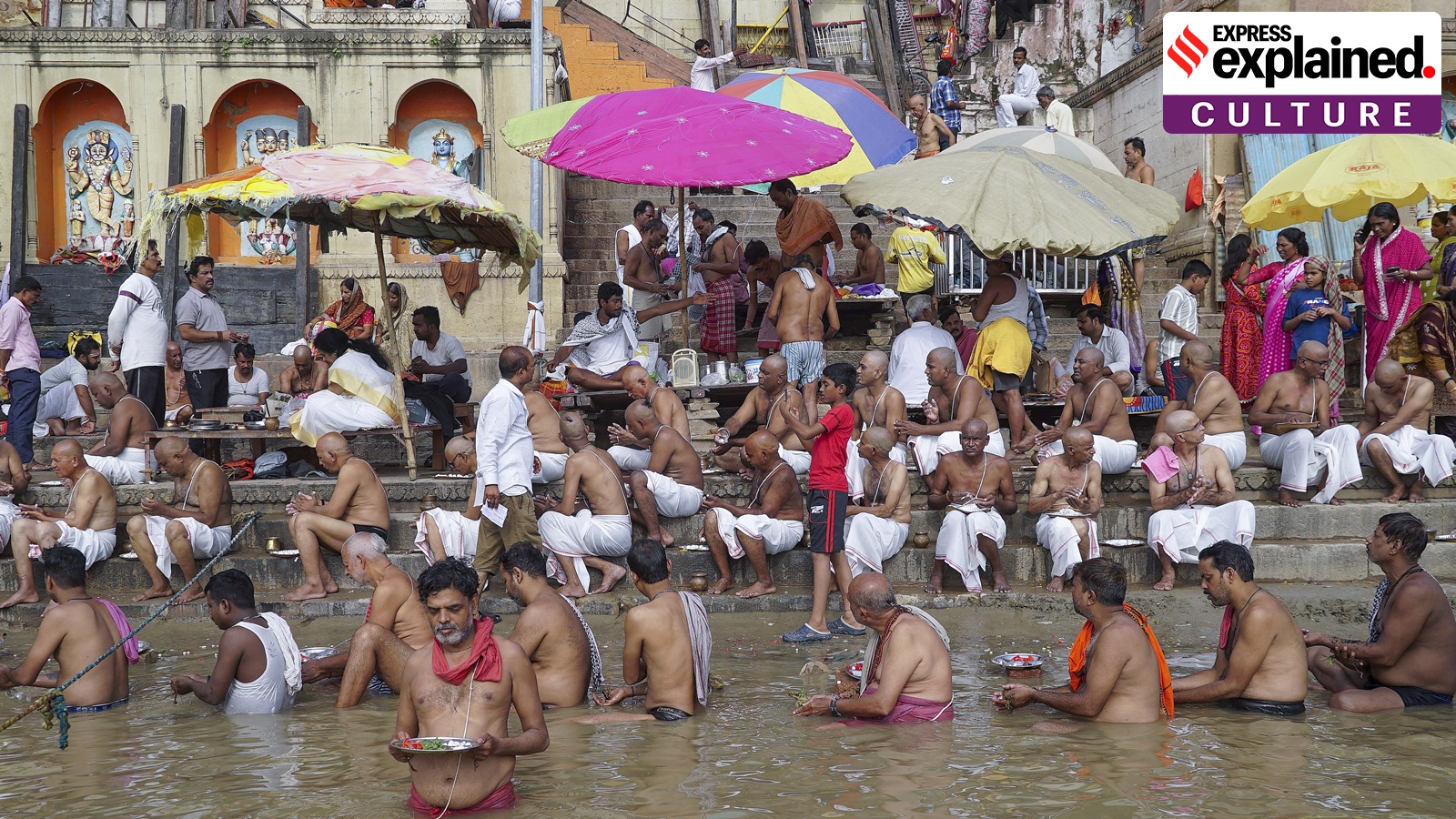
What exactly is Pitru Paksha, and why is it observed this time of the year? What are the beliefs behind its observance? We explain.
Paksha literally means fortnight, while pitru means forefathers. Pitru Paksha begins on Ashwin Krishna Pratipada (the first day of the waning moon in the Hindu month of Ashwin) and ends on Ashwin Krishna Amavasya (the new-moon day that closes the waning fortnight). During this period, people conduct shraadh rituals for their ancestors (more on this later).
However, there is one extra day too. For ancestors who died on the full-moon day (Purnima) of any month, the rites are performed on Bhadrapada Shukla Purnima (full-moon day in the month of Bhadrapada, the day just before Ashwin Krishna pratipada begins). Thus, Shraddha Paksha, or Pitru Paksha, comes to a total of 16 days.
“During Pitru Paksha, Lord Indra frees ancestors residing in heaven, and Yamraj (also called Dharmaraj) frees those residing in hell, sending them to earth to receive their descendants’ offerings. Offering food and water to your forefathers in this period gives spiritual benefits to you as well as them,” Dr Ramesh Kumar Upadhyay, president of the Bhartiya Jyotish Aadhyatm parishad in Jamshedpur, told The Indian Express.
Others believe that three preceding generations of ancestors reside in Pitru Loka after death. “It is believed that there is a Pitru Loka which is the place where the souls find their place after death; it is between Earth and heaven. To reach heaven, Pitru Loka needs to be cleared. With proper Shradh rites, souls can leave Pitru Loka and find their peace in heaven,” the website of the Trimbakeshwar temple in Nashik says.
Since this period is dedicated to the departed, no events involving new beginnings, like marriage or house warming, are held. Many Hindus don’t eat non-veg food. The one doing the shraadh rituals also gives up onion and garlic, and pulses like urad (black gram) and masoor (red lentils) during the period, Upadhyay explained.
Story continues below this ad
What happens during Pitru Paksha?
The shraadh rituals generally involve pind daan and tarpan. Pind daan refers to offering cooked rice and other grains to the ancestors, while tarpan means offering water. People also do anna daan, or the donation of food.
The rituals are generally performed by men, and this is one of the reasons for traditional Hindu families to desire a son.
Different days of the fortnight are dedicated to different departed souls, like one day for women who died before their husbands, one for children, one for those who died by weapons, etc.
The Karna legend behind Pitru Paksha
Another popular story about the origins of Pitru Paksha, though not commonly found in scriptures, is related to Karna in the epic Mahabharata.
Story continues below this ad
Karna was the son of Kunti, the Pandavas’ mother, and the Sun god Soorya. Kunti was given a mantra by the sage Durvasa that she could use to invoke any God and bear his child, who would carry divine traits. A young Kunti decided to check if the mantra worked, and Karna was born. However, since Kunti was then unmarried, she cast the baby off in a river, where he was found and adopted by King Dhritarashtra’s charioteer Adhiratha and his wife Radha.
The radiant Karna grew up to be a brave warrior, attracting the notice and friendship of Dhritarashtra’s son, the Kaurav prince Duryodhana. Just before the Kurukshetra war began, Karna was approached by Kunti, who revealed his identity and asked him to fight alongside the Pandavas. However, he refused to abandon his friend.
Karna was also known for his generosity, frequently giving away gold and gems.
After he was killed by Arjuna in the war, Karna went to heaven. Here, he was given gold and gems to eat. When a hungry Karna asked for food, he was told that on earth, he had only donated valuables and never food for his ancestors. Karna pointed out that as a foundling, he hadn’t known who his ancestors were till a few days before his death.
Story continues below this ad
He was thus sent back to Earth for a fortnight to perform the necessary rituals for his ancestors. This is the period now observed as Pitru Paksha.
KioskNews shows a cleaned-up reading view extracted from the publisher’s page — the original always lives on their site, not ours.