US midterm takeaways: Trump’s blame game, Elon’s space lasers and the rest of the world
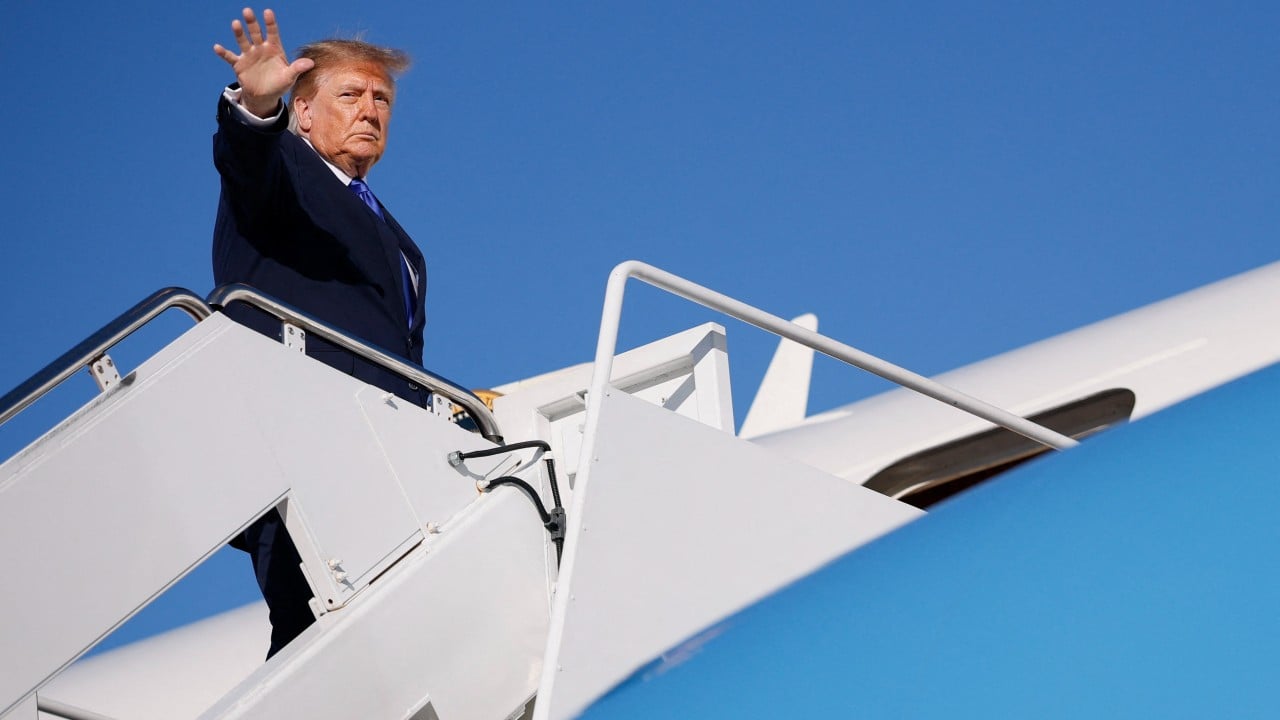
Democrats won control of both chambers of the US Congress in Tuesday’s midterm elections, dealing a heavy blow to President Donald Trump as voters vented frustration over rising costs and the Iran war.
With Democrats set to take over Congress in January, they will have the power to block Trump’s agenda and investigate his administration.
Under these conditions, the president is expected to face a far more constrained final two years in office, with consequences for US-China relations and global trade.
Here are some key developments on Tuesday’s midterms.
Who did Trump blame?
“I wasn’t on the Ballot and if I was, we would have won IN A LANDSLIDE! Thank you for your attention to this matter,” he wrote on social media.
In an interview with Fox News, he partly blamed the Iran war for the losses. But he added that “people agree with what I’m doing on Iran, but they really probably weren’t willing to do the short-term consequence of paying more for gasoline”.
He also turned on the network itself, saying Fox News “bears responsibility for these losses by constantly and consistently putting on the ‘Dumocrat’ opposition, and worse”.
WATCH: Democrat James Talarico to speak after flipping Texas Senate seat
How have other countries responded?
Beijing said it viewed the US midterm elections as a “domestic affair” and remained committed to working with Washington towards a constructive relationship of strategic stability based on respect, fairness and reciprocity.
Japanese Chief Cabinet Secretary Minoru Kihara said the importance of Japan-US relations remained unchanged, adding that Tokyo would continue working closely with Washington to “elevate the alliance to even greater heights”.
Meanwhile, Iran’s speaker of parliament Mohammad Bagher Ghalibaf warned Washington against further military action, framing the Democrats’ sweep of Congress as a clear public rejection of the war.
“Conscience or the cost of living, Americans said NO TO WAR, and we endorse this message,” he wrote in a social media post.
‘Election-interfering space lasers’
Elon Musk, the Tesla and SpaceX head who reportedly spent nearly US$500 million backing Republican efforts to hold onto Congress, was conspicuously quiet as the early results rolled in.
But he did break his silence on X, saying: “Guess my election-interfering space lasers didn’t work this time.”
“Data centres in space looking pretty appealing right now,” he said in another post.
Data centres that power artificial intelligence became a flashpoint in the midterm campaigns, as voters resisted Trump’s drive to build more of them.
WATCH: Democrat Abdul El-Sayed speaking while awaiting US senate results
What does it mean for Trump?
Fudan University professor Zhao Minghao said the Democrats’ “blue tsunami” would turn Trump into a “lame duck” under threat from congressional investigations and resistance to his agenda.
He said lawmakers would also ramp up pressure on Beijing, particularly over Taiwan, AI and export controls.
Hilton Root, professor of public policy at George Mason University, said a weaker Trump would not necessarily mean a softer line on Beijing.
“Trump may offer China more scope for a personal, negotiated accommodation than many leading figures in either party,” Root said. “His willingness to deal directly with Xi is not necessarily shared by the wider American foreign-policy establishment.”
KioskNews shows a cleaned-up reading view extracted from the publisher’s page — the original always lives on their site, not ours.