Mexico’s mistletoe crisis: Is el muérdago the kiss of death?
Ten years ago, I visited a city park in the Guadalajara Metro Area that a group of enthusiastic volunteers was transforming into a bosque-escuela, an “arboreal school,” where they would someday be able to teach the public all about three different kinds of forest.
Hundreds of sticky seeds
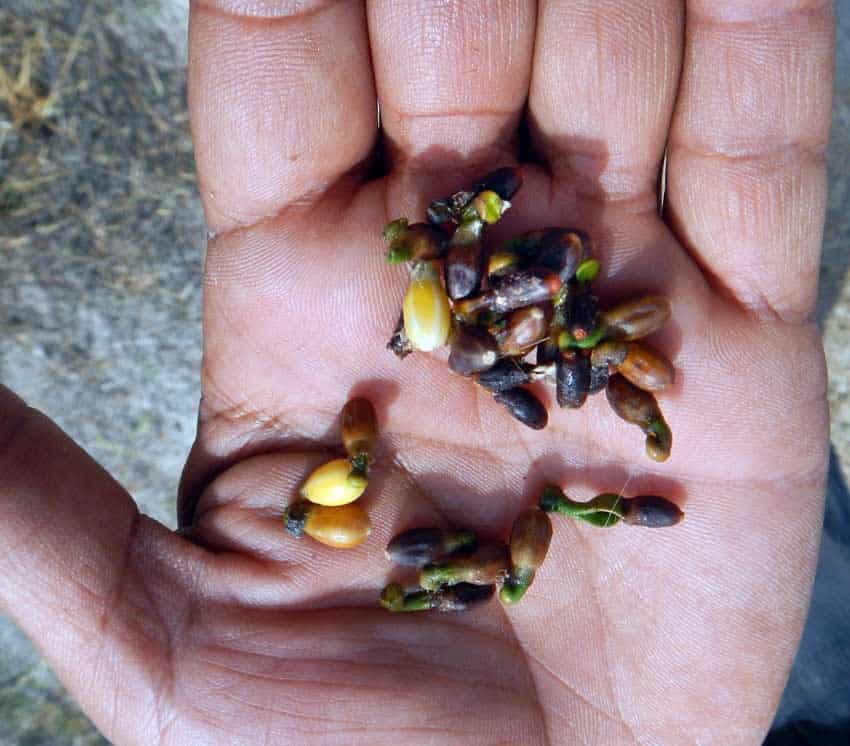
Throughout the park, they had planted many trees, and as we walked among these saplings, the environmentalists pointed out a problem they had not anticipated. The smooth branches of all these young trees were covered with hundreds — perhaps thousands — of small, sticky seeds.
“These,” I was told by engineer Ricardo López, a leader of the group, “are the seeds of Psittacanthus calyculatus, which most people call el muérdago (the plant that bites). In English, we call it Mexican mistletoe.”
The seeds were less than an inch long, covered with a very sticky glue called viscin, which has properties beyond those of a commercial adhesive.
To my astonishment, I learned that the seeds I was looking at had been deposited during the past week, forcing the volunteers to wipe the branches clean every Saturday, typically removing around two kilograms of seeds.
From jungle to wildflowers: How Mexico made me a botanical artist

“This is happening all over western Mexico,” they told me, “and it is going to be hard to survive.”
Muérdago attack strategy
What Mexicans call muérdago is one of around 150 species of mistletoes and dwarf mistletoes that have developed efficient procedures for tapping the water supply of trees, weakening and in many cases killing their hosts.
Here’s how it works:
When a bird eats the mistletoe berry, the viscin coating prevents the seed from being digested. In fact, it comes out the other end of the bird stickier than ever and activated for growing.
The viscin, according to the Max Planck Institute and McGill University, is much more than slime. It contains incredibly strong fibers that allow a tiny droplet to stretch out into thin, sticky threads up to 2 meters long. As the seed falls from bird to branch, or slides under gravity, these long threads mechanically wrap and wind around the textures, cracks and contours of the tree bark.
According to Scientific American, as the viscin dries in the open air, its internal fibers align parallel to one another along the direction of stress, greatly increasing the tensile strength of the threads. Finally, the viscin hardens into a rigid, cement-like solid.
All is ready for stage two of the muérdago’s attack.
Impaling the host tree
Instead of producing a root that seeks soil, like a normal plant, the mistletoe seed now grows a penetration peg, a kind of anatomical drill, which pushes downward into the tree branch. To help things along, the peg secretes a cocktail of aggressive plant enzymes, which turn the tough bark into soft mush.
Once the peg reaches the tree’s water highway, it transforms into a kind of pipe, connecting the tree’s plumbing with the invader’s. Soon after, the first green mistletoe leaves sprout on the outside of the branch.

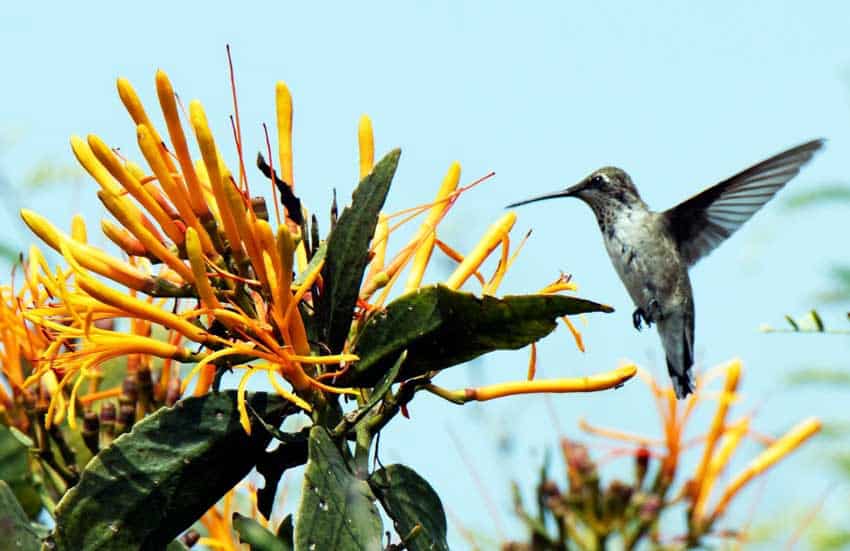
During the dry season, the muérdago produces vibrant, brightly colored tubular flowers filled with copious amounts of nectar, which hummingbirds find irresistible.
Slow road to death
If the tree is deep in a forest, surrounded by arboreal “friends,” its defense mechanisms will probably defeat the mistletoe attack. If, however, it is growing in a city, town or rancho, it will no longer be able to close wounds or produce defensive chemicals, leaving it completely defenseless against wood-boring insects, fungi and diseases. The tree will typically undergo a slow, progressive decline that ultimately results in its death.
In August 2026, Sergio Graf, director general of CONAFOR, the National Forestry Commission, identified mistletoe and other parasitic plants as the country’s principal forest-pest problem in terms of the area affected.
Anti-mistletoe brigades
In Jalisco, one of the hardest-hit states, citizens of many communities are forming anti-mistletoe groups. Says Susana Ibarra, an active member of Vecinos contra el Muérdago in one small community in Zapopan: “This is a problem that can’t be solved by spraying. Fortunately, we have the help of two arboristas (arborists or tree surgeons), Chepe Medina and Juan Carlos Hueso. They have the equipment and the will to climb up into the trees and saw off infected branches. But everywhere we look, we find more muérdago. I don’t see how we are ever going to win this battle!”
I had a chance to chat with one of those soldiers waging war against el muérdago in Jalisco. Arborist Juan Carlos Velázques Hueso told me he learned how to do it while working for the Primavera Forest.
“How do you go about removing mistletoe from an infected tree?” I asked him.
Roping a tree
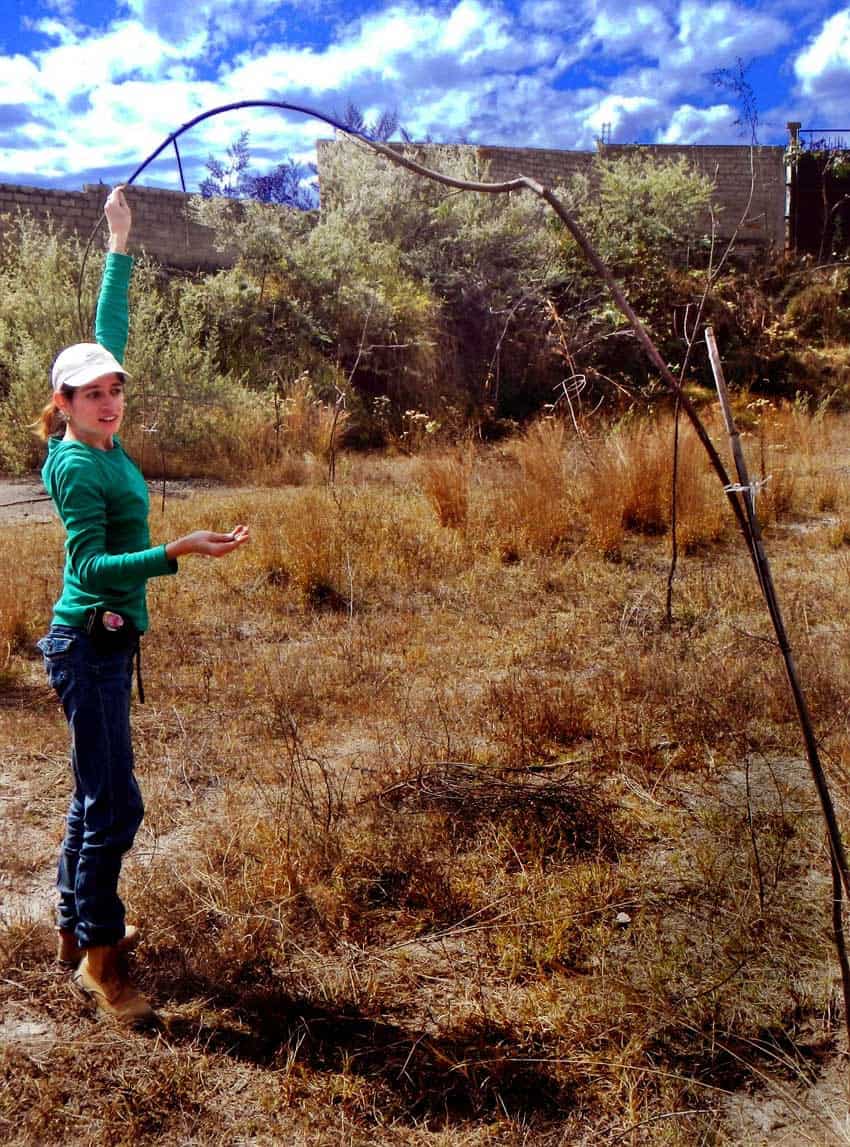
Hueso, as his friends call him, showed me his equipment: a tree saw on a pole, a climbing harness and a coiled kernmantle rope. “First of all,” he said, “we never use climbing spurs or spikes, which could damage a tree. Instead, we loop a nylon rope over a tree branch and go up the rope.”
Looping is accomplished by first throwing a small weight attached to a cord over the desired branch. The rope is then tied to this cord and pulled up over the branch. Next, Hueso and about 80% of the world’s arborists ascend the rope using one of the oldest and simplest systems known: a special knot called Blake’s hitch (but actually invented by Austrian Heinz Prohaska). When pulled from the top, this hitch slides upward easily. When pulled from the bottom, it tightens securely.
Amputation
Up the rope goes the arborist, hoping he won’t run into wasps or a swarm of bees before reaching the infected branch, which he then amputates.
Campeche’s bees, vital for Indigenous bioculture, present their case for legal rights
“I don’t think we will ever eradicate el muérdago,” Hueso told me, “nor would we want to. In the dry season those clumps of mistletoe provide birds with lipid-rich berries and a green place of refuge. What I do hope is that we will manage to get el muérdago under control. I think we can do that, but it’s going to be a tough fight.”
John Pint has lived near Guadalajara, Jalisco, for more than 30 years and is the author of “A Guide to West Mexico’s Guachimontones and Surrounding Area” and co-author of “Outdoors in Western Mexico.” More of his writing can be found on his website.
KioskNews shows a cleaned-up reading view extracted from the publisher’s page — the original always lives on their site, not ours.