‘You can’t put everything on immigration’: The suburbs at breaking point

Ted Brill stands outside the Ebenezer Church and surveys the paddocks before him.
It was here, two centuries ago, that Australia’s first migrant town was established.
On a ship built in Bangladesh, eight free families from different denominations arrived from Britain in 1802: Davison, Hall, Howe, Johnston, Johnstone, Mein, Stubbs and Turnbull.
“They wanted more freedom in their worship,” says Brill.
They weren’t convicts. They were merchants, teachers and religious ministers who survived floods and famine.
Before they built Australia’s oldest standing church and school, the Ebenezer families prayed under a red gum tree. Half of it still stands, a living monument to the generations of migrants who used the Hawkesbury River in NSW as their highway, transporting their food and their dead for burial, on land occupied for 50,000 years by the Indigenous Darug people.
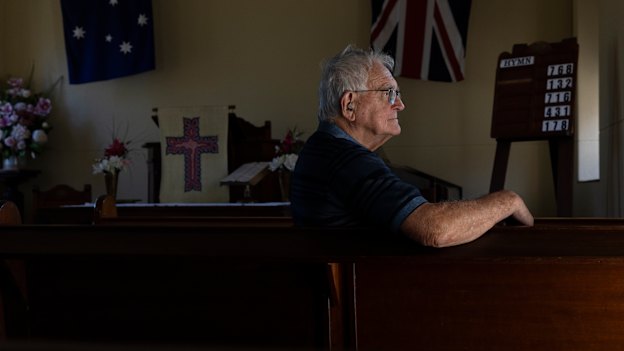
But there are few immigrants in Ebenezer any more. Australia’s oldest migrant town is now almost 90 per cent Australian-born.
“We bought the paddock across the road to keep the development away,” says Brill, former school principal-turned-local historian, and secretary of the church.
Ebenezer’s southern edge sits right on the development fringe reshaping Australia’s cities, from The Ponds in Sydney’s north-west to Tarneit in south-west Melbourne, driven partly by populations more likely to come from Kolkata or Manila than Edinburgh or London.
These outer suburban districts share three factors: high migration levels, strong house price growth, and infrastructure strain.
They are also areas One Nation must challenge, if it is to be a credible opposition or government, as it tries to frame the next federal poll as an immigration election.
“We are very much in the mind for the western suburbs of Sydney,” One Nation MP Barnaby Joyce declared after the party won the Farrer byelection in May.
One Nation has so far announced 36 candidates for the upcoming Victorian state election, including 31 running for the lower house, mostly in outer suburban and regional seats.
In Tarneit, on Melbourne’s western fringe, the neatly planned streets hum with the sound of construction.
Builders hammer at the timber frame of a new detached house. A rumbling bobcat clears a dusty paddock, preparing for another subdivision.
This is ground zero for Melbourne’s population boom. In 2011, it was home to 15,000 people. Today it has more than 60,000 residents.
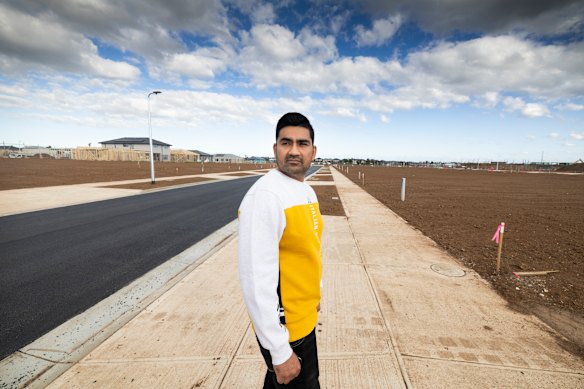
Mandy Gupta moved to Australia from India nine years ago on a permanent skilled migration visa. The IT expert says his life in Tarneit is better than he ever expected. He is raising his three Australian-born children here. “I would never even imagine going back,” he says.
But rapid population growth is putting immense pressure on Tarneit’s essential infrastructure. Roads are increasingly congested, and country V/Line trains overflow as they pass through the suburb.
The local Wyndham Council says it is already woefully short of swimming pools and sports facilities. It forecasts Tarneit and nearby Truganina will grow from 111,000 residents to 180,000 over the next 20 years.
In Tarneit, average traffic speed has fallen by 9 per cent in the past five years, according to data obtained by HERE traffic analytics. Even after accounting for COVID-19 lockdowns, drivers are taking longer to go where they want to go. Nearby Point Cook has seen its population jump by 8 per cent since 2021, while its average speed has dropped by almost 18 per cent.
The same phenomenon is playing out in Sydney. Blacktown in Sydney’s west has had average speeds drop from 61km/h in 2024 to 55km/h this year. In Penrith, the average congestion has grown from 12.5 per cent in 2023 to 15.4 per cent this year.
Gupta says the pressures are real. “There’s no balance between the number of people who are migrating and the investment,” he says. “[But] you can’t put everything on immigration.”
Instead of public debate being focused on solutions to infrastructure funding and housing supply, the Indian community is bearing the brunt of an anti-immigrant backlash.
Gupta says Indian friends are reluctant to go into the city because of far-right anti-migration rallies, and fear being abused or assaulted on public transport, or at pubs and nightclubs.
“Migrants are blamed for a whole lot of issues. Why are they not focusing on the significant contribution that migrants make? Migrants are starting new businesses and filling labour shortages in critical sectors. Why don’t they talk about doctors, engineers, healthcare workers, or the police?” he says. “If you stop migration, this country will come to a halt.”
Treasury estimates that a net overseas migration figure of 260,000 a year adds 0.8 percentage points to GDP. Without sustained migration levels, usually between 1 and 2 per cent of the population, fewer people will pay more in tax to support an ageing population.
Australia’s fertility rate hit a record low of 1.48 per couple in 2024. That is well below 2, the level needed to sustain the current population. Treasury estimates that without migration it will continue to fall further below the replacement rate because Australian-born residents have fewer babies than those born overseas.
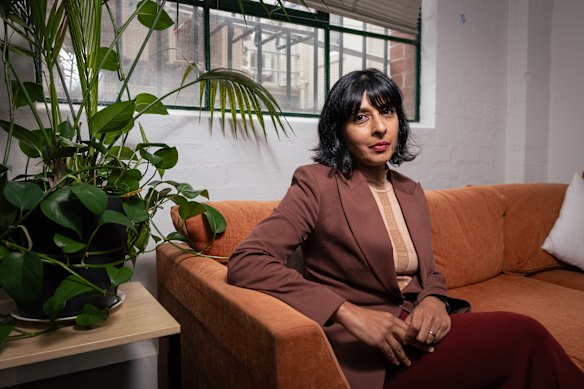
Grattan Institute chief executive Aruna Sathanapally says politicians in favour of immigration have failed to argue why Australia needs more people.
“One of the big issues in Australia is that we can’t have the kind of infrastructure that other countries have because we don’t have sufficient population density,” she says.
“So if we want fast trains and nice bridges, then we need people: the urgent care clinic or the metro station or a high street that actually has shops because the shops have customers. All of these things that you get in a vibrant neighbourhood.”
Sathanapally says Australia has relied for too long on a sprawled suburbia model of urban development that is incredibly expensive to sustain.
“Migration is being blamed for a lot of things that it is not responsible for.”
Inflated house prices (which have since retreated but are still among the highest in the world), poor connectivity and traffic congestion have helped drive anti-immigration sentiment in the urban fringes.
In suburbs groaning under these pressures, One Nation’s appeal is not necessarily its stance on immigration. It’s anger at a raft of other policy areas that have no easy solution.
“The overwhelming majority of people who have moved to One Nation over the last eight months, nine months, tell us they’ve done so because they’re sick of the two-party system,” says RedBridge pollster Kos Samaras.
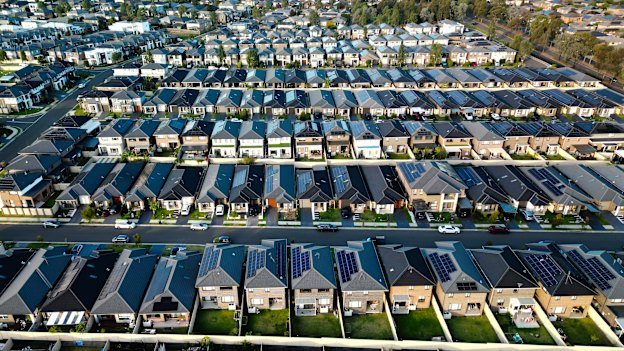
The rapidly changing demographics of these areas on the fringes of Sydney and Melbourne, where more than 50 per cent of residents were born outside of Australia, mean that if One Nation is going to take any of these seats, then this election is likely to be its only chance.
“If they have a really good day, they could pick up some peri-urban electorates, both from Labor and the Coalition,” says Samaras. “But it’s always going to be challenging for them because the group of Australians that provide those gains are proportionately declining in number every year.”
Tony Nikolic, a western Sydney lawyer and former One Nation candidate for Chifley, said immigration was not the only issue driving voters to One Nation.
“It’s death by 1000 cuts, and what’s happened is there is a genuine disconnect between the political class and the working class, and when I say that, we’re talking cost of living, we’re talking jobs, we’re talking taxes,” he says.
“The mechanism really isn’t immigration on its own. The best metaphor you can say is, like, if you look at a family break-up, it’s not like someone burnt the toast and that’s the divorce.”
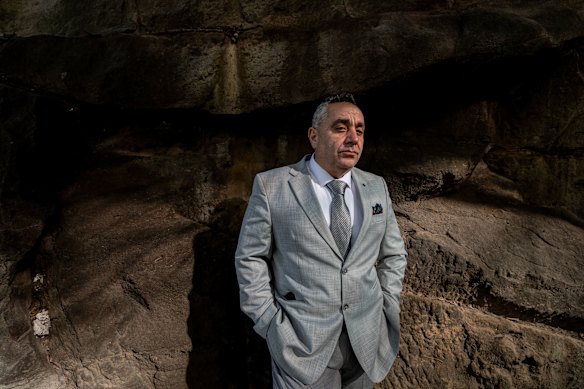
In Belmore, Tony Burke is trying to keep the marriage together, not just with the public, but within his own party.
Burke is the Home Affairs Minister responsible for immigration policy. He is also the member for Watson, one of Australia’s most diverse electorates where 50 per cent of residents were born overseas.
One local business owner jokes the Strathfield-raised Irish Catholic has “a bit of wog in him”.
“This part of Sydney has, for a very long time, been where people first come to live,” says Burke. “We’ve always made it work.”
The problem, as Burke sees it, is not the number of homes. But the number of people they house.
“We used to live 2.9 people per dwelling. Australians, and it’s completely their decision, but we’re now at 2.5 per dwelling. Every time you move one decimal point, you suddenly need 450,000 extra homes,” he says.
“What I think has driven all of this is a genuine housing pressure. If you’re in a situation where finding a rental property becomes near impossible, let alone trying to buy a home and at the same time you did have, post-COVID, very high net overseas migration. People have said, ‘Hang on, why are we doing that if I’m having so much trouble finding a home?’”
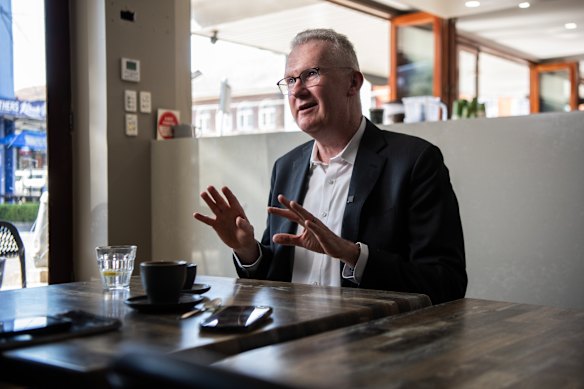
Burke says social media has compounded genuine economic pressures. Voters now have an outlet that mirrors their views in a way mainstream media can not.
“The thing that has changed is the edges of an argument get amplified now in a way that they didn’t use to,” he says. “They amplify anger, and so effectively, people who are unhappy have much more volume now.”
The noise has become so loud that Burke is presiding over an immigration system that no major party is defending.
Burke was forced to abandon a National Press Club speech in August that would have proposed a major overhaul of the migration system. Labor has spent the past month grappling internally and externally with the dominant political contest of its time.
The Coalition, once the great defender of business interests, now speaks more about bringing migration under control than it does about filling skill shortages.
One Nation has proposed cuts so drastic that they would shrink Australia’s population for the next three years.
The battleground is not permanent migration, which has stayed stable at about 200,000 a year for the past decade. It is temporary migration, which has exploded to more than 1 million visas last year on the back of a Hawke and Howard-era demand-driven system that Burke says successive governments have had little control over.
Often, temporary migrants might arrive on a temporary skilled visa and live in suburbs like Belmore. Then as they settle, they move into areas like Tarneit. They arrive, sponsored by a business or university, with virtually no government oversight. By the time they have moved between bridging visas, they may have spent more than a decade in the community, building their lives, their careers and their families. All of this happens without the government making a decision about whether they should ever have been given a temporary visa in the first place.
“Here’s the thing: the decision of making it demand-driven effectively meant that the immigration minister would not be in control of those numbers. Now, if infrastructure kept up, then that’s okay,” says Burke.
“One of the challenges we need to wrestle with is if so much of the program is demand-driven, then what are the levers a minister has available to be able to slow the system down.”
So what are the solutions?
The government has already shifted its emphasis on processing new temporary migrants towards those who are already onshore. But the bridging visa backlog – now at 400,000 – will take years to get through. The temporary migrant income threshold has also been indexed to rise with inflation at $79,423, meaning new migrants must be paid above this rate to be given a visa.
On Thursday, after six weeks of delays, Burke announced a further crackdown on international students switching visas after they finish their studies and restrictions on families being able to join them. He also said Australia would return to 2015-era visa settings that would give people on bridging visas two weeks to leave the country or face being deported. Backpackers will also be pushed into a ballot system if they want to stay in Australia for a second or third year.
But all of these measures are really tinkering at the edges of an economy that is now heavily reliant on migration to sustain its rate of growth.
“They are not as comprehensive as I would like them to be,” Burke said. “To be able to add all the levers that I talked about, particularly with respect to the problem of the demand-driven system that we have, you can’t do that without legislation.”
To pass legislation, Labor needs the support of the Coalition.
“When the numbers are too high, and the standards are too low, it’s not going to be bipartisan,” Opposition Leader Angus Taylor said on Thursday.
Unfortunately for Labor, the best line of political attack is a problem the government cannot fix.
Australian Bureau of Statistics figures released on Thursday showed net overseas migration (the number of people entering the country to live compared with the number of people leaving) at 292,000. Labor wants to get it down to 225,000 a year. The Coalition has suggested a figure between 170,000 and 180,000. One Nation has proposed much steeper cuts to 130,000 a year.
Neither party has outlined what legislation it would introduce to get to those numbers. But such is the public’s scepticism about immigration that any number lower than the government’s target is being rewarded by voters in the opinion polls. One Nation is now just one percentage point behind Labor on first preferences according to the most recent Resolve Political Monitor.
“If you want to do a ruthless cut like 130,000, you need to be upfront about which hospitals in regional Australia you think should close – because they will,” says Burke.
“You need to let people know that there will be fewer houses built, and the housing supply challenges will, in fact, be worse. You can’t get to those sorts of low numbers without smashing parts of the Australian economy.
“If you go to 180,000, you’re probably in a world of optional choice. You might not have to shut regional universities and regional hospitals and stop construction, but you’ll have to pick at least one of the three.”
The impact of a large reduction in temporary migrants on industries such as hospitality and construction may be immediate.
“But what happens to a suburb when it ages en masse and doesn’t let new people in?” says Sathanapally.
“Your schools start having insufficient kids to run. Your businesses start shutting down, and so you effectively hit this point where this suburb is not going to be what it was if everyone in the suburb is retired.”
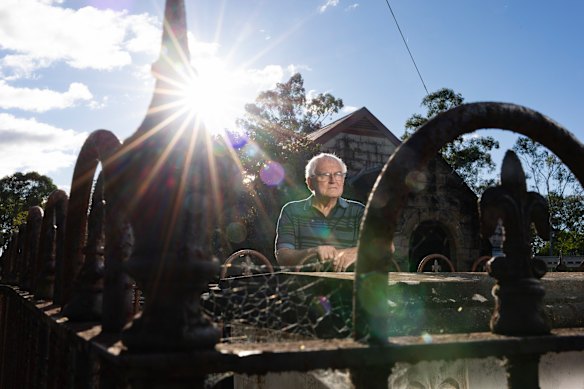
Ebenezer on the edge of Sydney’s north-western fringe is a beautiful but cautionary tale.
There aren’t enough people to fill the local church any more. “We want to see this as a living church, not as a museum,” says Brill.
He says the journey of Ebenezer’s migrants more than two centuries ago is not so different from Australia’s most recent.
“They showed they can be successful out here,” he says. “By migrating, they had a better life too: better food and fresh air.”
- Burke’s warning: Is Australia becoming a guest worker economy?
- Ruddock’s fix: Former immigration minister’s solution to student visa program
- As it happened: Labor unveils immigration overhaul
- What Australians really think: The migration pathways voters want slashed
KioskNews shows a cleaned-up reading view extracted from the publisher’s page — the original always lives on their site, not ours.