House defers DICT budget gab over online content concerns
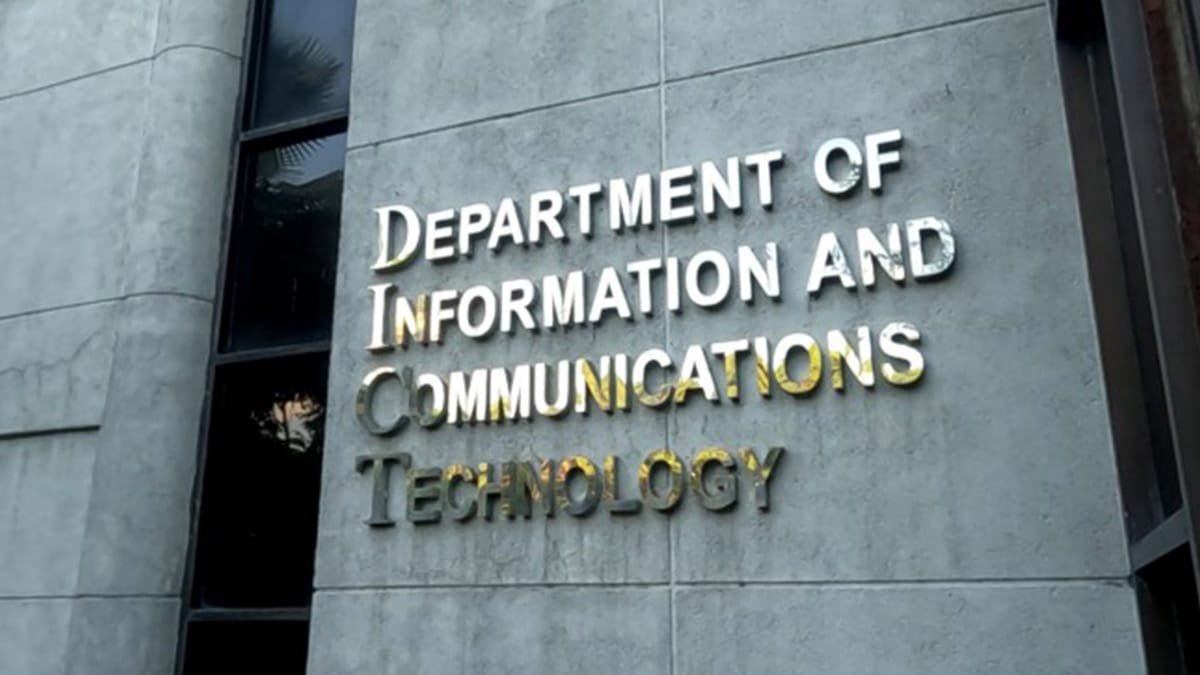
MANILA, Philippines — The House of Representatives late Wednesday suspended discussions on the Department of Information and Communications Technology’s (DICT) proposed 2027 budget over unresolved concerns regarding harmful online content.
Philreca party-list Rep. Presley de Jesus moved to defer the DICT’s proposed P10.68-billion budget to give the committee time to assess the results of the department’s crackdowns on the exploitation and sexual abuse of children, scams, cyberbullying and other concerns that put minors at risk.
“[We] must also be able to determine what happened after those actions were initiated,” De Jesus told lawmakers on the floor
Article continues after this advertisement
“Without that information, it is difficult for Congress to properly assess [whether] the resources being requested are producing the intended outcomes.”
FEATURED STORIES
NEWSINFO
NEWSINFO
NEWSINFO
Philreca, which stands for Philippine Rural Electric Cooperatives Association Inc., represents rural electric cooperatives and their member-consumers.
The House majority bloc supported De Jesus’ motion to suspend the debates with no objections.
‘Not addressed’
Deputy Speaker and Iloilo Rep. Janette Garin, who presided over Wednesday’s session, said the motion stemmed from the minority bloc’s concern that efforts to curb scams and protect children from harmful online content have “not been addressed well.”
The DICT has faced increasing public scrutiny after a string of school violence, particularly two school shootings that authorities linked to violent online content, left students dead and scores injured.
Article continues after this advertisement
In addition, lingering concerns over online scams have fueled mounting frustration among lawmakers, prompting them to put on hold the DICT’s budget.
In response, the DICT said it “fully understands and takes heed” of the body’s decision to defer the discussions.
Article continues after this advertisement
In a statement posted on its Facebook page, it also singled out social media platform Meta, which “continues to fall short of its responsibility and commitment to youth safety” unlike other technology platforms that have cooperated with authorities.
“With the enormous scale and reach of its services comes a corresponding obligation to implement effective, measurable safeguards, remove harmful content promptly, and cooperate fully and transparently with Philippine authorities. Accountability cannot be optional,” the DICT said.
“The safety and welfare of Filipino children must remain paramount. Technology companies that operate in the Philippines must be held to the highest standards of responsibility. Persistent failure to address these risks erodes public trust and cannot be tolerated,” it added.
Nonnegotiables
De Jesus asked FPJ Panday Bayanihan Rep. Brian Poe, who sponsored the DICT’s budget in plenary, what initiatives the agency had undertaken with social media platforms to address harmful content.
“The two nonnegotiables are one: that they open an actual office here in the Philippines so that they can be held accountable; and two: for the sake of accountability and protection on social media, the requirement of a national ID to create and maintain an account on the Meta platform here,” Poe said.
Meta Platforms Inc., Facebook’s parent company, “seems open to these requirements,” said Poe.
The lawmaker added that the DICT had invited Meta Platforms chair and chief executive officer Mark Zuckerberg to the Philippines “to ask him to confront these issues … although there was no response.”
Sagip Bata Act
At the Senate, Sen. Risa Hontiveros met with representatives of Roblox on Wednesday to discuss online safety measures for children.
She also pressed for the designation of a legal representative based in the Philippines to allow for easier coordination in cases involving online abuse and other threats to children.
“When a Filipino child is potentially a victim of grooming or online sexual abuse, every hour matters. Our authorities need to know immediately who to reach out to,” Hontiveros said in a press release on Thursday.\
The Senate is currently discussing the proposed enhanced Anti-Online Sexual Abuse or Exploitation of Children (Osaec) bill, now known as the Sagip Bata Act.
Your subscription could not be saved. Please try again.
Your subscription has been successful.
Under the measure, online platforms are expected to designate a representative in the country authorized to receive subpoenas, takedown and blocking orders, requests for account information, among others. —With a report from Isabelle Pechay
KioskNews shows a cleaned-up reading view extracted from the publisher’s page — the original always lives on their site, not ours.