Poilievre’s popularity lags behind his party, but few options on the horizon, new poll finds
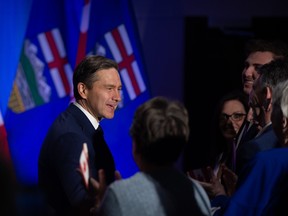
OTTAWA — The Conservative Party of Canada is more popular with Canadian voters than party head Pierre Poilievre, according to a new poll that suggests one-third of potential Tory supporters don’t do so simply because they don’t like the leader.
Sign In or Create an Account
But the poll from U.K.-based firm Lord Ashcroft Polls also suggests that swapping Poilievre for another leader is far from a panacea for Conservative woes.
That’s because while certain groups of voters say they would more likely vote for the Conservatives under an unnamed different leader, the change would also correlate with losses among the current Tory base, the poll finds.
“Switching leadership would bring its own risks,” reads the report.
“Changing leader could… mean alienating core supporters while at best standing still among softer voters and potential converts. The costs are therefore clearer than the uncertain reward.”
The poll surveyed a representative sample of 10,098 Canadians online between July 31 and Aug. 17 and hosted 16 focus groups held in B.C., Alberta, Quebec and Ontario.
Notably, 47 per cent of respondents thought Canada is headed in the wrong direction, compared to 40 per cent who said the country is on the right track.
And yet, the poll found that Prime Minister and Liberal Leader Mark Carney was the only leader of a major federal political party whose personal popularity exceeded that of his party.
That poses a particular challenge for Poilievre because the current federal landscape suggests an election would be a two-way battle between Liberals and Conservatives while Avi Lewis’s NDP looks to re-emerge from the ashes of the devastating 2025 vote.
“The PM was also a less polarizing figure than his opponent. While Poilievre is rated –64% by Liberal voters, Carney is only rated –33% among Conservatives,” Lord Ashcroft Polls found.
According to the poll, 60 per cent of respondents had a positive impression of Carney while 55 per cent said the same of the Liberal party. For Poilievre, 43 per cent of those surveyed viewed him positively (compared to 50 per cent negatively), six points below the Conservative party as a whole (49 per cent).
But the report notes the effect is even more pronounced among crucial voter groups for Conservatives.
During polling, “potential but currently unlikely Conservative voters” pegged not liking Poilievre (34 per cent) and the party feeling too close to U.S.-style politics (29 per cent) as the two top reasons they were put off from voting Tory.
More than half (53 per cent) of another key group, “persuadable Liberals” (recent Liberal voters who identified the Tories as their “clear second choice”), told Lord Ashcroft they were more likely to vote Conservative under a different leader than Poilievre.
That group is most likely to peg U.S. trade as one of three top issues facing Canada today, an issue poll respondents largely said they trust Carney to deal with better than Poilievre.
When combined with the fact that Conservatives’ current popularity challenges with the electorate are also tied to perception of it being “too American,” the prospect of another election centred around U.S. President Donald Trump could be terrible for Tories, according to the report.
“In Australia as well as Canada, incumbent governments pulled off upset victories by framing their national elections as referendums on President Trump’s trade policies and portraying the centre-right party as a proxy for the Americans,” reads the report.
“Allowing the Liberals to repeat the trick would give them the opportunity to galvanize the Carney coalition and leave the Conservatives trapped at their previous ceiling, inviting the same result.”
But there are chinks in Carney’s seemingly impenetrable polling armour too, the report notes. Respondents offered “mixed feelings” about Carney’s dealing with Trump, and fewer than half of respondents said the Carney government is “making progress and doing some good things.”
Furthermore, 45 per cent of respondents said they felt worse off compared to one year ago, whereas only 17 per cent said they were doing better.
National Post
cnardi@postmedia.com
Our website is the place for the latest breaking news, exclusive scoops, longreads and provocative commentary. Please bookmark nationalpost.com and sign up for our politics newsletter, First Reading, here.
Join the Conversation
This website uses cookies to personalize your content (including ads), and allows us to analyze our traffic. Read more about cookies here. By continuing to use our site, you agree to our Terms of Use and Privacy Policy.
KioskNews shows a cleaned-up reading view extracted from the publisher’s page — the original always lives on their site, not ours.