The AI revolution will go wherever there's electricity — and China knows it
Despite the recent surge in AI doomerism, President Donald Trump is right to maintain his strong support for data centers. As he notes: "China couldn’t be happier" if we were to turn our backs on these centers as a nation, which would effectively let the Chinese Communist Party win the AI race.
As Energy Secretary Chris Wright said in July, "The country that leads in artificial intelligence in the coming years and decades ahead will be the global superpower." Victory means capturing trillions of dollars in national wealth, securing an advantage in military technology, and gaining enormous leverage in international affairs.
An energy bottleneck could pose a serious risk to America’s AI lead. We need data centers to train and run top-tier AI models, and those centers need a lot of electricity. In 2024, they accounted for over 4% of electricity use, and their consumption is expected to more than double by 2030.
CHINA IS BUILDING AN AI WAR MACHINE. WASHINGTON MUST WAKE UP BEFORE IT’S TOO LATE
Ensuring there is sufficient supply and generation to meet the soaring demand is imperative to staying in the lead.
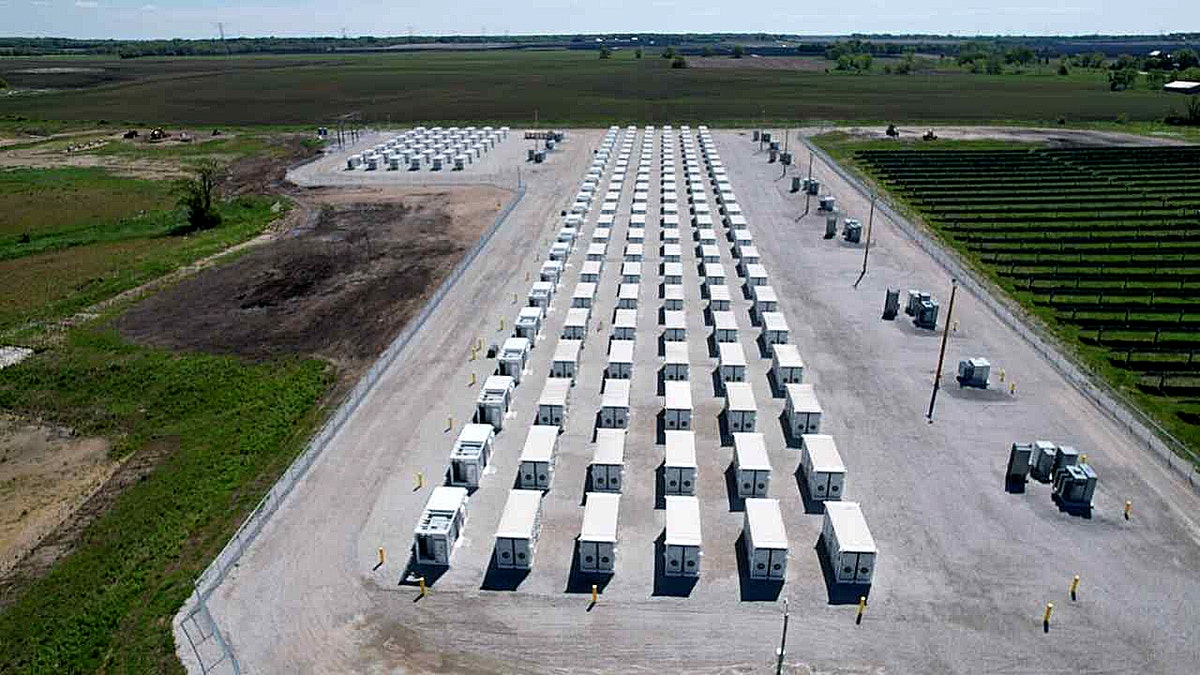
Solar should be a key part of that equation. New data centers need energy right now. New gas turbines and other large power projects can take years to bring online. Solar and battery projects can generally be deployed much faster, making them especially useful for meeting the near-term surge in electricity demand.
Solar power has been closely associated with the environmental left, because for decades, Democrats largely sold solar as a climate policy, often with no concern for cost, for whether the panels themselves were made in America, or whether deployment strengthened a supply chain dominated by China.
However, the strategic equation has changed. Under the Trump Administration, the case for solar isn’t about "going green." It’s about reindustrialization, energy security, technological leadership, and the national interest.
The Trump Administration recognizes the value that producing more domestic batteries brings to our energy security. That’s why the Energy Department recently backed 220 megawatts of new battery storage in Puerto Rico, which is enough to provide backup electricity for more than 100,000 customers during power shortages. This project will use American-made battery technology — strengthening the grid and our domestic energy supply chain at the same time.
Thanks in large part to the work of the Trump Administration, a very different picture of solar has emerged from the one encountered a decade ago. By creating the conditions for investment in Made-in-America panels and components, Washington is turning what was once a China-dependent industry into another source of American energy security and industrial strength. In fact, private industry has poured $18.2 billion into building a domestic solar supply chain since 2022, and cell production was recently reshored for the first time in five years.
Battery storage in the U.S. just topped 52 gigawatts of capacity, and it's been growing about 70% a year for three years straight. Thanks to these batteries, the American people now have significant access to this power not just when the sun is out at midday, but also in the evenings when America’s workers return home and turns on their lights and air conditioning.
President Trump’s agenda has created an opportunity to support the domestic U.S. solar industry that we should take advantage of. By emphasizing solar as part of a broader all of the above energy dominance strategy, we can reinvigorate the domestic supply chains and spur U.S. production necessary to supporting our national interests, in both energy and AI policy.
CHINA ‘THROWING GASOLINE ON THE FIRE’ IN AI DATA CENTERS RACE, SAY LAWMAKERS
Building up secure domestic supply chains for solar has the added advantage of insulating the U.S. against future energy shocks because the fuel these panels run on doesn’t require pipelines or tankers. Iran might be able to mine the Strait of Hormuz, but it can’t block out the sun.
Call it an Arsenal of Democracy for the AI age. At a moment when the country needs vastly more electricity, American companies are answering with real capital and real factories, and Washington is finally clearing a path for them to build here at home.
CLICK HERE TO DOWNLOAD THE FOX NEWS APP
The AI race will decide who leads the global economy for a generation. As one of the fastest sources of new power backed by an increasingly domestic supply chain, solar is a vital asset. America must bring solar online to continue driving AI development and U.S. technological leadership.
Ambassador Robert C. O’Brien (ret.) was the 27th U.S. national security adviser from 2019-2021 and serves as chairman of State Armor’s Board of Advisors.
KioskNews shows a cleaned-up reading view extracted from the publisher’s page — the original always lives on their site, not ours.