Biden aide McGurk says Washington had no warning of Oct. 7, reveals how war shook White House

On the morning of October 7, 2023, former White House coordinator for the Middle East Brett McGurk walked into the Oval Office and immediately understood that something unprecedented was happening. The full scale of the Hamas attack was not yet known, and the White House was struggling to establish what exactly had happened.
Former president Joe Biden looked pale. "He was just like, this is the last thing he expected and wanted,” McGurk recalls in an interview with The Jerusalem Post, discussing his new book, Brink: Inside the Race to Free the October 7th Hostages, which chronicles the Biden administration’s handling of the hostage crisis.
Biden had been preparing for a very different morning. A special prosecutor was expected to question him about classified documents found in his Delaware garage. "I just told the president, ‘This is unprecedented, but we don’t know exactly what we’re dealing with.’”
That uncertainty would soon give way to the defining crisis of Biden’s presidency.
McGurk’s account of October 7, detailed in Brink and discussed in his interview with the Post, begins not on the morning of the massacre but the evening before. On October 6, McGurk had been working toward one of the Biden administration’s biggest diplomatic ambitions: a normalization agreement between Israel and Saudi Arabia.

"I had the Saudis in my office,” he recalls. Saudi Ambassador Princess Reema bint Bandar was there, and the administration hoped to conclude the agreement by the end of the year. "We’re planning on trying to close out that Israel-Saudi deal by the end of the year and rolling it out in the first quarter of 2024,” McGurk said. Secretary of State Antony Blinken was preparing to travel to the region.
Then, after putting his child to bed, McGurk began receiving messages from the White House Situation Room. "We had rockets fired from Gaza.” The following hours transformed everything. "I’m also hearing from Israel’s ambassador here in Washington, Mike Herzog, as this unfolded,” he said. “It was about after midnight, when he said, ‘This is war. We’re at war.’”
The words captured the extraordinary transformation.
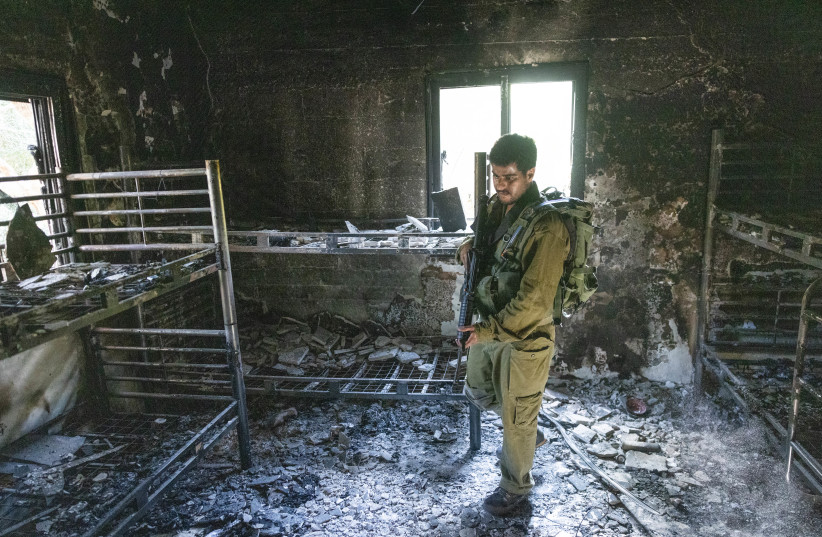
Just hours earlier, senior American officials had been discussing peace and normalization. Now they were confronting a war whose dimensions they could barely comprehend.
Was there a warning?
One of the most politically sensitive questions surrounding October 7 has been whether Israel had received advance intelligence indicating that Hamas was preparing a major attack. McGurk said the American intelligence community did not.
The Americans subsequently reviewed their intelligence. "We looked through, in the aftermath, all of our intelligence information,” McGurk said. “Had no warnings or indicators. I say in the book, we had no warning, and the Israelis had no warning from what they told us.”
But that does not mean there was nothing to investigate. "Whenever something like this happens on this scale, there’s always something in the system that should’ve been seen or somebody that knew something and the information didn’t get up,” he said.
For McGurk, Israel needs to conduct the same kind of institutional reckoning that the United States undertook after 9/11. "We reformed our intelligence community. We reformed how intelligence is briefed and categorized,” he said. Israel, he argues, needs “a commission of inquiry of some kind” to determine “what was missed and to make the reforms necessary so that nothing ever gets missed again.”
Biden to McGurk: 'Do anything we can to get these hostages out'
As the scale of the massacre became clearer, McGurk’s mission changed. He was now tasked with helping bring the hostages home. One of the most painful scenes in Brink took place in the Oval Office. Biden met with families of missing Americans and other hostages via a large screen. "It was one of the most gut-wrenching meetings I’ve been in in the Oval Office,” McGurk said.
Then something happened that he said he will never forget. "One woman left the screen, and when she came back, she learned that her loved one was actually confirmed dead.” She began “wailing into the screen” at the president. "Do something. Help us.”
The meeting affected Biden deeply. The president told McGurk that he had worked on hostage deals with Iran before.
"Few things are more difficult in the line of work of diplomacy,” Biden said. Then came the instruction that would define McGurk’s next year. "Do anything we can to get these hostages out.”
The first hostage deal
McGurk began working with CIA Director William Burns and negotiators in Israel, Egypt and Qatar. The negotiations were anything but straightforward. Israel initially believed there were around 75 hostages who might fit the category being discussed. Eventually, the terrorist organization offered to release 20. Israel rejected the proposal.
McGurk traveled to Jerusalem and met with Prime Minister Benjamin Netanyahu.
"Maybe we should just take… Let’s try to get 30 so we can get a process started,” McGurk suggested.
Netanyahu refused. "I have to have at least 50 guaranteed, otherwise Hamas is gonna hold hostages back,’” McGurk recalls the prime minister as saying. Eventually, however, the negotiations succeeded. The first hostage deal was implemented on November 24, 2023.
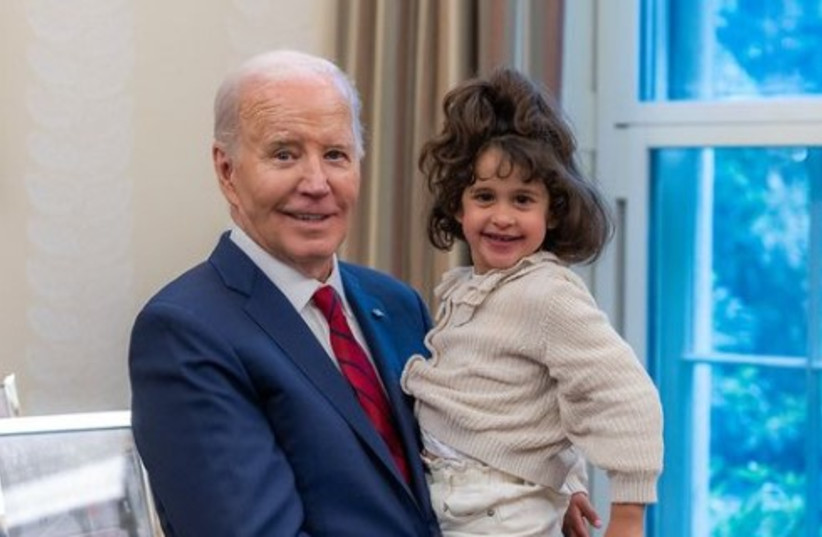
An eight-day ceasefire followed, and hostages began returning home. Among them was Abigail Edan, the young American-Israeli girl whose parents had been murdered on October 7.
On the eighth day, Hamas refused to release the younger women. Many had been kidnapped from the Nova music festival or from their homes on October 7. McGurk remembers the dilemma. "You know, there’s no real right answer", he said. "The cease-fire had worked. The hostage releases were continuing". But Hamas was refusing to release young women who had been among the most vulnerable hostages. "I kind of want to keep it going,” McGurk said of the cease-fire. But Israel took a different view.
“The Israeli side was unanimous,” he said. “We cannot skip over the younger women, basically potentially signing their death sentences.” The war resumed. "I did not anticipate in that moment,” McGurk said, “that it would take 14 months to get back to that deal.”

McGurk on Hersh Goldberg-Polin: 'We failed that family'
For months, the Americans, Israelis, Egyptians and Qataris continued trying to reach another agreement. McGurk said Israel repeatedly agreed to proposals while Hamas resisted.
In May 2024, one proposal was put on the table and then, on August 16, 2024, another proposal was put forward, backed by Qatar and Egypt. "It went further in the direction of Hamas,” McGurk said. “It was a much better deal for Hamas than what they have today.”
But once again, the negotiators waited. "Again, waiting on Hamas, which I think was very much, unfortunately, the common course.” Then came the news that six hostages had been found dead in a tunnel under Rafah. One of them was Hersh Goldberg-Polin, a dual Israeli-US citizen.
McGurk had been expecting potentially good news. Instead, he received a call from Burns.
"I just felt your kind of guts rip out of your body; [your] heart drops,” he said. Then came the emotion that perhaps best captures McGurk’s description of the hostage negotiations. "I felt like a complete failure. Whatever you can say in this process, we failed that family.”
The discovery of the six murdered hostages changed McGurk’s thinking. He concluded that as long as Yahya Sinwar remained in control of the hostage negotiations, a deal was unlikely. "So long as Yahya Sinwar was the one holding the keys to the hostages, we were not going to get a deal,” McGurk said in situation room meeting on August 1 with president Biden. "Sinwar had to be removed from the scene.”
The morning Israel almost struck Hezbollah
Another extraordinary episode in Brink occurred only days after October 7. On October 11, Israeli officials believed Hezbollah was preparing to open a major northern front, and the Israelis were preparing a strike against Hezbollah leader Hassan Nasrallah, his senior lieutenants and Iranian advisers.

The stakes were enormous. A strike could potentially trigger a full-scale war with Hezbollah and Iran at a moment when Israel was already fighting Hamas in Gaza.
Then Ron Dermer called Jake Sullivan’s office, then-president Biden's national security advisor. "Ron tells us that the attack has started,” McGurk recalls. “Hezbollah has started its attack with paragliders, very similar to the October 7th attack from Hamas.”
The Israelis were preparing to strike. "We kind of said, ‘Hey, let’s slow down, see what’s going on.’”
Then came an extraordinary back-channel message. A Norwegian intermediary delivered a message from the Iranian Revolutionary Guard: Hezbollah would not launch a new ground front as long as Israel did not do so first. "I don’t trust anything the Iranians tell me,” McGurk emphasizes. But the message mattered. McGurk believes the United States and Israel were not prepared for the consequences of an Israeli strike. "My judgment, we were not set. We were not prepared".
The strike was ultimately called off. The decision remains controversial in Israel. McGurk acknowledges the debate. "I know some [say] maybe they should have done the strike,” he said. But his own conclusion is clear: the timing was wrong.
The confrontation over Iran
The relationship between Biden and Netanyahu became increasingly tense as the war continued. One of the most dramatic confrontations followed the Israeli strike on senior Iranian commanders in Damascus in April 2024. At the same time, Washington and Jerusalem were already deeply divided over the war in Gaza, the planned Israeli operation in Rafah and the World Central Kitchen strike, in which seven aid workers were killed. McGurk describes the atmosphere as a “boiling point.” It was just frustration,” he said.
But another crisis was unfolding behind the scenes. American intelligence was detecting preparations for a direct Iranian attack on Israel. The scale was unprecedented. "We’re seeing the intelligence that Iran is preparing this unbelievable missile and drone attack directly against Israel,” McGurk said.
The United States therefore faced two simultaneous challenges: preventing a regional escalation while preparing to defend Israel. Israeli officials threatened a massive cyber attack against Iran if Israeli would be killed. Biden’s message was effectively: defend Israel, but do not turn the Iranian attack into a wider war. Then came Biden next objective: Let’s try to get back to that hostage and ceasefire process.”
The Iranian attack ultimately involved hundreds of missiles and drones. The joint Israeli-American and regional defensive effort largely succeeded. McGurk sees that episode as a critical turning point. Take the win,” Biden told Netanyahu, according to McGurk’s account. Let’s try to contain this, and let’s get back to that process.
The Haniyeh assassination
The killing of Hamas political leader Ismail Haniyeh in Tehran in July 2024 triggered another confrontation. Inside the White House, officials feared that the assassination would destroy the hostage talks. McGurk said Biden believed the killing had put the negotiations at risk and was frustrated with Netanyahu. Netanyahu disagreed.
"The opportunity to kill Haniyeh had been unique," Netanyahu argued in a phone call with president Biden, and added the operation was unrelated to the negotiations. "It could even strengthen Israel’s position"
Biden pressed him to compromise. Netanyahu responded that Biden was not reading the regional map correctly. Biden’s answer was blunt: "This may be the last chance for a deal.”
The disagreement reflected the fundamental problem at the heart of every negotiation. As McGurk puts it: "Hamas’s core demand [was] we stay in power. We go back to October 6th status quo.” "I don’t think any Israeli government could have accepted that.”
"Trying to bridge that is what the story of this book is about," McGurk said.
Witkoff enters the picture
By late 2024, the strategic landscape had changed dramatically. Sinwar had been eliminated. Nasrallah had been eliminated. Israel and Hezbollah had reached a cease-fire. Israel had struck Iran. And Donald Trump had won the presidential election.
McGurk began working closely with Trump’s incoming envoy, Steve Witkoff.
"I worked very closely with Steve Witkoff,” McGurk said. "And without that cooperation, which I think is quite unique in today’s Washington, without that cooperation, we would not have gotten that done.”
The negotiations intensified. Eventually, they reached another hostage deal. But even then, the agreement nearly collapsed. Trump had already announced the deal publicly, while Netanyahu had not yet formally approved it. McGurk described entering the room as Mossad Director David Barnea spoke to Netanyahu.
"What’s going on?” McGurk asked. He was told Netanyahu still needed time. McGurk could hardly believe it. "But we have a deal.” Then Witkoff intervened. His message to the Israelis was explosive: If the deal collapsed, he would publicly say that the Israelis did not want an agreement. Barnea warned that Witkoff had crossed a red line. Witkoff reportedly reached for his phone.
The Israelis asked for more time. Witkoff gave them 3 minutes. Eventually, the problem was resolved. The second agreement went forward. 33 were freed.
Closing the circle
For McGurk, the eventual release of the hostages was deeply personal. Three young women whom Hamas had refused to release in the first hostage agreement – Romi Gonen, Doron Steinbrecher and Emily Damari – finally returned to Israel in January 2025.
It happened on Biden’s final day as president. "It kind of connects this story,” McGurk said. He was in the green room preparing to appear on Face the Nation when he received the news. "I actually got the news of Romi, Doron, and Emily in Israeli hands – the 3 that weren't released in the first deal,” he recalls. He broke the news on television. But even in that moment of relief, McGurk could not forget the months that had passed. "They should have come out in November,” he said.
And perhaps that is the central message of Brink. For McGurk, the story of the hostage negotiations is not one of a single diplomatic breakthrough. It is a story of repeated failure and persistence, of moments when a deal appeared close and then collapsed, of pressure applied behind closed doors and of decisions that could mean life or death for people being held underground.
Looking back, McGurk describes the final agreement with one word: "Relief.” But there is also regret. "I just wish it had… I wish we were able to get there sooner, honestly.” That sentence may ultimately say more about the year after October 7 than any diplomatic victory.
For 24 months, Washington, Jerusalem, Doha and Cairo tried to bridge two fundamentally incompatible demands: Hamas’s insistence on survival and Israel’s insistence that October 7 could never happen again.
In Brink: Inside the Race to Free the October 7th Hostages, and in his interview with the Post, McGurk offers an unusually intimate view of that struggle – the Oval Office meetings, the midnight calls, the intelligence warnings, the arguments with Netanyahu, the pressure on Hamas and the moments when negotiators wondered whether the process had finally failed. It is a story of diplomacy conducted at the edge of catastrophe.
KioskNews shows a cleaned-up reading view extracted from the publisher’s page — the original always lives on their site, not ours.