Delhi Metro Shining Example Of India-Japan Partnership: Lt-Governor Taranjit Sandhu
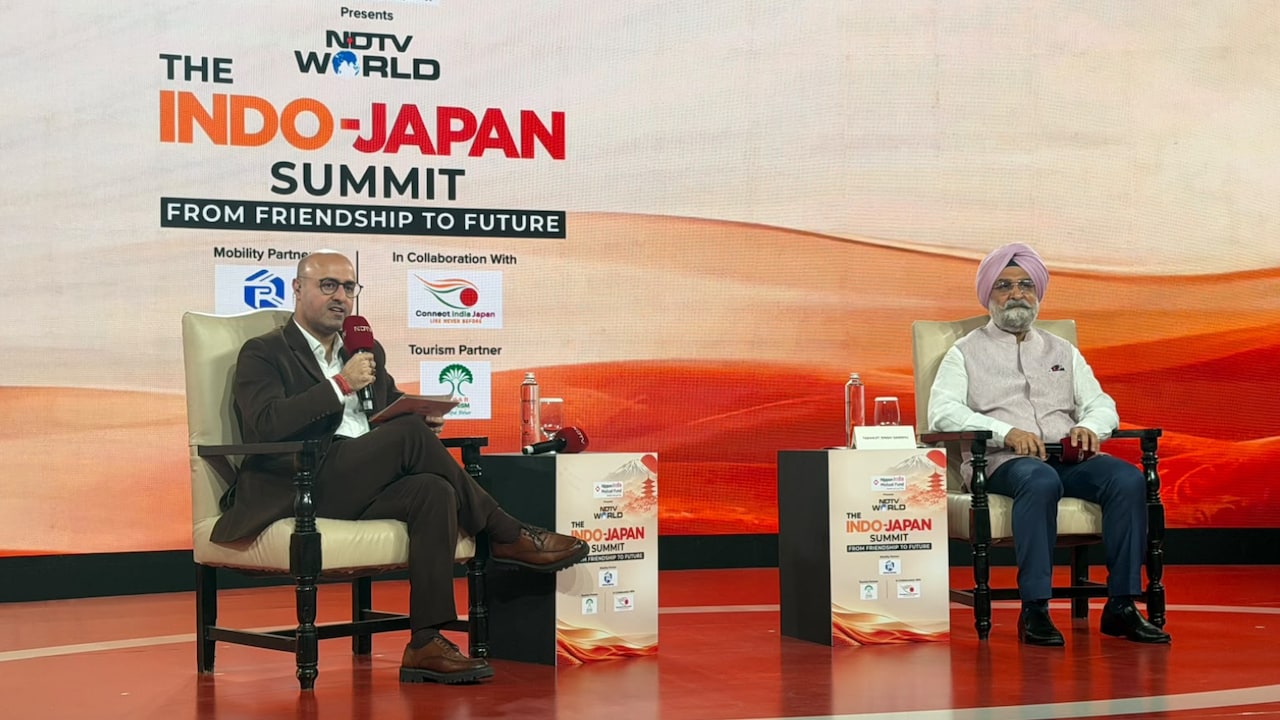
India and Japan have a deep, multifaceted relationship, and the Delhi Metro is one of the shining examples of that, Delhi Lieutenant Governor Taranjit Singh Sandhu has said.
Speaking at the NDTV Indo-Japan Summit on Thursday, Sandhu said the future of Delhi cannot only be about building more infrastructure, but also about adopting an integrated approach to development.
"Japan has been a partner of the Delhi Metro from its early stages, with JICA (Japan International Cooperation Agency) providing substantial, long-term financing and technical cooperation. But the importance of the Delhi Metro goes well beyond the physical infrastructure that has been created. It has changed the way Delhi moves," he emphasised.
Sandhu said the focus is on sustainable development.
“Delhi is a political capital, a major economic hub and one of the world's largest urban hubs. Its population and economic activity continue to expand while the city has to respond to the pressures of mobility, air quality, water, waste management and climate change. The future of Delhi, therefore, cannot be approached simply as a question of building more infrastructure,” he noted.
"It requires a more integrated approach to urban development where transport connects with technology, strengthens public services and environmental sustainability, and infrastructure is designed with resilience in mind," he said.
Deep Ties, Quad
Sandhu, a former diplomat, said India and Japan have built a special strategic and global partnership that has steadily deepened and expanded from economic cooperation and infrastructure to technology, security, clean energy, AI and mobility.
Noting that the late Japanese Prime Minister Shinzo Abe's wife, Akie Abe, was also at the summit, he continued, "At the heart of this transformation has been the deep personal friendship between Prime Minister Narendra Modi and former Prime Minister Shinzo Abe - a friendship founded on trust, warmth and a shared strategic vision. I am particularly pleased that this conversation on the future of cities is taking place in the presence of Mrs Abe. Her being here is a reminder that the India-Japan relationship is not only about institutions and projects but also about the enduring people-to-people warmth and goodwill that connect our two countries."
"Abe-san also understood India's pivotal role in the Indo-Pacific. His landmark 2007 'Confluence of the Two Seas' address articulated a vision that laid the foundation for what was later to become the Quad. Abe-san's vision and his friendship with Prime Minister Modi helped lay the foundations for a partnership that continues to shape the Indo-Pacific," he added.
The former US ambassador said people forget that the Quad, which has India, Australia, Japan and the US as partners, is an economic grouping too
"Everybody measures it on the defence part, but look at it in terms of the COVID vaccines and how we try to help Southeast Asia. The first 50 scholarships of Quad countries were also established, and among the two Indians who were recipients, one of the girls, who did not have the means, was doing a doctorate in the United States," he pointed out.
Traffic, Pollution Issues
Asked by NDTV's Aditya Raj Kaul about what can be done about traffic bottlenecks in Delhi, especially during peak hours, the lieutenant governor said the answer lies in technology.
He said several other cities, including Indore, have successfully integrated technology into traffic management and are seeing results. "We need to adapt that technology to Delhi's requirements, and we will," he noted.
On pollution, Sandhu said it is a problem that needs to be solved soon, and even he had to take antibiotics last year.
"We must learn from other cities and other countries. So, on my part, I have been pushing the government and NGOs... We have to get their best practices here and we have to all come together. Each one of us has to participate, and the government has to take the lead," he said.
KioskNews shows a cleaned-up reading view extracted from the publisher’s page — the original always lives on their site, not ours.