‘Resident Evil’ cements Zach Cregger’s reputation as horror’s brightest new star director
SEPTEMBER 26 — I’ve never been much of a gamer. While die-hard video game purists spent decades complaining about fidelity to source material and whether this or that is canon or not, I’ve always approached video game adaptations from a purely cinematic perspective.
And as a film fan, I think it’s safe to say that I am one of those rare people who actually loved the original Resident Evil film franchise spearheaded by Paul W.S. Anderson.
Love might even be too light a word to be used as I can be found guilty of singing his praises for what must have been more than a decade, on every platform imaginable.
Why? Well, and here I go again with my championing of Anderson’s Resident Evil movies, for all the critical snobbery aimed at those movies, Anderson’s six-film cycle possessed genuine artistic merits and high-minded visual ambitions.
More specifically, his work fits squarely into the realm of “expressive esoterica,” a concept famously coined by film critic Andrew Sarris to describe cinema that prioritises formal visual abstraction and smart editing rhythms over traditional narrative mechanics.
Entries like Resident Evil: Afterlife and Resident Evil: Retribution are particularly breathtaking in this regard.
Anderson crafted some of the most beautiful, purely formalist uses of CGI and slow-motion photography ever produced within a major Hollywood studio in these films, turning pulp action into mesmerising, avant-garde digital ballet.
So, walking into this latest cinematic reboot, I knew things were going to be radically different.
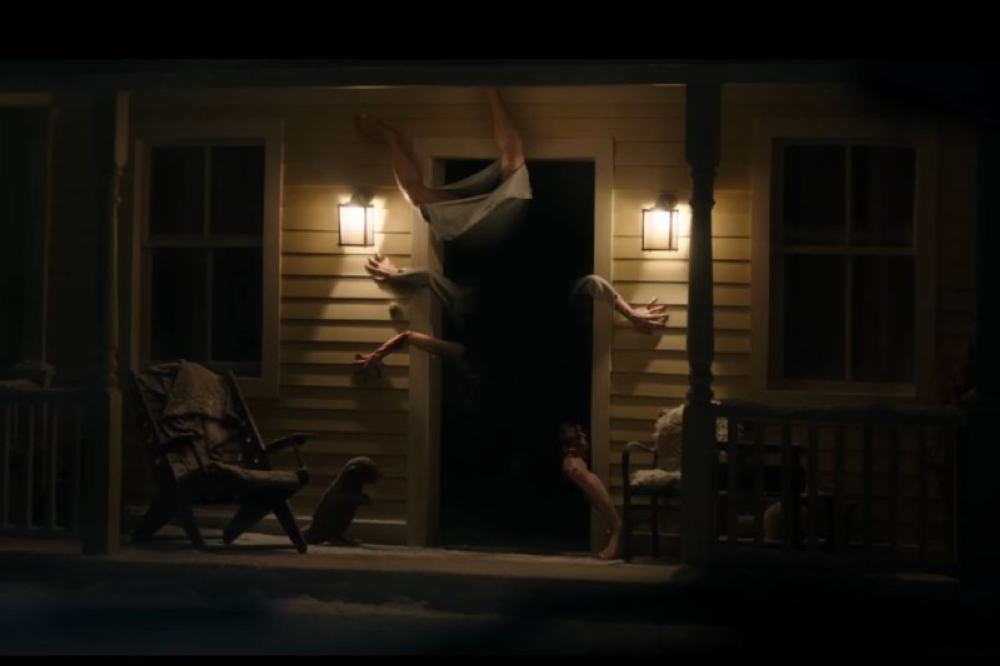
The author argues that Zach Cregger’s ‘Resident Evil’ succeeds by combining claustrophobic horror, dark humour and video-game-inspired POV filmmaking into a confident new direction for the franchise. — Picture courtesy of Sony Pictures
With director Zach Cregger taking the reins, I was more than prepared for a complete pivot in style, and that was fine by me.
Having been thoroughly impressed by Cregger’s work on Barbarian and Weapons, I was eager to see how his distinct directorial voice would handle the umbrella of biological horror, pun absolutely intended.
Cregger takes this new Resident Evil in a far more straightforward narrative direction than Anderson’s surreal, dream logic aesthetics.
Rather than assembling a tactical ensemble team, the film stays relentlessly anchored to its single main protagonist, Bryan Hodukavich (brilliantly played by Austin Abrams, who was also in Weapons).
By keeping the narrative strictly centred on Bryan’s lone journey through the nightmare-riddled town of Raccoon City, Cregger turns the film into a claustrophobic character study of survival.
Abrams brings a frantic, deeply sympathetic vulnerability to Bryan, making his every move through the sprawling labyrinth feel terrifyingly immediate.
Instead of sprawling, sterile glass corridors and hyper-stylised digital trickery, Cregger places an absolute premium on brilliantly executed suspense set-pieces that build dread through meticulous spatial awareness and exquisite timing.
What makes the film glide so effortlessly, however, is Cregger’s by-now trademark injection of humour into the proceedings.
Just when the claustrophobia threatens to become suffocating, Cregger drops in moments of pitch-black, situational comedy through Bryan’s bewildered reactions.
It releases the pressure without ever undercutting the genuine threat of the biological horrors lurking in the dark, keeping the narrative momentum going and the audience thoroughly entertained throughout its runtime.
Yet, despite taking a more straightforward narrative route, Cregger hasn’t completely abandoned video game grammar.
There are many parts of the movie where the POV camera style makes it feel as if we’re playing the game ourselves, which is helped immensely by the film’s sole focus on Bryan.
By making Bryan our point of entry into the film, the audience not only assumes Bryan’s point of view, but also kind of becomes a player in this Resident Evil video game, thanks to the passages in the film where the POV camera style takes over.
This subjective visual approach immediately recalls that of another brilliant video game adaptation, the Japanese film Exit 8, which was on my list of favourite genre films last year.
Much like how Exit 8 used a tight, claustrophobic POV to trap the viewer inside an endless, uncanny subway corridor, Cregger uses this perspective to heighten the audience’s disorientation and vulnerability.
We are forced to look down narrow, unlit hallways through Bryan’s flashlight beam, where every turn of the camera carries an agonising sense of anticipation.
Ultimately, this new entry proves that Cregger is no one hit wonder. It firmly cements his reputation as modern horror’s brightest new star director.
His rapid, uncompromising rise in the industry directly mirrors that of Jordan Peele (of Get Out, Us and Nope fame), a filmmaker who transitioned seamlessly from comedy roots into crafting masterclasses in contemporary horror.
Cregger understands that horror works best when the director respects the craft of the set-piece, and with Resident Evil, he delivers a tense, thrilling, and supremely confident ride that marks an exciting new chapter for the franchise.
KioskNews shows a cleaned-up reading view extracted from the publisher’s page — the original always lives on their site, not ours.