Iran Says Middle East Doesn't Need A "Regional Policeman" Amid War With US
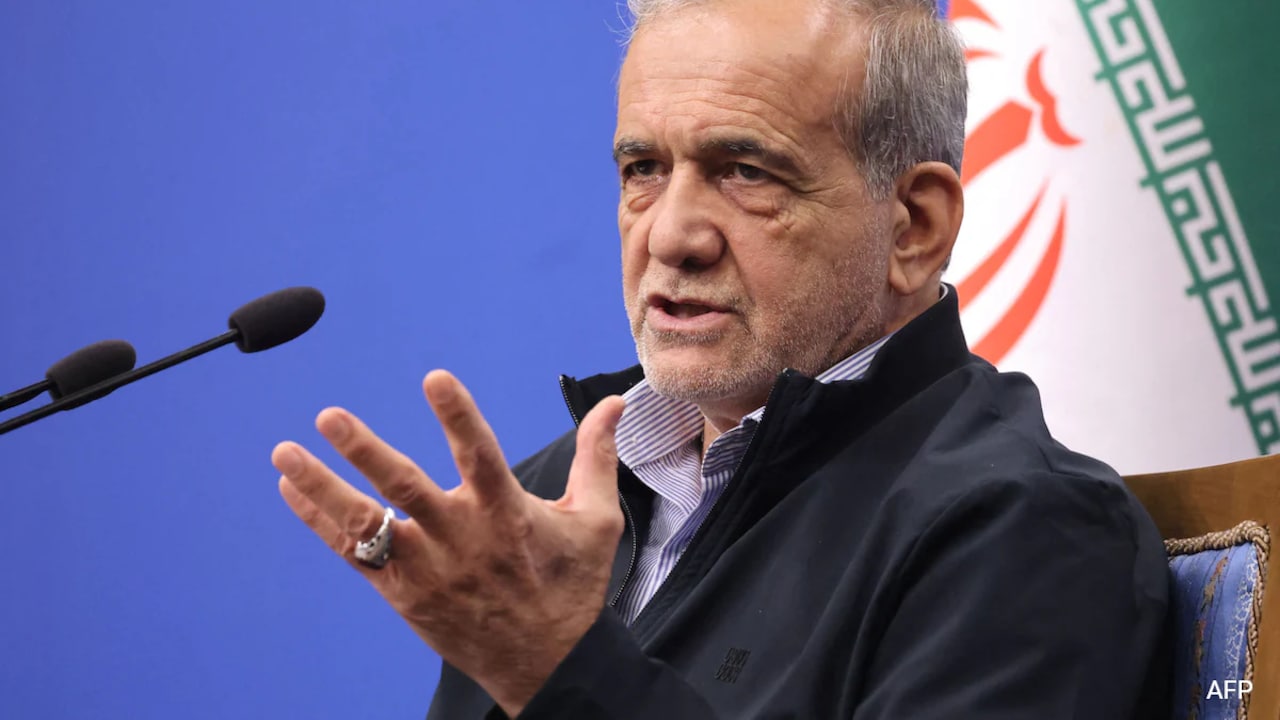
Iran's President Masoud Pezeshkian said on Saturday that the Middle East does not need the United States to be a "regional policeman", with the two countries at war and vying for control of the Strait of Hormuz.
"We do not need a regional policeman," he said on the sidelines of a BRICS summit in India during a meeting with Malaysian Prime Minister Anwar Ibrahim.
"The territorial integrity and security of the region can only be guaranteed by its main players and the countries that comprise it," he added, according to the Iranian presidency.
Iran has been at war since February 28, when US-Israeli strikes killed its supreme leader.
The Islamic Republic retaliated with attacks across the region and blockaded the Strait of Hormuz, through which one-fifth of the world's oil previously flowed.
Iran and the US have since been vying for control of the strategic waterway.
The strait was free to transit before the war, but Iran now requires vessels to obtain permission and is considering a mechanism to impose service fees.
Ships that do not comply are regularly targeted by Iranian strikes, while the US periodically bombs the Iranian coastline to challenge the Islamic Republic's control of the strait.
More than six months into the Middle East war, the blockade continues to drive up oil prices, which soared past $100 a barrel this week.
"Despite all the injustices suffered by our people, we neither desire war nor its continuation. Peace remains our priority," Pezeshkian added.
(Except for the headline, this story has not been edited by NDTV staff and is published from a syndicated feed.)
KioskNews shows a cleaned-up reading view extracted from the publisher’s page — the original always lives on their site, not ours.