How to watch Japan’s mission to Mars
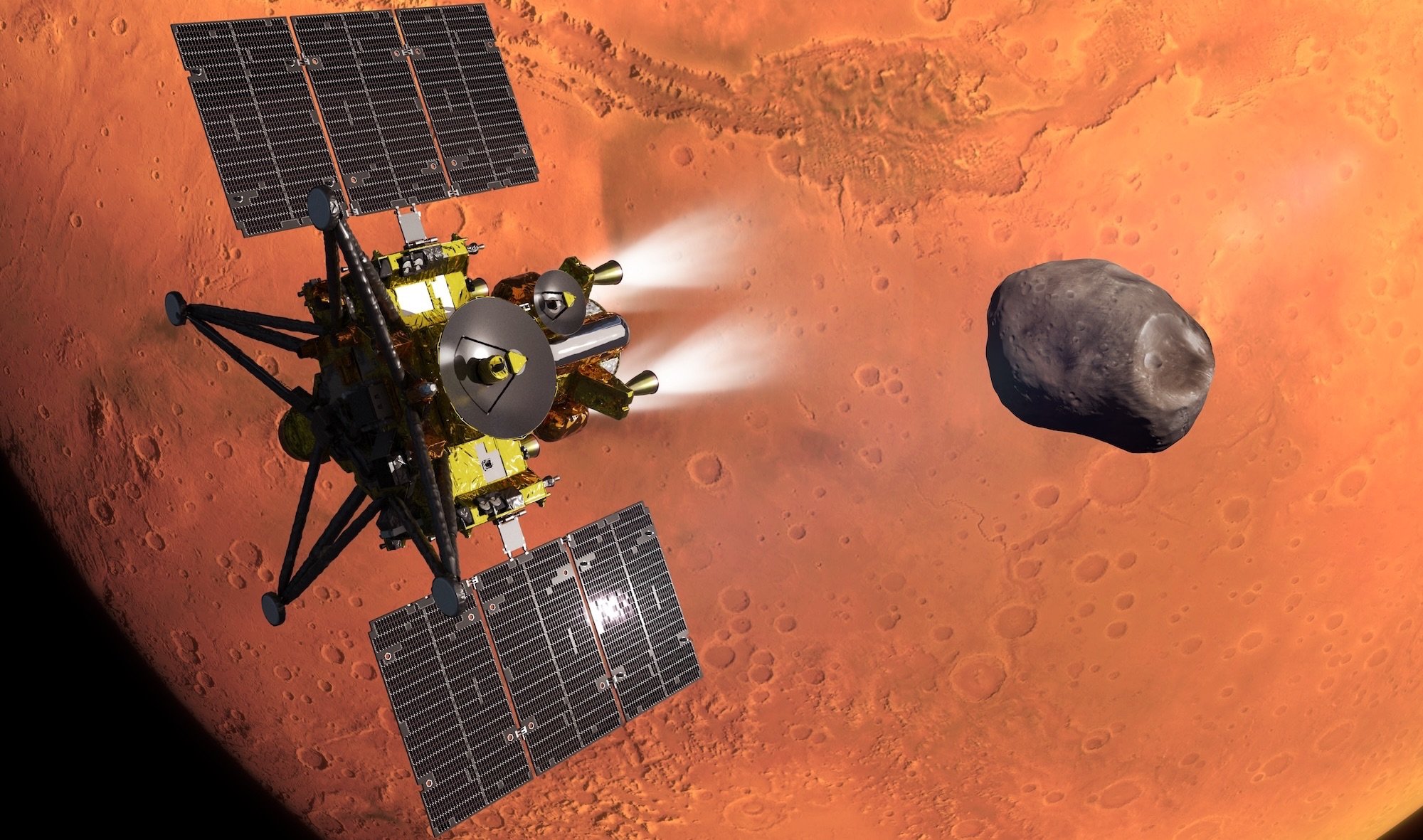
Japan launches a ground-breaking mission to the Mars moon Phobos today, and you can watch live.
The JAXA (Japan Aerospace Exploration Agency) MMX (Martian Moons eXploration) mission aims to collect samples from Phobos, the larger of Mars’ two moons, and deliver it back to Earth for analysis. If successful, the samples could help solve long-standing mysteries about Mars’ moons, including their origin.

Launch live streaming of Martian Moons eXploration (MMX)/H3 Launch Vehicle flight No.10(English)
In 1877, US astronomer Asaph Hall discovered Phobos and its smaller sibling, Deimos. The moons have arguably the most bad-ass names in our solar system: Phobos comes from the ancient Greek word φόβος (phobos), meaning “fear,” and Deimos originates with the ancient Greek word Δεῖμος, which translates to “dread.”
Despite increased attention on Mars in recent decades, astronomers don’t know exactly how the celestial bodies formed. Theories include asteroids or debris leftovers from way back when the solar system formed about 4.5 billion years ago.
“The samples from MMX will bring forth paradigm-shifting science on the Mars system for generations to come, especially as NASA prepares to send the first humans to Mars,” said Nicky Fox, associate administrator and Science Mission Directorate at NASA, said in a statement. While a JAXA mission, NASA worked with the agency to provide instruments and technologies to assist.
The MMX spacecraft launches on top of an H3 rocket at Japan’s Tanegashima Space Center today at 3:41 p.m. EDT (4:41 a.m. Japan Standard Time on October 20). You can watch it live on JAXA’s YouTube page. The mission will get to Phobos in August 2027 and spend at least 16 months surveying the surface before collecting samples. The samples will not return to Earth until at least 2031.
KioskNews shows a cleaned-up reading view extracted from the publisher’s page — the original always lives on their site, not ours.