Britain's sweeping new crackdown on 'antisocial' behavior sparks free speech backlash: 'Peak insanity'

The United Kingdom introduced new "Respect Orders" across England and Wales on Monday, giving authorities expanded powers to crack down on persistent "anti-social" behavior and drawing criticism from free-speech advocates concerned about potential government overreach.
The U.K. government’s order enables police and councils to take stronger "enforcement action" against "adult offenders" of persistent "anti-social" behavior, according to a government news release.
Under the new restrictions, U.K. courts could ban offenders from town centers or prohibit them from drinking in "public hotspots" like local parks, the announcement states. Courts can impose restrictions and requirements through a civil Respect Order, while individuals who breach an order without a reasonable excuse can face criminal prosecution, including potentially unlimited fines or imprisonment.
Under the legislation governing the Respect Orders, anti-social behavior is defined as conduct that has caused, or is likely to cause, harassment, alarm or distress to any person. The definition has prompted concerns from critics that the powers could be applied too broadly, although the law requires judicial approval before an order can be imposed.
UK PRIME MINISTER SAYS FOOTBALL FANS 'SINGLED OUT' BY ALCOHOL BAN NOT IMPOSED ON RUGBY MATCHES
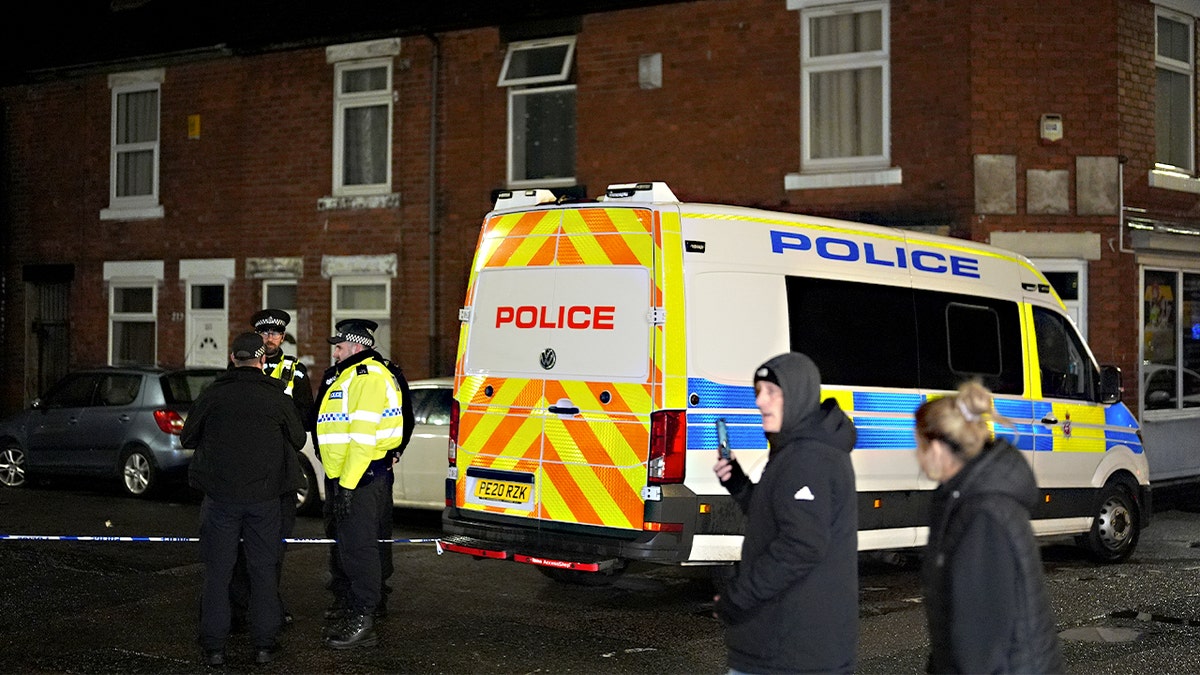
Police officers in the U.K. (Jacob King/PA Images via Getty Images)
"Unchecked, anti-social [behavior] blights our communities," Home Secretary Shabana Mahmood said in a statement. "But it is not inevitable and I won’t accept it. For too long, we have lacked the powers we need to deal with this problem properly. From today, that changes: authorities will be able to take tough action against these offenders."
"This delivers on a commitment we made to the British people in our manifesto," Mahmood continued. "And, most importantly, those who make life a misery for others will now face the consequences of their actions."
Some offenders may be required to "tackle" the "root causes" of their behavior by participating in drug or alcohol treatment or anger-management programs, according to the announcement.
Violating a respect order is considered a criminal offense, giving police the power to arrest anyone on charges of violating the rules, per the press release. Those who defy an order could also face up to two years of jail time.
When reached for comment, the U.K. Cabinet Office referred Fox News Digital to the Home Office, which could not immediately be reached for comment.
Alan Mendoza, co-founder and executive director of U.K.-based think tank the Henry Jackson Society, told Fox News Digital on Tuesday that "vague" definitions under the government's respect orders could result in such enforcement actions being wrongfully "applied to lawful speech or protest."
"I think the breadth of these orders deserves scrutiny, particularly in the case of potentially unlimited fines," Mendoza explained. "The government has a legitimate duty to tackle genuinely antisocial behaviour, but the powers need to be tightly defined and proportionate. Vague or elastic definitions could allow measures intended for serious nuisance or harassment to be applied to lawful speech or protest. We have already seen similar after all with social media posts and police investigations that follow."
"There should be clear statutory limits, proper evidence requirements, judicial oversight and an effective right of appeal," he added. "Online criticism, however unwelcome, should not be treated as antisocial [behavior] simply because it is unpopular or embarrassing to those in authority."
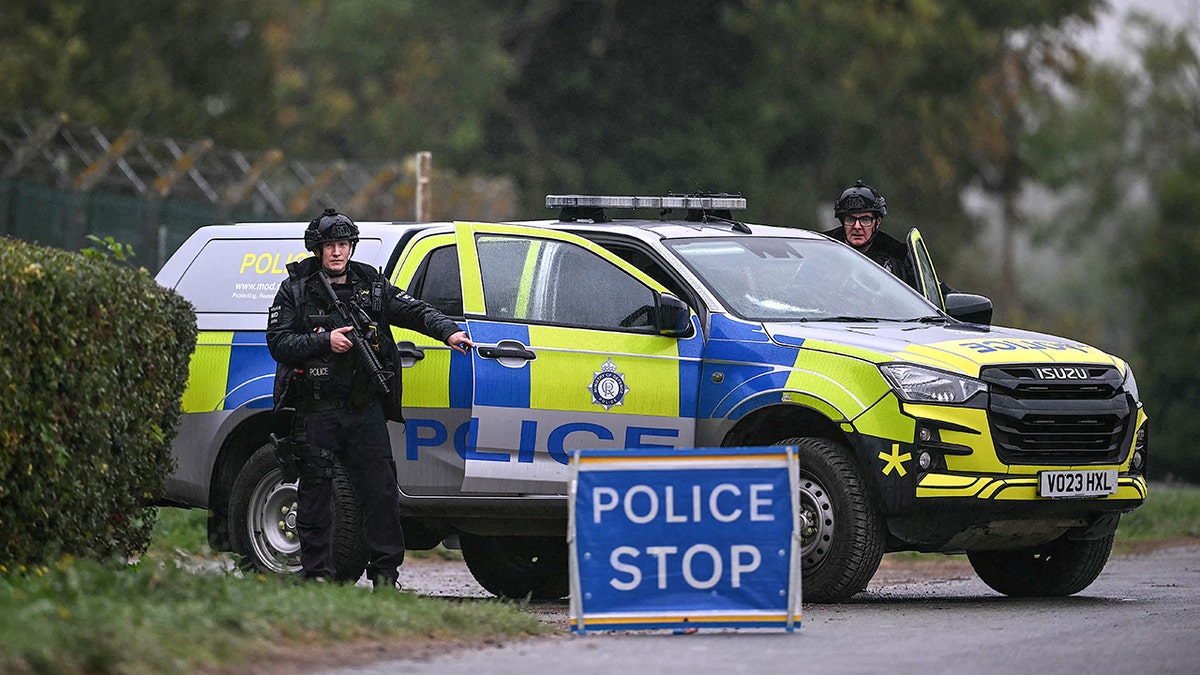
Armed police man a roadblock while posted outside RAF Fairford base in Fairford, south-west England on September 27, 2026, as UK counter-terrorism police investigate an incident near the base in the village of Whelford. British police on September 27 declared a major incident and evacuated villagers living near a base used by the US air force after arresting several men on suspicion of explosives offences. (Photo by JUSTIN TALLIS / AFP via Getty Images) ((Photo by JUSTIN TALLIS / AFP via Getty Images))
UK POLICE APOLOGIZE TO 'FATHER TED' CREATOR GRAHAM LINEHAN FOR ARREST OVER TRANS SOCIAL MEDIA POSTS
Mendoza went on to say that the U.K. government "should be able to demonstrate that these powers are necessary and contain adequate safeguards against arbitrary or disproportionate use."
The orders notably replace civil injunctions for adult offenders and grant U.K. police more enforcement powers, "including the ability to arrest anyone who breaches an order," according to the announcement.
The new restrictions have drawn intense criticism across social media, with one X user claiming in a Monday post that the orders are "mental," while another X account referred to the rules as "peak insanity."
"Laugh all you want at what a joke England has become, but understand that the U.S. will follow right behind if Democrats ever take full power again," the Federalist CEO and co-founder Sean Davis wrote Monday in an X post.
Tech and free speech lawyer Preston Byrne similarly took to social media to criticize the orders, saying that U.K. residents should "keep in mind that one can cause 'harassment, alarm, or distress' in England and Wales by uttering a true statement of fact to someone who doesn't want to hear it, or by offering an honestly-held opinion or belief, spoken or written, which also offends."

Union Jack flags on Westminster Bridge opposite the Houses of Parliament on 6th November 2024 in London, United Kingdom. London is one of the worlds leading tourism destinations, with many famous tourist attractions, with Elizabeth Tower which contains Big Ben being one of the iconic views of the capital. (Mike Kemp/In Pictures via Getty Images)
CLICK HERE TO DOWNLOAD THE FOX NEWS APP
British political commentator Calvin Robinson wrote in a Monday X post responding to the orders that "this tyranny must end."
The U.K. has notably enacted a spate of laws restricting free speech in recent years, including the 2023 Online Safety Act, which gives the country's regulator the authority to impose major fines on digital platforms if they fail to comply with certain requirements.
The new restrictions come amid growing tensions across Europe, where protests and riots have rocked countries, most notably France.
KioskNews shows a cleaned-up reading view extracted from the publisher’s page — the original always lives on their site, not ours.