China's Stock Market Crashes 20%: 3 Reasons Why The Dragon Is Losing Its Fire
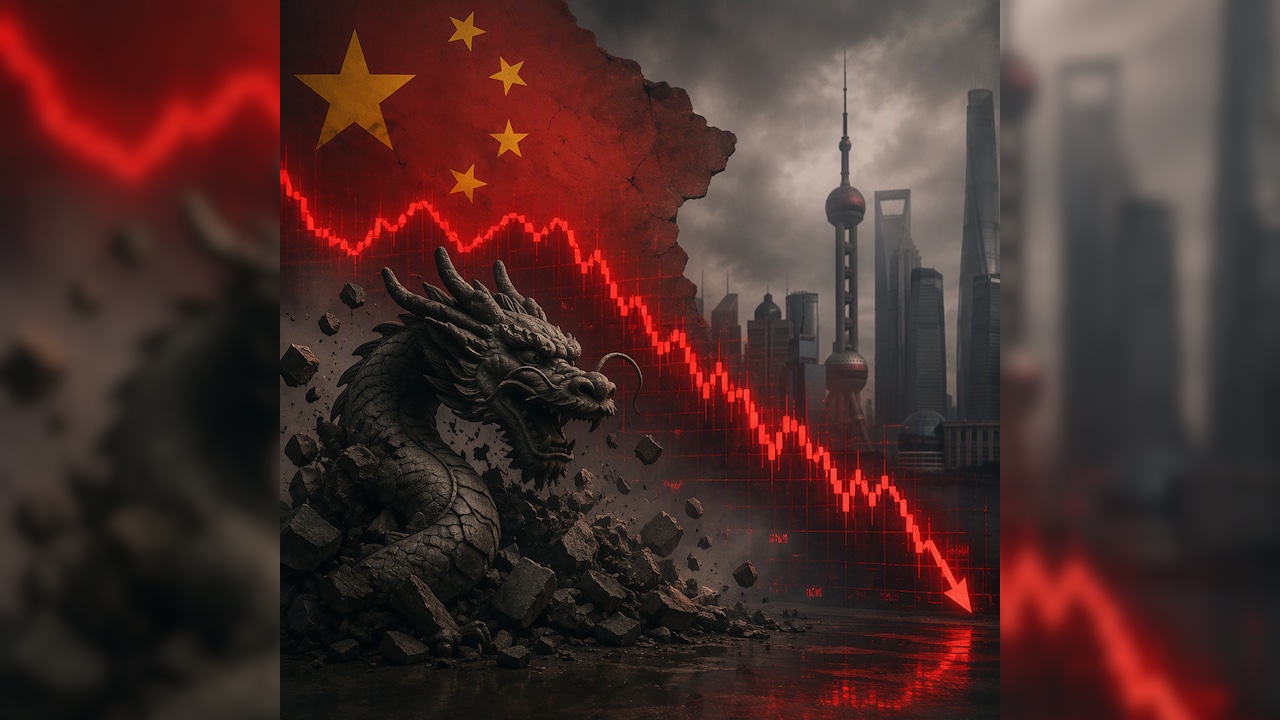
China's stock market is discovering that even an artificial intelligence boom cannot keep investors excited forever. After months of optimism around technology, hopes of government support and a potential economic revival, the country's biggest stocks are facing a sharp reversal.
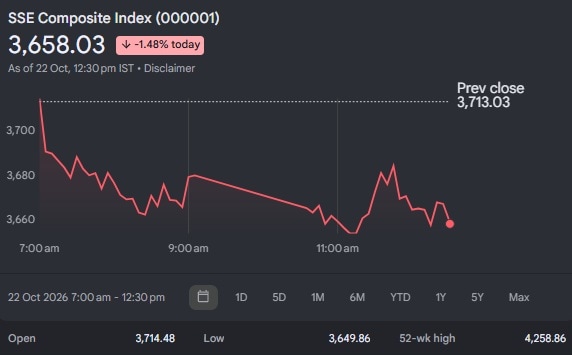
The CSI 300 Index, which tracks 300 major companies listed in Shanghai and Shenzhen, fell as much as 1.6 per cent on Thursday (October 22). The decline took its losses from a June peak to around 20 per cent, putting the benchmark in bear-market territory. A 20 per cent fall from a recent peak is the widely used threshold for a technical bear market.
The sell-off has also spread to Hong Kong-listed Chinese companies. A gauge tracking major stocks in the city dropped as much as 2.9 per cent, reflecting the growing nervousness surrounding China's economic outlook and technology shares.
Also Read | Layoffs Are Rising In Tech, But These Skills Are Helping People Unlock Better Pay
The trouble is not coming from a single direction. Investors are reassessing the prospects of artificial intelligence (AI) stocks, questioning the strength of domestic demand and waiting for clearer signs of policy support.
AI Euphoria Gives Way To Hard Questions
Technology stocks had been among the biggest beneficiaries of investor enthusiasm earlier this year. Expectations of Chinese technological breakthroughs and Beijing's push to strengthen the country's AI industry helped drive money into the sector.
But the mood has changed.
Investors are now looking more closely at company valuations, earnings prospects and the returns businesses can generate from the AI boom. When expectations rise faster than profits, even a promising industry can become vulnerable to a sharp correction.
The weakness is not limited to China. A wider global sell-off in AI-linked stocks has weighed on markets across Asia. Chinese equities have faced additional pressure as investors reconsider whether the sector's earlier gains were justified by its business prospects.
This shift matters for China because its technology companies increasingly rely on equity markets to raise money for expansion. A prolonged slump could make fundraising more difficult and put pressure on companies seeking capital to develop new products and technologies.
The Consumer Is Still Missing From China's Recovery Story
The second problem lies closer to home: Chinese households are not spending strongly enough to convince investors that the economy is on a firm recovery path.
A sustained weakness in consumption can affect businesses across retail, internet services and other consumer-facing industries. Even companies with promising technology or strong market positions need customers willing to spend.
China's third-quarter economic growth exceeded expectations and kept the country on course to meet its annual growth target. That has given policymakers room to continue with targeted support rather than introduce a sweeping new stimulus package.
For investors, however, meeting a growth target is not the same as seeing a broad-based improvement in business conditions.
The market wants evidence that demand is strengthening, companies are generating healthier profits and households are becoming more confident about spending.
Until those signs emerge, economic growth figures alone may not be enough to revive enthusiasm for Chinese stocks.
Beijing's Stimulus Card Has Lost Some Of Its Appeal
Government support has been another important part of the investment case for China. Expectations of policy intervention helped fuel earlier gains as investors bet that authorities would take steps to support growth and stabilise markets.
But hopes of a substantial new stimulus package have weakened. That has left investors questioning how quickly policymakers can improve economic conditions and whether incremental measures will be sufficient.
Chinese authorities have moved to curb selling pressure and support the stock market. However, government-backed purchases may help steady prices without necessarily creating the conditions for a lasting recovery.
For a sustained rebound, investors will want more than temporary relief. They will look for stronger earnings, improving consumer demand and policies that translate into better business conditions.
The latest earnings season has added to the caution. Contemporary Amperex Technology, the world's largest battery maker, reported slower-than-expected quarterly profit growth. Its shares fell 12 per cent on Wednesday as policy support for the sector wound down.
The company's performance illustrates a wider concern: businesses that benefited from policy backing may still struggle to maintain their growth momentum.
Is China's Stock Market A Buying Opportunity?
A 20 per cent correction can make a market look cheaper. But lower prices do not automatically mean better value.
Abhishek Bhilwaria, Partner at BhilwariaFinserv, told NDTV that the correction highlights how quickly sentiment can turn when economic growth, corporate earnings and policy expectations disappoint investors. He pointed to weak domestic consumption, fading hopes of substantial policy stimulus and uncertainty surrounding technology stocks as factors weighing on sentiment.
"While lower valuations may make select Chinese equities attractive, a market correction alone does not necessarily signal a buying opportunity," Bhilwaria said. Investors, he added, need to determine whether share prices are supported by sustainable earnings growth, stronger demand and improving business fundamentals.
Bhilwaria added that the episode underlines the importance of diversification, particularly when investing in markets where policy decisions and geopolitical risks can significantly affect returns.
Any recovery in Chinese equities will depend on a meaningful improvement in investor confidence, corporate earnings and underlying economic conditions, rather than short-lived market rallies.
KioskNews shows a cleaned-up reading view extracted from the publisher’s page — the original always lives on their site, not ours.