10 Mystery Book Masterpieces So Great They Became the Blueprint
When done right, mystery fiction is one of the most enjoyable genres. At its best, it offers suspense, violence, twisty plots, and the irresistible pleasure of solving a puzzle. The most compelling mysteries become something truly irresistible, a whole experience for readers to fully immerse themselves in.
In this regard, a handful of books blazed the trail, establishing the tropes and conventions mystery writers continue to play with today. The titles below introduced new storytelling techniques and character archetypes. Some forged entire subgenres, while others perfected existing formulas so completely that they became the standard against which future mysteries would be judged. In many cases, their influence extends well beyond literature.
'The Name of the Rose' (1980)

"Books speak of books." The Name of the Rose is an unusually philosophical and intellectual mystery novel, combining a classic murder investigation with medieval theology, semiotics, history, and literary criticism. Set inside a secluded fourteenth-century Italian monastery, it follows Franciscan friar William of Baskerville (his name a nod to Sherlock Holmes) and his novice Adso of Melk as they investigate a series of increasingly unsettling deaths.
As more monks die under seemingly impossible circumstances, William employs careful observation and deductive reasoning to uncover secrets. Along the way, author Umberto Eco deliberately pays tribute to earlier detective fiction while simultaneously expanding its possibilities. He showed how the genre could engage with big questions about religion and faith without sacrificing suspense or entertainment value. As a result, countless historical novels owe a debt to The Name of the Rose.
'Gone Girl' (2012)
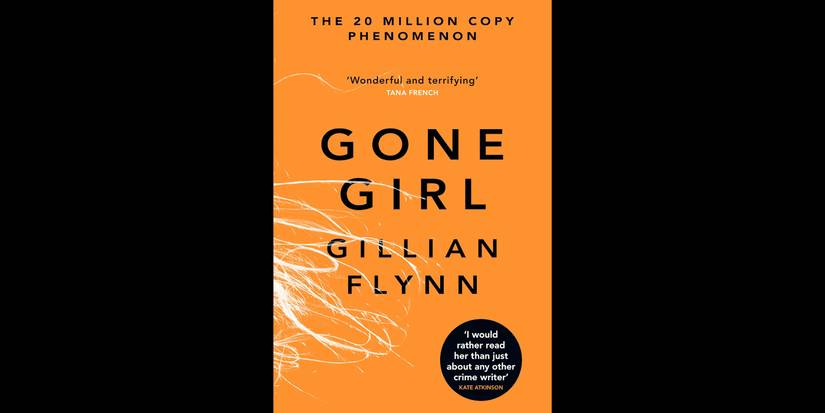
"What are you thinking? How are you feeling? What have we done to each other?" A landmark of 2010s thriller writing, Gone Girl begins when Amy Dunne disappears on the morning of her fifth wedding anniversary, leaving her husband Nick as the obvious prime suspect. However, what initially appears to be a familiar missing-person investigation gradually transforms into something vastly more complicated.
Competing narratives and shocking revelations continually reshape our understanding of the case. This recipe resonated, taking Gone Girl to the top of the bestseller lists and quickly spawning a legion of imitators. On top of the sheer thrills, the book also serves up sharp satire and some iconic paragraphs, like the famous "Cool Girl" monologue. In other words, it hit the zeitgeist perfectly on release, and David Fincher's killer movie adaptation cemented its hold on the culture.
'The Moonstone' (1868)

"Your tears come easy, when you're young, and beginning the world." Published in 1868, The Moonstone by Wilkie Collins is one of the earliest detective novels, helping to establish many of the subgenre's conventions. The plot revolves around the theft of an enormous Indian diamond from an English country house shortly after its presentation as a birthday gift. Suspicion falls upon numerous guests and servants, with multiple narrators recounting the events from their perspectives.
This structure allows Collins to reveal information piece by piece while encouraging readers to solve the mystery themselves. Other detective fiction hallmarks also appear here, like red herrings, hidden motives, multiple suspects, unreliable testimony, and the methodical gathering of evidence. This alone ensures The Moonstone's place in thriller history, yet the novel's quality and inventiveness mean it's still worth reading now.
'Tinker Tailor Soldier Spy' (1974)

"There is one mole. One." Tinker Tailor Soldier Spy ranks among John le Carré's very best novels, and also served as the basis for the stellar film adaptation starring Gary Oldman. In it, retired intelligence officer George Smiley is secretly recruited to identify a Soviet mole operating at the highest levels of Britain's intelligence service. Le Carré steadily ratchets up the tension as Smiley painstakingly reconstructs years of deception through interviews, documents, forgotten conversations, and subtle behavioral clues.
Spy fiction existed long before this book, but Tinker Tailor Soldier Spy was a milestone in terms of replacing glamorous international adventure with quiet psychological warfare and moral ambiguity. Rather than relying on car chases, explosions, or elaborate gadgets, the novel holds our attention through careful plotting and sophisticated characterization, as well as tiny clues scattered among seemingly mundane conversations.
'The Hound of the Baskervilles' (1902)

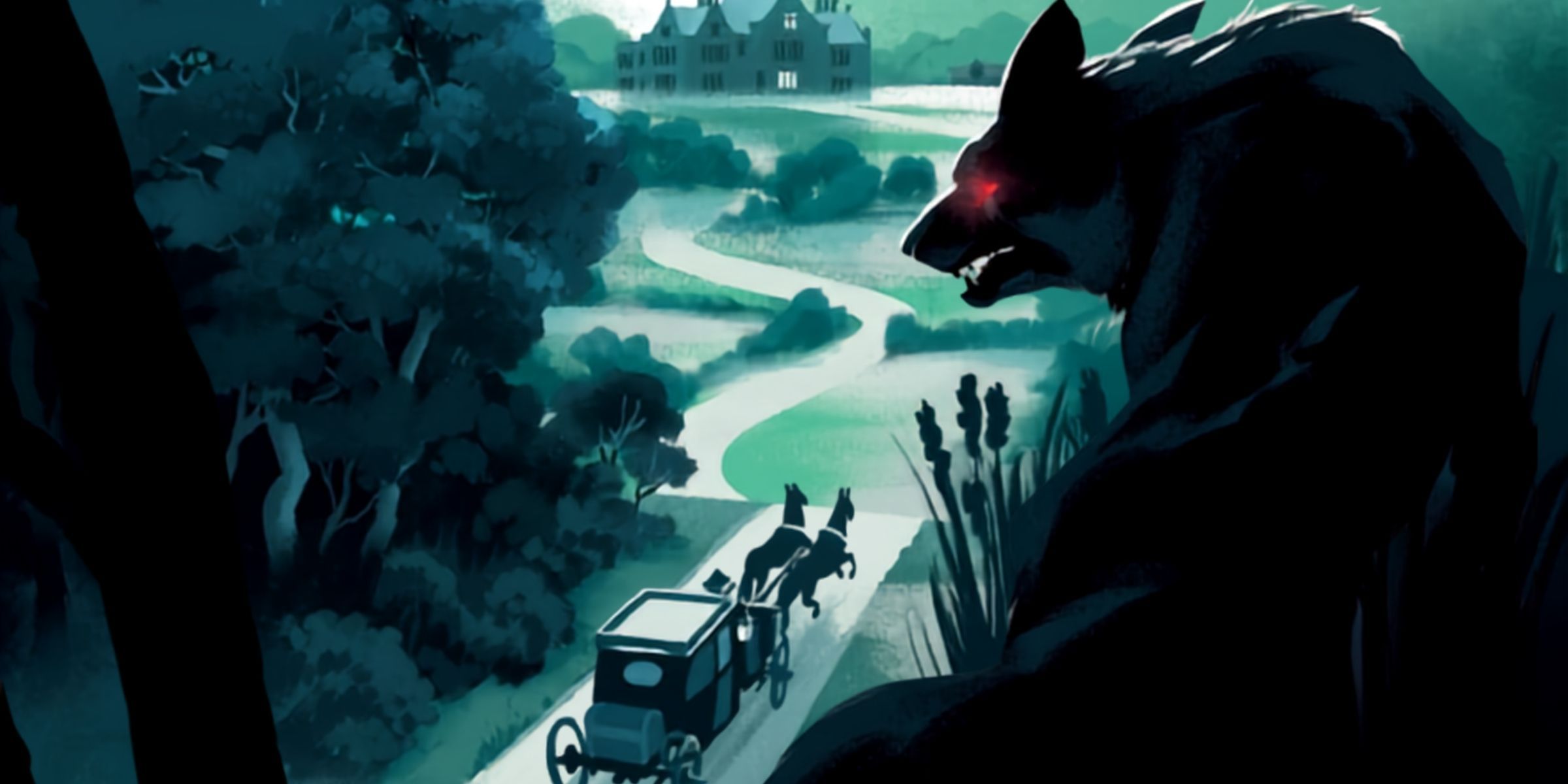
"The world is full of obvious things which nobody by any chance ever observes." No fictional detective has shaped mystery literature more profoundly than Sherlock Holmes, and The Hound of the Baskervilles is perhaps his definitive adventure. In the story, Holmes and Watson investigate the mysterious deaths surrounding the Baskerville family, whose ancestral estate is supposedly haunted by a monstrous hound. As Watson gathers evidence across the isolated Devonshire moors, Holmes quietly assembles the clues needed to separate terrifying legend from rational explanation.
The whole way through, Doyle perfectly balances suspense and logic. The supernatural elements generate genuine unease, yet Holmes consistently reminds readers that every mystery ultimately has a rational solution waiting to be uncovered. Observation and deduction are the name of the game, providing the raw materials for countless detective stories that followed.
'The Maltese Falcon' (1930)

"When you're slapped, you'll take it and like it." One of the classic noirs, The Maltese Falcon centers on Sam Spade, a cynical private detective navigating a morally compromised society. In his gritty, hard-boiled world, virtually everyone has something to hide. The plot kicks into gear after Spade's partner is murdered while looking into what appears to be a routine missing-person case. His search for the truth soon draws him into a deadly contest involving an assortment of criminals, con artists, and fortune hunters, all obsessed with obtaining the legendary jewel-encrusted Falcon.
In Spade, author Dashiell Hammett created the blueprint for the modern private investigator. Spade is the ultimate noir antihero: cynical, financially desperate, and physically aggressive. He lives by a strict personal code of ethics, but he is completely willing to break the law, lie, and manipulate others to survive. In this regard, he's the precursor to later icons like Philip Marlowe.
'The Big Sleep' (1939)

"I was neat, clean, shaved and sober, and I didn't care who knew it." Speaking of Marlowe, Raymond Chandler built on (and arguably perfected) many of Hammett's ideas with The Big Sleep. It follows Marlowe after he is hired by the wealthy General Sternwood to resolve a blackmail attempt. Predictably, the investigation soon spirals into a labyrinth of murder, corruption, gambling, pornography, and deception, where every answer seems to uncover another layer of criminal intrigue.
Unlike traditional puzzle mysteries, The Big Sleep places just as much emphasis on atmosphere and character as on the identity of the culprit. Chandler's version of Los Angeles is a morally decaying world populated by unforgettable criminals, socialites, police officers, and opportunists. His bleak vision is rendered through punchy, concise prose that remains among the genre's finest ever. Needless to say, many writers borrowed from this style.
'The Murder of Roger Ackroyd' (1926)

"The truth, however strange, is always the truth." Frequently ranked among Agatha Christie's greatest masterpieces, The Murder of Roger Ackroyd sees Hercule Poirot pulled out of retirement by the murder of wealthy businessman Roger Ackroyd. Assisted by the local doctor, the eccentric Belgian detective begins investigating a case defined by suspicious relatives, conflicting testimonies, and carefully concealed motives.
What makes the book legendary is the way Christie manipulates readers' expectations. Without violating the rules of fair-play detective fiction, the legendary author constructs one of the most influential plot twists in literary history. The solution hugely expanded the possibilities of what mystery fiction could do, particularly when it came to unreliable narrators. Indeed, The Murder of Roger Ackroyd raised the bar for plot construction, challenging other writers to compose similarly tight, intricate timelines.
'The Murders in the Rue Morgue' (1841)

"The analytical power should not be confused with simple ingenuity." With this groundbreaking tale, Edgar Allan Poe pioneered several detective fiction tropes. The book focuses on C. Auguste Dupin, an eccentric Parisian with extraordinary powers of analysis, who becomes fascinated by the seemingly impossible murders of two women inside a locked room. While the police remain baffled, Dupin approaches the crime through observation and cold logic, thus making him a forerunner to the classic rational investigator.
So many of the subgenre's hallmarks find their early expression here: the brilliant amateur detective, the admiring companion who narrates the investigation, the fair presentation of clues, the emphasis on deduction, the contrast between the bumbling police and the superior sleuth. Sherlock Holmes, Hercule Poirot, Nero Wolfe, and many others all trace their literary ancestry back to Dupin.
'And Then There Were None' (1939)

"One by one..." Although The Murder of Roger Ackroyd is great, And Then There Were None is Christie's defining work. It begins when ten strangers, each hiding a dark secret from their past, receive mysterious invitations to a remote island. Shortly after arriving, they discover that their unseen host has accused each of them of murder. Then, one by one, the guests begin dying in accordance with the verses of a sinister nursery rhyme, leaving the survivors to determine who among them is responsible before it's too late.
In a radical departure from her usual formula, Christie wrote this novel completely devoid of a sleuth. Instead, the characters are forced to investigate each other, deprived of the intellect or ingenuity of a Poirot. This approach, combined with the isolated setting, shrinking cast, and relentless pacing, generates extraordinary suspense, amped up further by the fact that we know the next strike is inevitable. In this regard, on top of being a masterful mystery, And Then There Were None is almost like a proto-slasher, decades before the subgenre was a gleam in Michael Powell's eye.
KioskNews shows a cleaned-up reading view extracted from the publisher’s page — the original always lives on their site, not ours.