EXPLAINER: What 'piercing the corporate veil' means
Make this your preferred source to get more updates from this publisher on Google.
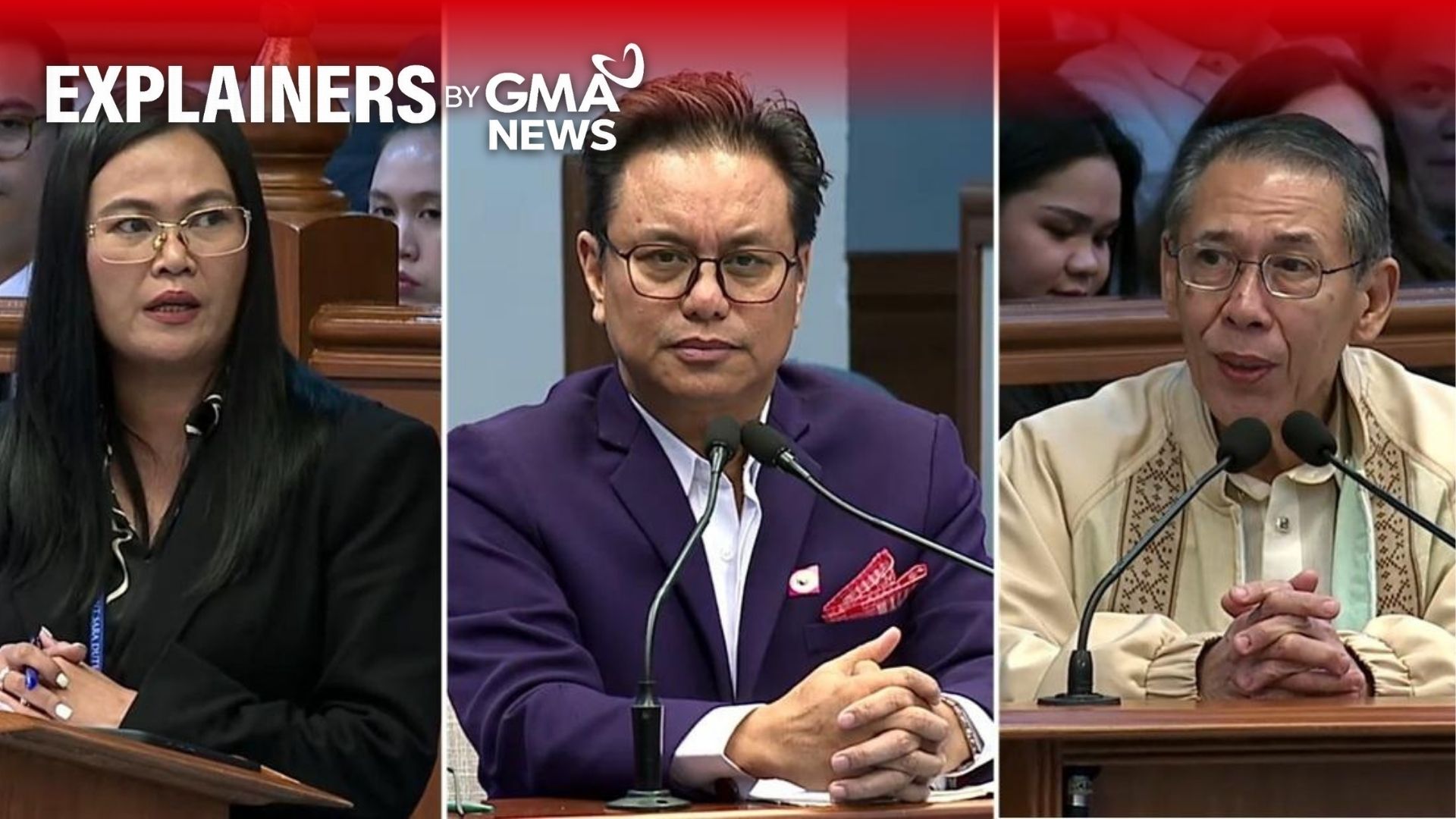
The doctrine of piercing the corporate veil has been raised during the impeachment trial of Vice President Sara Duterte, as defense and prosecution lawyers debated the assets and earnings of companies linked to Duterte and her husband, lawyer Manases Carpio.
The issue arose after Atty. Alexander Cabrera, a financial forensic analyst presented as a prosecution witness, testified that Duterte and Carpio supposedly had unexplained wealth and undeclared assets amounting to P817.87 million.
Cabrera said he arrived at the figure by piercing the corporate veil, a legal doctrine that allows courts, under certain circumstances, to disregard a corporation’s separate legal personality and hold the individuals behind it accountable.
READ: Who is Alexander Cabrera?
Defense lead counsel Sheila Sison later challenged Cabrera’s testimony, describing his conclusions as “unbridled and erroneous conclusions of law and fact.”
She cited the Supreme Court’s ruling in Kukan International Corporation v. Reyes, which states that "wrongdoing must be established clearly and convincingly before a corporation’s separate juridical personality can be disregarded," and that such wrongdoing "cannot be presumed."
“Otherwise an injustice that was never intended may result from an erroneous application. And it bears reiterating that piercing the veil of corporate fiction is frowned upon,” Sison said.
When can the corporate veil be pierced?
In its ruling, the Supreme Court said the doctrine may be applied when a corporation’s separate legal personality is used to “defeat public convenience, justify wrong, protect fraud, or defend crime, or when it serves as a shield to confuse legitimate issues."
The doctrine may also apply when a corporation is "merely the alter ego or business conduit of an individual, or when its organization, control and operations effectively make it an instrumentality, agency or extension of another person or corporation."
The High Court also explained that while a corporation may be established for any lawful purpose, courts may treat it as "an association of persons or merge two corporations into one when their separate legal identities are used to conceal fraud or illegality."
In such cases, the corporate structure cannot be used to shield those responsible from liability.
Sison said she cited the ruling to "avoid misleading the public" watching the impeachment proceedings.
She questioned the basis of Cabrera’s conclusions, saying the witness had repeatedly acknowledged that he had insufficient time to conduct his analysis and did not have all the documents needed to form a sufficient basis for a complete opinion.
“Now that witness has answered over time and repeatedly that unang una sa lahat, wala siyang sapat na oras. Pangalawa, hindi niya hawak ang lahat ng dokumento to form sufficient basis or ng kumpletong opinyon,” Sison said.
(That witness has repeatedly answered that, first and foremost, he did not have sufficient time. Second, he did not have all the documents needed to establish a sufficient basis for a complete opinion.)
Diokno moved to strike Sison’s characterization of Cabrera’s testimony as “erroneous,” arguing that it was a legal conclusion and was “totally out of order.”
“It’s up to the Honorable Court to decide whether the opinion of Atty. Cabrera is acceptable or not. And it’s not in our place, whether I’m for the prosecution or for the defense, to make such irresponsible statements. I move to strike, Your Honor,” Diokno said.
Senate impeachment court presiding officer Francis Escudero, however, ruled that Sison’s remarks would remain on the record.— MCG, GMA News
Follow GMA News Online on Facebook for real-time news and developments in the Philippines and around the world.
KioskNews shows a cleaned-up reading view extracted from the publisher’s page — the original always lives on their site, not ours.