Filipinos split on Marcos’ South China Sea handling amid row over Jing Quan’s remarks
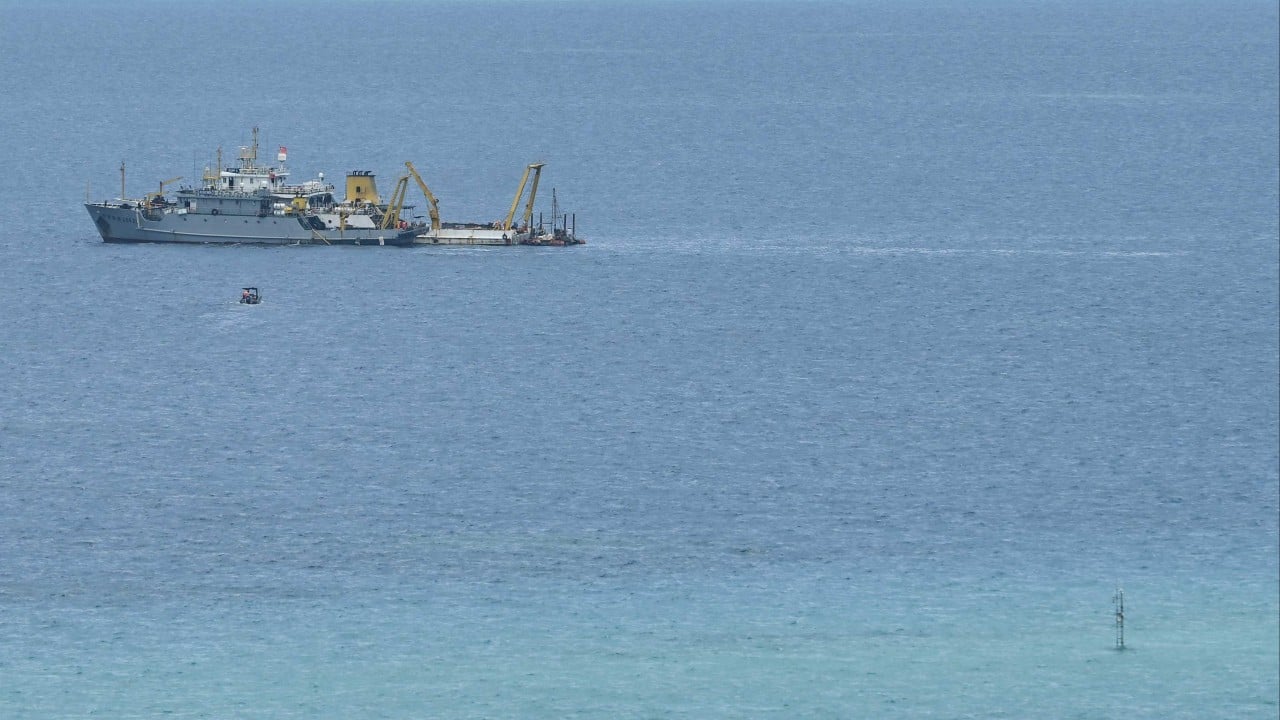
Filipinos are almost evenly divided over the Marcos administration’s handling of the maritime dispute with China, even as nearly three in four favour diplomacy over confrontation, according to a new survey.
That preference has taken on added significance after recent remarks by China’s ambassador to Manila sparked a diplomatic row ahead of November’s Asean summit.
The feud underscored the challenge of managing tensions with Beijing, and increasingly hostile rhetoric could make the diplomatic path backed by most Filipinos harder to sustain, analysts say.
A nationwide poll of 1,487 Filipino adults, conducted from August 18 to 23 and released on October 20 by Momentum Research, found that 45.2 per cent considered President Ferdinand Marcos Jnr’s administration effective in handling tensions in the South China Sea, while 45 per cent disagreed, with the remainder undecided or declining to answer.
“Nearly three in four prefer diplomacy over show of strength,” Momentum said.
Retired rear admiral Roy Vincent Trinidad, a spokesman for the military’s operations in the West Philippine Sea – the eastern parts of the South China Sea that are within Manila’s territorial waters – said the findings reflected the public’s preference for peace.
He said the military’s activities were not a “show of strength for aggression”, but part of its constitutional mandate.
Retired Supreme Court associate justice Antonio Carpio said “the great majority of Filipinos have always been for a peaceful settlement of the dispute with China and the same is true for all cabinet officials, past and present [and] for the armed forces”.
Anna Dominique “Nikki” Coseteng, a former senator and president of Diliman College, which sponsored the South China Sea forum, attributed Filipinos’ preference for peace to cultural ties between Manila and Beijing.
“The people want peace. It does not matter whether against China, against America, against Russia, against whoever else. We don’t want war,” she said.
Dr Carlos Tabunda Jnr, dean of the School of International Relations at New Era University, said the survey’s result reflected the belief among some Filipinos that their country would lose to China in a military conflict.
“There are realistic Filipinos who believe that we can’t [fight on our own],” he said, adding that Manila could not simply assume Washington would come to its aid.
Beijing claims most of the South China Sea, rejecting rival claims from other countries, including the Philippines, and a 2016 international ruling that its assertion over the waterway has no legal basis.
Calling the judgment “null and void”, China has maintained that the dispute should be resolved through bilateral negotiations.
09:58
Will Batanes become the next South China Sea flashpoint?
Turning down the temperature
While most Filipinos supported diplomacy in the survey, Chinese envoy Jing Quan’s remarks have raised concerns that an escalating war of words could narrow the space for a peaceful resolution of the maritime discord.
On October 14, Philippine defence chief Gilberto Teodoro Jnr called China the region’s “real troublemaker”. Asked to respond the following day, Jing said the Philippines should feel fortunate to have China as a neighbour, adding: “If we want to use force, we may easily win. But no, we will not choose to use force. And we love peace.”
The comments saw Manila summon Jing on Monday, saying they could be interpreted as a threat while lawmakers sought to declare him persona non grata. China accused the Philippines of taking them out of context.
Nearly 100 student organisations also “banned” Jing from their campuses, vowing to resist what they described as China’s threats and false narratives.
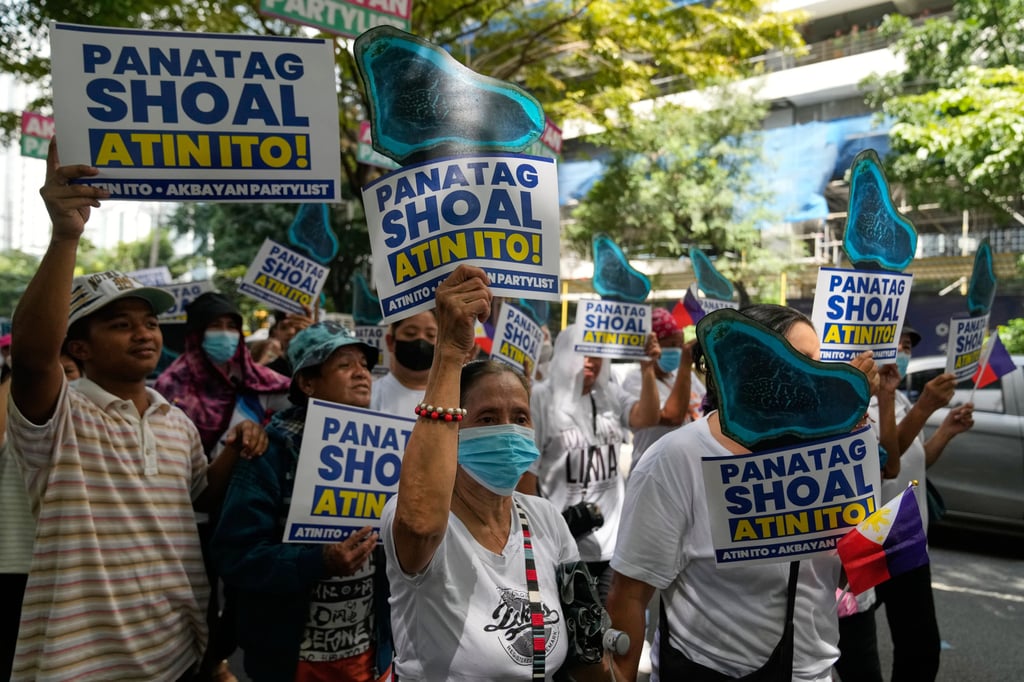
Beyond the wrangling, analysts said the challenge for Manila was how to defend its maritime interests without allowing a verbal duel to undermine diplomacy.
Marcos’ former national security adviser and political scientist Dr Clarita Carlos said Jing should have been “more prudent” in his remarks to the media, though she understood his perspective.
As a seasoned diplomat who had served in Washington, he was accustomed to Americans’ blunt style, she said, but should have recognised that Filipinos were “more sensitive”.
Tabunda criticised Jing’s choice of words, saying the ambassador should have expressed himself more carefully, even though he agreed with the substance of his remarks.
“This word war and social media hostilities should not be fought and cannot be won,” said Dr Lucio Blanco Pitlo, a Filipino geopolitics and security analyst who had served as president of the Philippine Association for Chinese Studies.
“There is no shortage of zealous nationalists on both sides that can sustain this unhealthy dynamic that may affect diplomatic space if left unchecked,” Pitlo said.
Retired rear admiral Rommel Jude Ong, who started the navy’s South China Sea operations, said Jing’s statement was a “threat directed at our moral centre and unbecoming for a diplomat, but it revealed the true position of Beijing”.
“They attack our sense of nation and the legitimacy of our sovereign rights, [instilling] fear among our people and indecision in our political leadership. Their desired end state for us is capitulation.”
KioskNews shows a cleaned-up reading view extracted from the publisher’s page — the original always lives on their site, not ours.