Hong Kong must revive growth and drive reforms with government’s ‘visible hand’
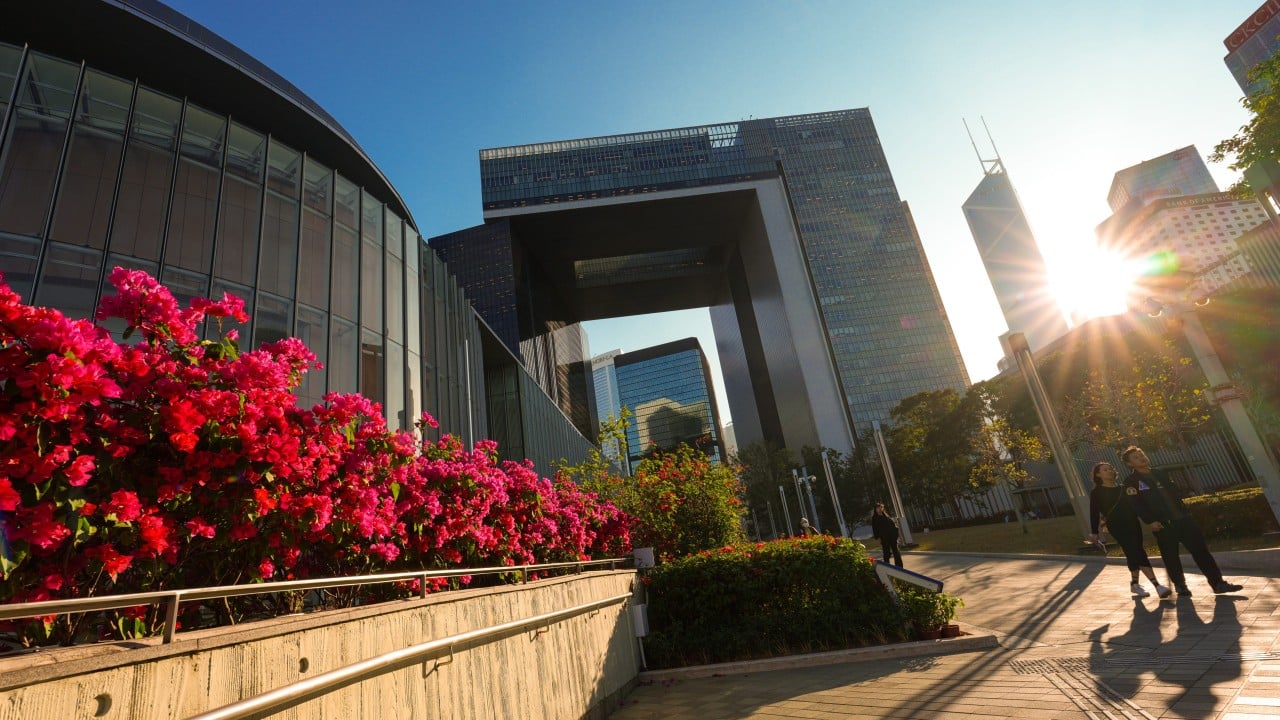
Hong Kong authorities should act as a “visible hand” to break down barriers erected by vested interests and revive growth momentum through reform under its maiden five-year plan, a former Beijing official overseeing the city’s affairs has said.
Deng Zhonghua, former deputy director of the State Council’s Hong Kong and Macau Affairs Office, also said on Saturday that Hong Kong must empower emerging industries through deregulation and improve mechanisms for sharing the benefits of development in housing, healthcare, elderly care and education.
Deng said the city’s five-year blueprint would address “deep-rooted conflicts” in Hong Kong, including entrenched vested interests and uneven benefits from development, through a reform-oriented approach.
“[The five-year plan] shifted from a free market adopting a positive non-interventionist approach to an organic combination of an efficient market and a capable government,” said Deng, who is now president of the semi-official Chinese Association of Hong Kong and Macau Studies think tank.
“[This entails] performing the role of the ‘visible hand’ of the government to effectively regulate and guide in areas where the market fails and reinforce the leading role.”
Speaking at a seminar in Shenzhen, titled “Five-year plans of Hong Kong and Macau and their Integration into and Service to the Overall National Development”, Deng described Hong Kong’s five-year plan as a milestone in the implementation of the “one country, two systems” principle, which fully aligned with the national blueprint.
Pointing to long-standing challenges in Hong Kong and Macau, including a narrow economic structure, insufficient growth momentum, entrenched vested interests and uneven distribution of development benefits among residents, Deng said the five-year plan for both cities sought to tackle these issues through reform.
“The key to overcoming these challenges lies in breaking down blockades of vested interests, fostering and expanding new growth drivers and new tracks,” Deng said.
“We can only achieve breakthroughs in economic and social development and break down blockades of vested interests through reform. We can only generate new growth momentum and unleash the vitality through innovation.”
Highlighting reform measures in Hong Kong’s five-year plan, including developing an international innovation and technology centre and a high-calibre talent hub, Deng urged the government to maintain a reform mindset throughout implementation, particularly in supporting emerging industries and improving residents’ livelihoods.
“The implementation of the five-year plan relies on innovation,” he said. “It is not only about implementing the reform and innovative measures well, but also about further breaking free from fixed mindsets and path dependence in actual work.”
Deng urged officials to pursue institutional innovation to deregulate and empower the development of emerging industries, establish a fault-tolerant and error-correction mechanism with bold reform and innovation within the legal framework.
He also called for improving mechanisms for sharing the fruits of development in livelihood areas such as housing, healthcare, elderly care and education.
Deng also said the five-year plan marked a shift in Hong Kong’s governance approach and would improve governance effectiveness, but it must be upheld to turn the blueprint into practice.
He noted that the blueprint enabled Hong Kong and Macau to shift from passive responses and short-term measures to proactive, comprehensive and long-term planning for future development.
It preserved core advantages such as free-port status, low tax rates, marketisation and the rule of law, while strengthening development guidance through policy incentives and government funding, Deng added.
At the same event, Gao Xiang, president of the Chinese Academy of Social Sciences, a prominent Beijing-based state research institute and think tank, said the five-year blueprint served as a key instrument of executive-led governance.
He noted that Hong Kong’s five-year plan set out more than a hundred indicators that would allow the outcomes of governance to be examined.
“Under the framework of the five-year plan, executive-led governance becomes an operable, verifiable and accountable institutional arrangement,” Gao added.
KioskNews shows a cleaned-up reading view extracted from the publisher’s page — the original always lives on their site, not ours.