Economic fears fuel protests in India, France as ‘social contract’ breaks down
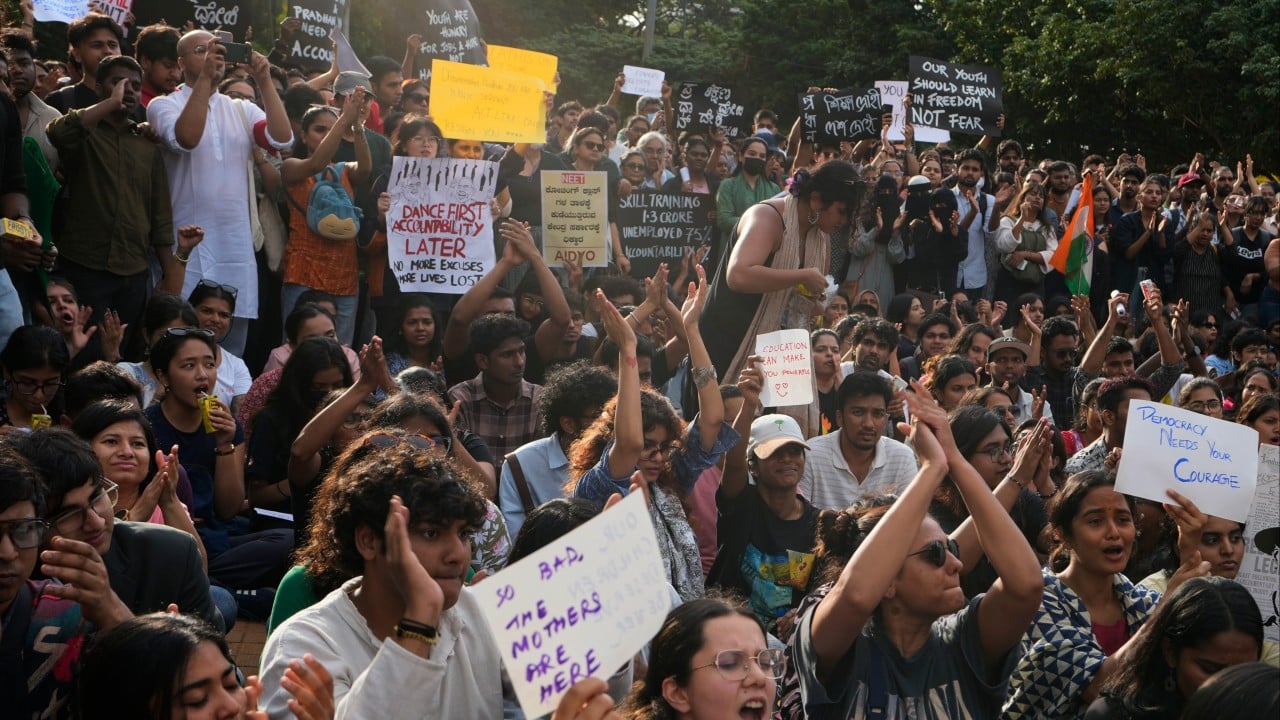
Recent youth-led protests in New Delhi and other cities in India have fuelled allegations that they are connected to unrest in France and elsewhere in Europe, with an influential Hindu nationalist organisation warning of foreign forces seeking to destabilise societies.
While analysts caution against concluding that foreign interference played a role in demonstrations in India, they say protesters in Europe and India share similar concerns, reflecting their mounting anger that education and hard work no longer guarantee them economic security or social mobility.
In an address to mark the Hindu festival of Vijayadashami on Tuesday, Mohan Bhagwat, chief of the Rashtriya Swayamsevak Sangh, said: “A storm has swept in from the West, driven by a demonic resolve to destroy and devastate all that is decent, auspicious and rooted in cultural and human values, both in Bharat [India] and across the world.”
He cited protests in France, Albania, Nepal and Bangladesh as examples of attempts to bring about a change in government without offering solutions to societal problems.
Prime Minister Narendra Modi urged the Indian people in his own Vijayadashami address on the same day to unite against “the enemies of Mother India” that attacked the country’s dignity, divide society or harbour hatred towards its culture. He did not refer to the unrest in Europe in his comments.
Modi later praised Bhagwat’s address as “very motivating”.
A Fox News Digital investigation has alleged links between the protests in France and India, describing what it called a “red-green protest ecosystem”. It said it had identified 101 organisations involved in coordinating, organising or amplifying protests, citing groups it said had unified the same protest messages in the two countries.
In India, students protested in Delhi in June and July, calling for an overhaul of the education system to improve transparency and accountability.
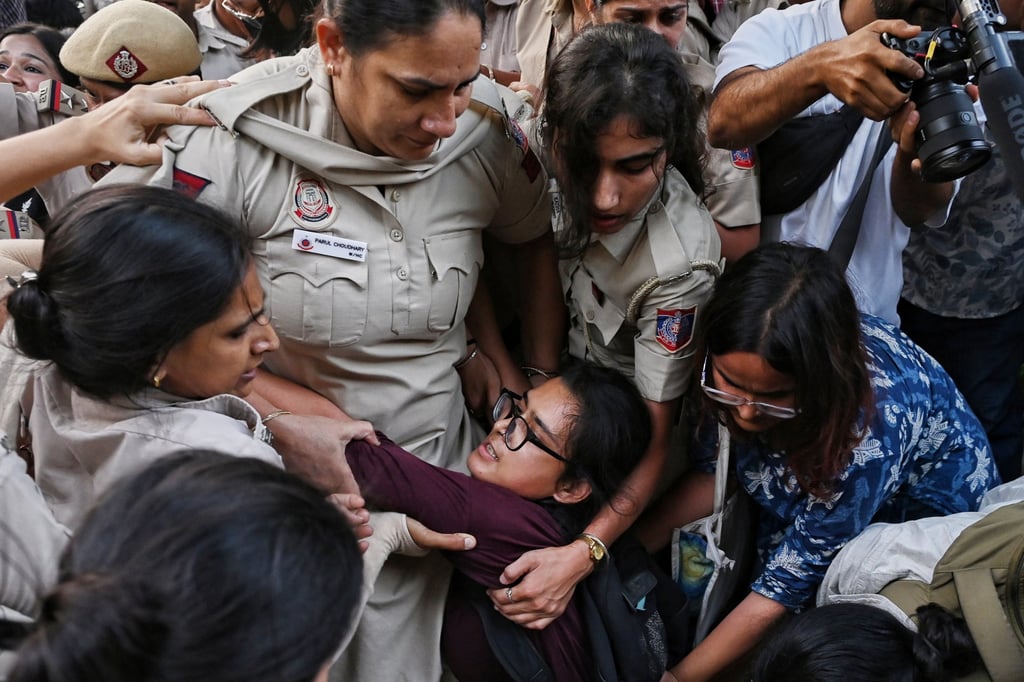
Earlier this month, thousands of young Indians and opposition supporters in Delhi and Mumbai protested against alleged irregularities over revisions to electoral rolls, saying such a move would disenfranchise eligible voters. They demanded the resignation of chief election commissioner Gyanesh Kumar, who defended the move and said it would remove duplicate and ineligible entries.
Some of the protests were spearheaded by the Cockroach Janata Party (CJP), whose name was sparked by remarks by Chief Justice Surya Kant, who reportedly referred to people with fake or bogus degrees as “cockroaches”. The comments were widely interpreted as a swipe at young Indians struggling with education and employment, two key issues that the CJP has championed.
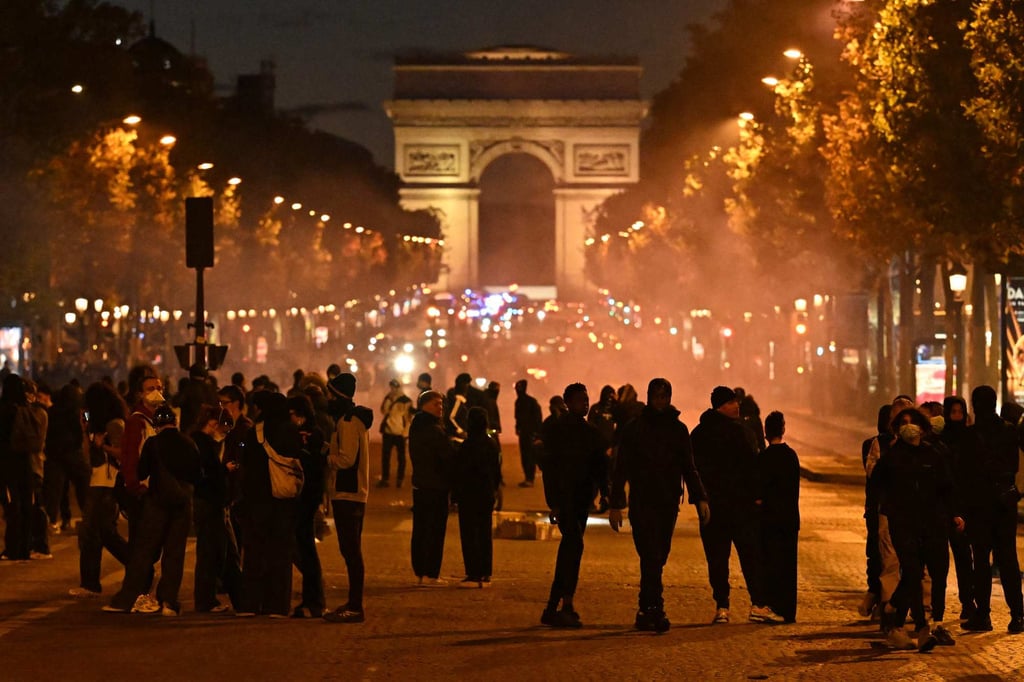
In France, hundreds of thousands took part in demonstrations over cost of living, public services and school conditions, beginning last month. The interior ministry estimated that about 550,000 people joined 110 marches on October 17, when the protests were at their height, while organisers put the turnout at 800,000.
Cedomir Nestorovic, a Singapore-based professor of geopolitics at ESSEC Business School, said the protests in France and India pointed to a breakdown of the “social contract” linking education to upward social mobility.
Citing challenges in the education system as a spark, Nestorovic said: “In both nations, the younger generation senses that the traditional promise – that working hard within the educational system guarantees economic security and middle-class stability – is breaking down.”
Nestorovic said that while economic pressures were a trigger for the demonstrations in the two countries, the protesters in India were also demanding democratic accountability.
“In France, the movement fundamentally defends the traditional public welfare state against government austerity, centring on protecting public resources, capping class sizes and resisting budget cuts,” he said.
“In India, the primary demand centres on systemic fairness and administrative integrity,” he added.
Jamus Lim, an associate professor of economics at ESSEC Business School Asia-Pacific, cautioned against drawing too many parallels between the protests.
“The French protests have a much stronger political element, including not just students but also opportunists from the French left, as well as more unsavoury elements of society taking advantage of the chaos to loot and pillage,” he said.
Praveen Rai, academic secretary of the India-based Centre for the Study of Developing Societies, argued that the demonstrations in India were being driven more by opposition parties than by young people.
“Frequent street protests and anti-statism disrupt routine government functioning, cause hardships to common people and degrade economic growth,” he said.
Rai said left-wing and socialist forces, along with civil society groups opposed to right-wing and centrist politics, were capitalising on economic grievances to mobilise opposition against the government.
“Unemployment, higher cost of living and growing economic divide are major problems but movements against these issues are restricted to some urban areas and are not pan-Indian,” he added.
Christopher Blackburn, a London-based independent political commentator, said that while concerns about potential external influence were legitimate, allegations of its link to the protests would require evidence.
He said the appropriate response was for authorities to respect the right to peaceful demonstrations and facilitate dialogue to address the protesters’ grievances.
02:00
India’s ‘cockroach’ youth movement pledges to press on despite mass detentions
“India’s electoral and federal institutions provide resilience, but leaders should not take that for granted,” Blackburn said.
Shawn Balakrishnan, a partner for Asia at Penta Group, said a major risk for the governments in India and France was an erosion of trust in institutions due to dissatisfaction with specific policies.
“For India, sustained youth discontent could undermine the government’s narrative of economic progress, particularly if growth fails to deliver jobs and upward mobility,” he said.
The challenge could be more immediate in France, where student mobilisation could converge with wider labour and public-sector grievances, increasing political pressure ahead of the 2027 presidential election, Balakrishnan said.
Tiziano Marino, a Rome-based adviser to the Observatory on India, said the impact of the protests in India was likely to emerge over the medium to long term.
“In France, by contrast, the protests are already playing a central role in electoral debate, and their political repercussions are likely to be felt in the short term, shaping the outcome of the presidential election,” he said.
KioskNews shows a cleaned-up reading view extracted from the publisher’s page — the original always lives on their site, not ours.