How Hong Kong can go from passive trade hub to regional control tower
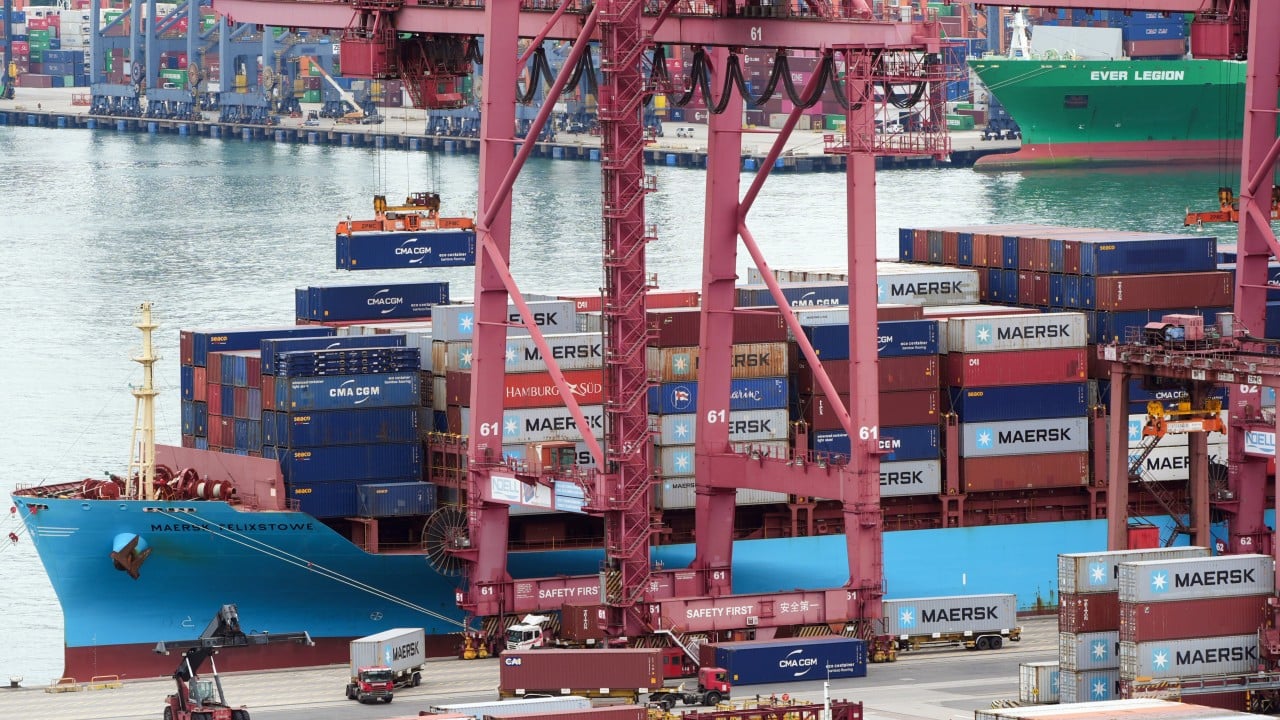
This year has opened a rare window of relative calm in global commerce. On October 8, the World Trade Organization doubled its forecast for global goods trade growth, from 1.9 to 3.9 per cent. The easing of US-China and Europe-China tensions has given open economies some breathing space.
Hong Kong has seized the moment. Its exports rose 42.5 per cent year on year in the first eight months of 2026, with figures from August alone up 53 per cent, driven largely by AI-related equipment and high-value electronic components.
A deeper transformation lurks beneath the headline numbers. Hong Kong is no longer merely a passive trade hub. For decades, its role in global commerce was defined by its position as a buffer in geopolitical cross-currents. The traditional model of “Made in China, shipped via Hong Kong, consumed in the West” made the city a passage point rather than a decision point.
The question now is whether Hong Kong can reposition itself as a regional supply-chain management hub linking diverse Asian production networks with Western markets. Three structural shifts are creating this opportunity.
First, Hong Kong’s trade is concentrating in high‑value goods. Nearly 68 per cent of exports to the United States through to August were telecoms equipment, computer parts and semiconductors, while re‑exports to mainland China are increasingly dominated by high‑end chips and AI servers. These compact, high‑value products demand fast, secure logistics, an area where Hong Kong’s air freight capacity gives it a distinct edge.
Second, Hong Kong’s sourcing base is diversifying across Asia. The share of mainland-origin goods in Hong Kong’s re-exports to the US has fallen from 72.9 per cent in 2020 to 23.8 per cent in the first eight months of 2026. Vietnam has emerged as the largest source, accounting for 42.9 per cent, with India, South Korea, Thailand and Malaysia close behind. Hong Kong is upgrading from a “China window” to a core node in Asia’s production network.
05:39
‘Business is business’: HK commerce chief shrugs off geopolitics as foreign firms pour in
Third, offshore trade is rising. Offshore trade now exceeds HK$5 trillion (US$637.1 billion) annually, surpassing traditional re-exports. Increasingly, goods do not physically pass through Hong Kong, yet transactions such as orders, financing, settlement and risk management are completed in the city. The value added is shifting from logistics to finance and compliance. Hong Kong is becoming a hub for “transactional transit”, managing flows of capital and contracts rather than containers.
Together, these trends create the basis for Hong Kong to evolve from a conduit for China-centred manufacturing into a control tower for a multi-node, multi-rule supply chain network. The test of that role is most evident in its relationship with the US. It is one of the few economies where the US consistently runs a goods trade surplus, reaching US$28.5 billion in 2025, up 30.2 per cent from the previous year.
However, Hong Kong has yet to institutionalise its role as a true control tower. Decisions on order routing, inventory allocation, trade finance, compliance sign-off, currency hedging and contract arbitration remain fragmented. On this test, Hong Kong has assets but not yet an architecture. The policy task is to convert emerging trade patterns into institutionalised decision-making functions. Four pillars define how Hong Kong can turn this into a durable role.
First, Hong Kong’s offshore wealth management sector is now the largest in the world, but supply-chain finance – receivables financing, trade settlement, currency hedging – is not yet anchored here at scale. Embedding capital-market capacity into trade finance would move Hong Kong from a transit point to a decision node. The gap is not in capital; it is the trade-finance product architecture that turns capital into working-capital solutions for Asian suppliers.
Second, compliance and law. Common law and arbitration give Hong Kong a neutral forum where contracts shaped by both US and Chinese rules can be enforced. Mutual recognition is aspirational, not operational; the task is to build the case law and enforcement practice that make Hong Kong the default venue for cross-regime disputes.
Third, digital and logistics. Electronic bills of lading and real-time tracking let Hong Kong manage supply chains even when goods bypass its ports. A data framework accepted by both China and the US remains a long-term goal; meanwhile, Hong Kong can build trusted digital trade infrastructure and pilot data sandboxes with major partners.
Fourth, regional headquarters. About 200 US-parented companies maintain regional headquarters in Hong Kong, with another 480 running regional offices. However, presence is not mandate: a firm can keep its office and still route orders, hold inventory and sign off compliance elsewhere. The test of the four pillars is whether those mandates are exercised here. That is the outcome the other three pillars must deliver.
As the Asia-Pacific Economic Cooperation forum summit in Shenzhen approaches, Hong Kong must act. This window of calm is a chance to lock in its role as Asia’s supply‑chain control tower. Compliance and law should be the foundation, finance the driver, digital the infrastructure and regional headquarters the visible outcome. If Hong Kong embeds these functions into a coherent strategy, it will move from a passive beneficiary of global trade to an active architect of its future.
KioskNews shows a cleaned-up reading view extracted from the publisher’s page — the original always lives on their site, not ours.