‘Serumpun’ in good times and hard times — Ahmad Nizam Che Kasim
OCTOBER 30 — Malaysians have felt the Middle East conflict at the petrol pump and in the grocery bill. Benchmark crude has traded at around US$100 a barrel in recent weeks, and every ringgit spent cushioning that increase is a ringgit not spent on schools, hospitals and the grid.
Last week, the energy conversation moved closer to home. On October 21, Indonesia’s Energy and Mineral Resources Minister Bahlil Lahadalia said Jakarta was considering not renewing some gas export contracts with neighbours, in line with President Prabowo Subianto’s directive to put domestic needs first. Indonesia then trimmed pipeline gas deliveries to Singapore for about 18 days, saying the cut stayed within contractual limits. Malaysia, which also buys Indonesian gas, was not singled out.
Indonesia’s concern is understandable. Earlier this month, a 16-hour blackout in Batam left more than 411,000 customers without power, and any government would want to secure supply for its own people first. Singapore responded calmly, noting the cut was under two per cent of its daily gas demand. The episode shows that in a prolonged crisis every Asean capital will feel pressure to look inward, and that the region is better served when those pressures are managed together.
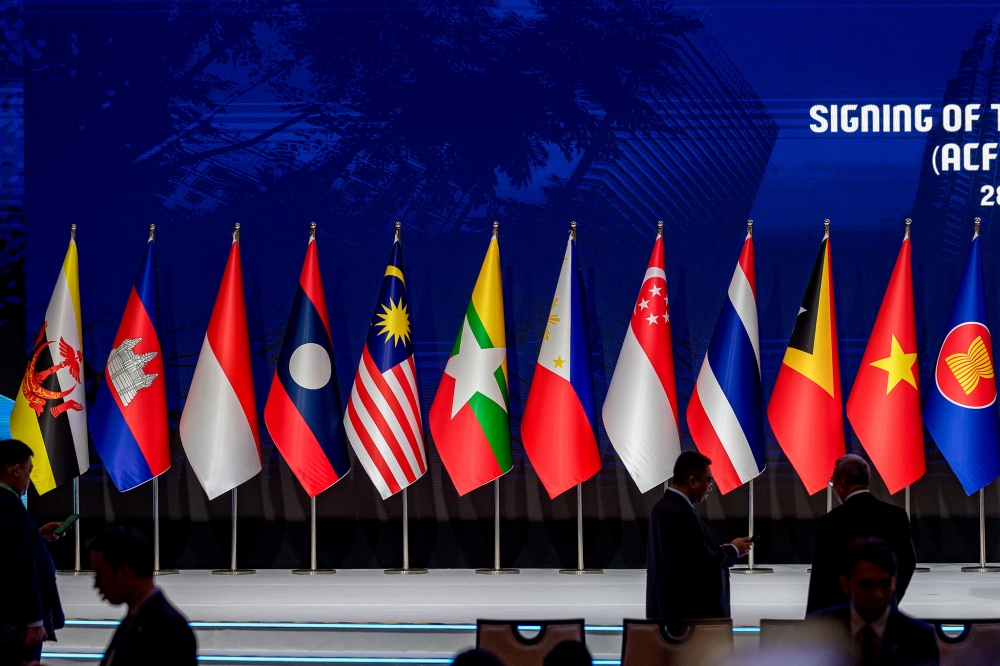
In Asean, respect has long meant standing with a neighbour when times are hard. — Picture by Firdaus Latif
Targeted relief, lasting reform
Jakarta’s instinct to protect households is one Malaysia shares. For many years, our quickest tool was the blanket fuel subsidy.
The Institute for Democracy and Economic Affairs (IDEAS) has cautioned that this habit is becoming financially unsustainable. Its Director of Research, Dr Stewart Nixon, said Malaysia cannot keep relying on subsidies that offer “temporary relief but preserve a status quo that will never return.”
Malaysia has made real progress, ending blanket diesel subsidies in 2024 and moving to targeted RON95 pricing. The next step is to make crisis support time-limited, directed at low-income households and transport operators, and paired with reforms that reward energy efficiency.
Building flexibility together
Malte Küper of the German Economic Institute, who co-wrote the IDEAS report, argued that energy security depends not only on suppliers but on whether a country’s infrastructure allows it to switch sources.
That is a shared test for Asean. If each member meets a shock alone, one conserving gas, another bidding for costly spot LNG, a third tightening exports, pressures that began in the Gulf ripple across our own region. A community of nearly 700 million people is stronger with one coordinated plan than with ten separate ones.
Serumpun in practice
Asean already has the tools. Energy ministers meeting in Manila this month reviewed steps to put coordinated emergency responses under the Asean Petroleum Security Agreement into effect. Agreeing in advance on the volumes members would share in an emergency, and on what terms, would give every capital confidence that supply will be there when it matters. The Asean Summit in Manila on November 16 to 18 is a timely opportunity to take this forward.
Such cooperation rests on quiet, steady diplomacy. Malaysia and Indonesia are bangsa serumpun, with a long record of working through differences at the Joint Commission and in dialogue between leaders. The gas pipeline that has served both countries for many years is a symbol of that partnership.
Shared infrastructure also builds trust. Sarawak already supplies electricity to West Kalimantan with little fanfare. Extending such links through the Asean Power Grid and the Trans-Asean Gas Pipeline would give every member a stake in the others’ stability, making interdependence a source of security rather than concern.
None of this can be improvised mid-crisis. The IDEAS call for scenario planning and sharper market intelligence deserves a regional hearing, allowing Asean to anticipate shocks together rather than one capital at a time.
Minister Bahlil is right that mutual respect matters. In Asean, respect has long meant standing with a neighbour when times are hard. As serumpun, Malaysia and Indonesia are well placed to show the region what that looks like in an energy crisis.
Ahmad Nizam Che Kasim
AGILE Research Group,
Faculty of Business & Communication,
Universiti Malaysia Perlis
* This is the personal opinion of the writer or publication and does not necessarily represent the views of Malay Mail.
KioskNews shows a cleaned-up reading view extracted from the publisher’s page — the original always lives on their site, not ours.