GROUNDUP: ‘Soul-crushing’ Master’s Office stuck in cycle of delays and dysfunction
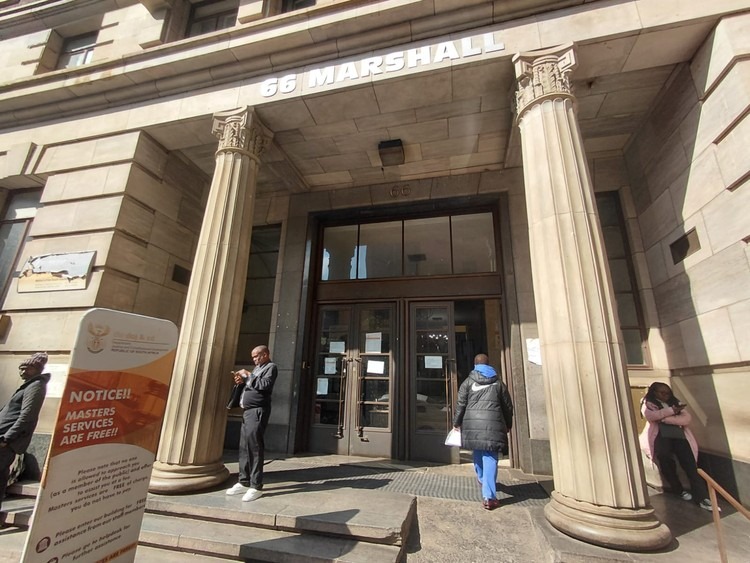
Six months after GroundUp last reported on backlogs, delays, inefficiency and corruption at the Johannesburg Master’s Office, sources say they see no improvement.
The office in Marshall Street has not had a permanent Master since 2024.
Delays in appointing an executor, lodging or amending a trust deed, or finalising an insolvency can leave people’s lives in limbo.
For instance, without a letter of executorship, which can take months, beneficiaries cannot access funds or insurance bonds. Delays may lead to devastating financial losses.
Lawyers described applying for court orders simply to compel the Master to make a decision, adding legal costs for families who were already grieving.
In the business sector, delays in appointing insolvency practitioners harm creditors, workers and local communities.
‘Soul destroying’
We spoke to six lawyers who regularly deal with the office. They preferred not to be named so that the service they receive at the office is not compromised.
One attorney said the experience “crushes your soul”, as practitioners and the public are often pushed from pillar to post.
A Master’s Office official, who asked not to be named, said there was a “growing backlog that we are struggling to catch up on as new matters are logged”.
Paper fortress
Despite efforts to digitise, the Johannesburg Master’s Office remains a “paper fortress”, lawyers say. When we visited the office last week, we saw files piled floor to ceiling, with documents overflowing into corridors.
One attorney told GroundUp that it should take no more than a couple of weeks to hear back after lodging an estate, but he was once left waiting for more than a year. He searched through towers of paper taller than himself for a document, without any help. The document was never found.
The digital systems meant to reduce paperwork had offered some relief but were often offline, lawyers we spoke to said. Many practitioners continue to submit paper forms because the online system is so unreliable.
Because of the inefficiency, clients and legal professionals allegedly pay intermediaries called “runners” who have connections inside the office.
“It is an open secret that cash can allow you to jump the queue,” said an attorney. “It is very common for someone to try to solicit a bribe, especially when you look like your matter is urgent.”
Another lawyer said officials would solicit a bribe by asking: “What will you do for me so that I can get it done for you?”
He said many legal professionals and members of the public paid the bribe, pushing those waiting for their matter to be resolved even further back.
The building is plastered with signs stating that “Master’s services are free”, yet sources say bribes are still solicited.
/file/attachments/2996/gu2_550530.jpeg)
Navigating the building is a challenge. There are almost no signs, and directory boards are inaccurate. Practitioners said that they must often go door-to-door through the corridors to find the correct official, as many doors lacked nameplates.
Sources praised the helpfulness of the security guards. The guards were helpful to us, too.
The Department of Justice and Constitutional Development had not responded to our questions by the time of publication. It previously told GroundUp that the Johannesburg Master’s Office was meeting its key performance targets, including issuing the majority of letters of executorship within the prescribed 15 working days for compliant applications.
In a response to a question in Parliament, Justice Minister Mmamoloko Kubayi said 82% of letters of executorship were issued within 15 working days of receipt of all required documents (when the application is complete). This does not take into account delays at the Master’s Office in completing the application, including queries, resubmissions, incomplete files and systems being offline.
The response also said that Johannesburg had the second-highest number of vacancies of all Master’s offices, with 11 vacant posts. Pretoria has 20.
The department asserted that it had a zero-tolerance approach to corruption and took disciplinary action when wrongdoing was identified.
While acknowledging that the office still relied on hybrid paper-and-digital processes, the Department of Justice claimed that its ongoing reforms were yielding “tangible improvements” in access and accountability.
The department stated that it was collaborating with Home Affairs to improve the stability of its online platforms. DM
KioskNews shows a cleaned-up reading view extracted from the publisher’s page — the original always lives on their site, not ours.