Netflix Just Found Its Next 'KPop Demon Hunters'
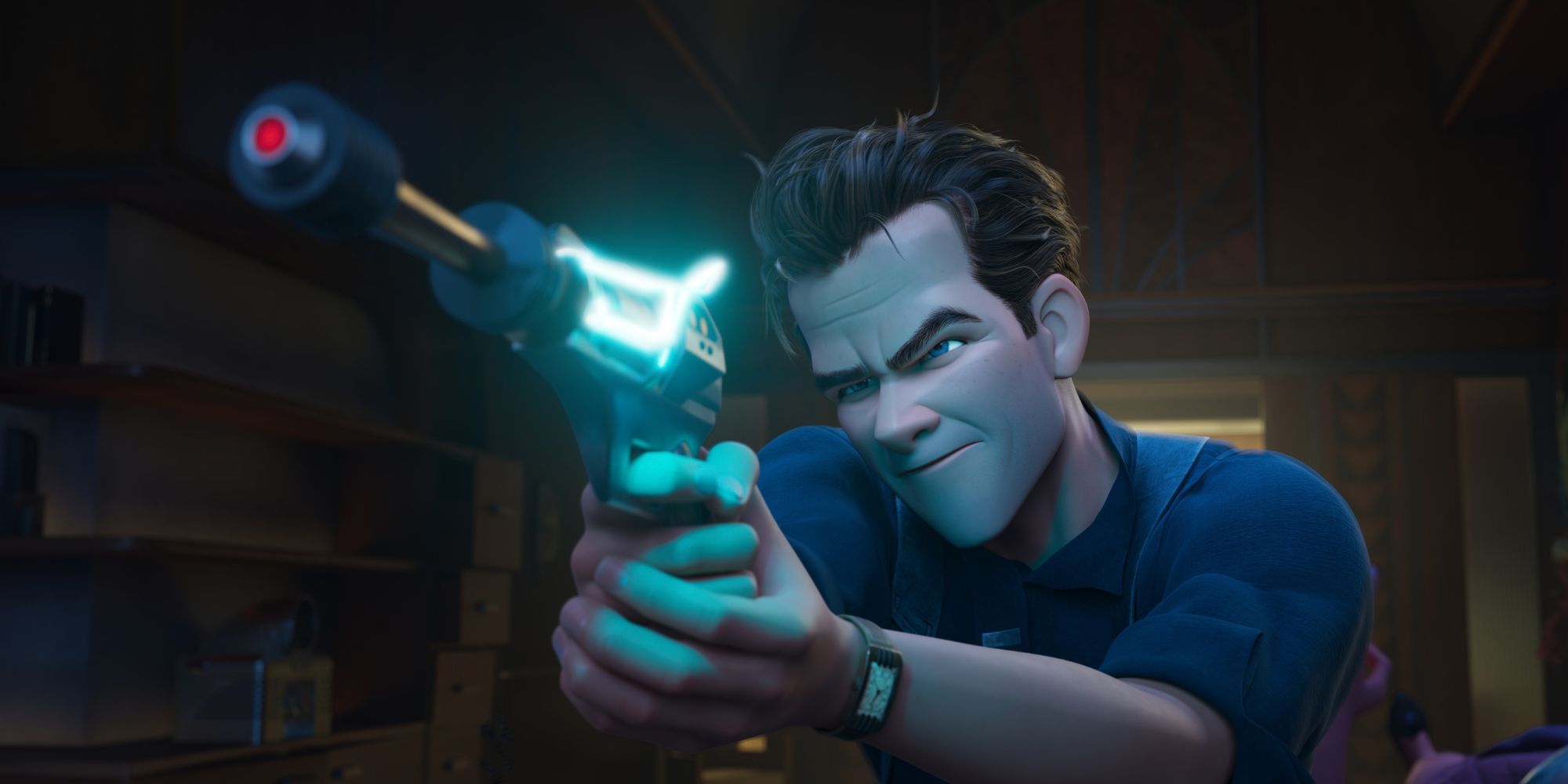
The animated noir film from ‘The Incredibles’ director Brad Bird has been in the works for over 30 years.

Taylor Gates is an Indiana native who earned her BFA in Creative Writing from the University of Evansville. She fell in love with entertainment by watching shows about chaotic families like Full House, The Nanny, Gilmore Girls, and The Fosters.
After college, she moved to Los Angeles to pursue a career as a writer, editor, and filmmaker. Today, she’s a sucker for dramedies — especially coming-of-age stories centering around complex female and LGBTQ+ characters. She has been with Collider since May 2022.
Brad Bird is one of the most renowned and prolific filmmakers, specifically in the animated space. Since the massive success of his directorial debut in 1999 with The Iron Giant, he’s been nominated for four Oscars (winning two for Best Animated Feature for The Incredibles and Ratatouille) and has emerged as the mastermind behind some of the most beloved, acclaimed movies ever made.
His frequent collaborator, composer Michael Giacchino, is just as revered and impactful, earning two Academy Award nominations of his own (winning one for Up) and nine Grammy nods, taking home three trophies from the Recording Academy for Up and Ratatouille. His resume includes everything from animated films like Inside Out and Zootopia 2 to superhero movies like The Batman and Tom Holland’s Spider-Man series.
The two are once again teaming up, this time for a Netflix film called Ray Gunn. Directed and co-written by Bird along with Matthew Robbins (a frequent collaborator with Guillermo del Toro), with a score by Giacchino, the film follows the titular private detective (Sam Rockwell) in a futuristic world inhabited by humans and aliens alike. Things get especially complicated when he gets caught up in a case involving the alluring but enigmatic singer Venus Nova (Scarlett Johansson).
Collider got the chance to visit Netflix Animation Studios and get a sneak peek of the highly anticipated project, including a sizzle reel and the first 30 minutes of the film. From drawing lessons with Storyboard Artist Clarisse Chua to a trip to the recording booth with Animation Director Jason Ryan, we were treated to a truly immersive experience, as well as insightful conversations with Bird, Giacchino, VFX Supervisor Adel Abada, and Art Director Wendell Luebbe. Here’s everything we learned.
Brad Bird Has Wanted to Make ‘Ray Gunn’ for Over 30 Years
Ray Gunn has been a long time in the making, with Bird having written the original script in the ‘90s. Turner Broadcasting System's merger with Time Warner in 1996, however, kept the project from coming to fruition, though he never forgot about it — or gave up on bringing it to the screen. Giacchino recalls Bird first telling him about the idea way back in 2003 when the two were working on The Incredibles.
During that project, the duo quickly developed an efficient and fulfilling working relationship, which has only gotten stronger with time. Giacchino says this is due to their shared language rooted in a love of cinema that spans all genres and puts characters and their emotional journeys first. That, and fun. “This is meant to be a good time at the movies,” Bird says. “Anything in addition to that is a bonus.”
Michael Giacchino Knew ‘Ray Gunn’ Was Special From the Start

Though he uses a wide array of instruments in the final product, Giacchino reveals that he always starts with the piano to find a fitting melody. The sound of Ray Gunn came relatively easily, as he started getting ideas “almost immediately” upon hearing the concept, taking inspiration from films like The Maltese Falcon. Still, he says that it’s not until the orchestra comes in that you get the full depth of “emotions and humanity” a score can provide.
Giacchino works hard to ensure that, when it comes to the music of Ray Gunn, you’ll never have heard anything quite like it. There’s something special, he says, about working on a Brad Bird movie that makes him want to get particularly specific and innovative. “When I’m writing for his movies, I only want it to fit this movie. I don’t want you to be able to take this score and throw it on anything else. I don’t want it to work for anything else.” Bird then jumps in to help — and tease — with an analogy that’s evidence of their long, close friendship. “‘Giacchino’ means ‘little jacket,’” he informs us. “So it better be tailored right.”
‘Ray Gunn’s Target Audience Feels Groundbreaking

Animation usually falls into two categories: sweet, G-rated stories and raunchy, over-the-top R-rated films. Ray Gunn, however, does something different by landing somewhere in the middle. Bird says he set out to “broaden what an animated movie could be,” striving to create something that’s “not just for six-year-olds.” Though rated PG for violence, action, language, some suggestive material, and thematic elements, the footage we were treated to seems to skirt the line of being PG-13. This makes it a great choice for both adults and older kids who aren’t often catered to with animation, hopefully showing them that the medium is truly for everyone.
The craftsmanship and care that went into creating Ray Gunn is immediately obvious when watching the footage and again when hearing Abada and Luebbe speak about how they captured it. In an age dominated by busy special effects and rushed CGI, it’s refreshing to hear them talk about their approach, highlighting the “elegance of simplicity” to give the film a mature, sophisticated feel. From using 21mm and 28mm lenses to showcase the grand scope of the world the filmmakers built to techniques to give certain scenes a handheld feel, the level of artistry is undoubtedly impressive, putting Ray Gunn in a league of its own.
‘Ray Gunn’ Has a Wide Range of Visual Influences

Besides being deeply rooted in noir (more on that later), there are a plethora of visual and tonal influences. The combination of gritty crime and glamorous theatricality feels vaguely reminiscent of Chicago to me, while Abada and Luebbe cited both Mad Men and Columbo among their influences on the TV side of things.
With the film taking place in 1939, the New York World's Fair was also a major influence for the team when crafting the film’s fictional city of Metropia, but with a twist. Instead of focusing solely on the brochure-ready utopian vibes, they wanted to dig into the darker, seedier underbelly simmering beneath the shiny Art Deco surface.
The buildings in Metropia are defined by retrofuturism (which might bring to mind another one of Giacchino’s recent projects, Fantastic Four: First Steps). Abada and Luebbe combined Hugh Ferriss’ famous architectural style, characterized by square, tall buildings, with the curves of Streamline Moderne to create unique rounded skyscrapers that also took inspiration from glassblowing.
‘Ray Gunn’ Is a Love Letter to Noir

Ray Gunn pays homage to the noir genre, whose staples include morally grey characters — usually a cynical detective and seductive femme fatale — and a gloomy environment. Venus Nova is described as “Lauren Bacall meets Veronica Lake,” two women who defined 1940s noir through films like This Gun for Hire, The Glass Key, The Big Sleep, and Key Largo. The 1974 film Chinatown, which is considered one of the greatest neo-noir films — and one of the greatest films, period — also heavily influenced Ray Gunn.
The film also acts as a tribute to the aesthetic elements of noir films, playing with lights and shadows. Whether it’s moonlight creeping into an office through the blinds or being introduced to someone by their dramatic silhouette alone, there’s a highly stylized and specific feel to the visuals of the genre. Ray Gunn integrates this in a way that feels particularly fresh due to its animated nature.
‘Ray Gunn’ Is Grounded In Realism

Ray Gunn may be animated, but make no mistake: it’s still firmly grounded in reality. The artists took a great deal of care to make sure each and every hair on the characters’ heads felt realistic. From making their locks look appropriately wet when it’s raining outside to having them look tousled after, well, a tussle, the animators did numerous experiments to see how each element “behaved” to make sure everything looked as authentic as possible. This is quite a feat when you consider this also applies to each piece of clothing the characters wear, with Ray racking up 10 costume changes and Venus having a whopping 23 throughout the film.
But this is still a sci-fi movie, after all, so those looking for some cool creatures need not fear, as there are aliens aplenty. The artists approached many of its creature designs by mixing elements of more classic monsters with machinery to complement the technological bend of the environment in which they’re living. I have a feeling that Eye-Ra (Tom Waits), with his singular droopy eye, oversized coat, and green skin, will be an instant favorite for many.
After three decades, Ray Gunn finally premieres on Netflix on December 18th. From everything I’ve seen so far, I have a good feeling it will have been worth the wait.

- Release Date
- December 18, 2026
- Runtime
- 119 minutes
- Director
- Brad Bird
- Writers
- Matthew Robbins, Brad Bird
- Producers
- Alex Schwartz, Brad Bird, Connie Nartonis Thompson, Dana Goldberg, David Ellison, Hannah Minghella, John Lasseter, Karen Rupert Toliver, Lisa Beroud
Cast
-

Raymond Gunn (voice)
-

Venus Nova (voice)
-

Tom Waits
Eyera (voice)
-

Matt Berry
Francis “Slugsy” Xavier (voice)
KioskNews shows a cleaned-up reading view extracted from the publisher’s page — the original always lives on their site, not ours.