Injured delivery workers could get up to a year of sick pay under proposed scheme
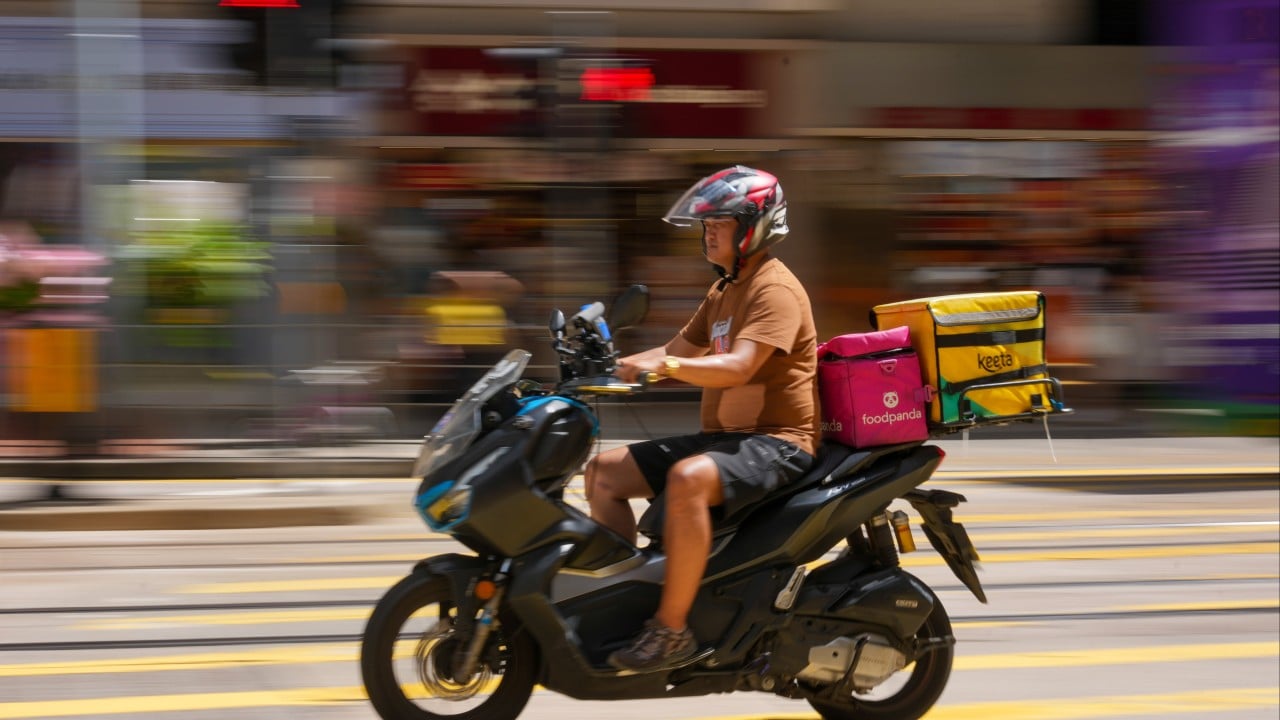
Hong Kong delivery workers injured on the job could receive up to a year of sick leave payments under a proposed three-tier compensation mechanism based on their working hours, with authorities acknowledging that the scheme might also lead to higher charges for consumers.
In a Legislative Council brief dated Wednesday, the government set out details of the Digital Platform Workers Compensation Bill, under which food and goods delivery firms will be required to take out insurance covering work-related injuries and deaths.
“In other words, platform workers who are performing digital platform work more actively (i.e. working more hours) will fall into a higher tier and will be entitled to a longer maximum period of sick leave with periodical payments payable,” authorities said.
Workers who spend fewer than 230 hours carrying out delivery tasks over a 90-day period – equivalent to about three hours a day, six days a week – will be entitled to up to three months of sick leave payments.
Those working between 230 and 385 hours will be eligible for up to six months, while those exceeding 385 hours – equivalent to about five hours a day, six days a week – will qualify for up to a year.
Hours spent carrying out deliveries for multiple platforms will count towards the thresholds.
Chief Executive John Lee Ka-chiu first announced plans to introduce statutory work injury compensation for delivery workers in his policy address last year amid growth in the gig economy, with authorities outlining the proposed framework to lawmakers in July.
According to information from the city’s two major delivery platforms, Keeta and Foodpanda, the group personal accident insurance policies they currently purchase provide temporary total disablement payouts capped at HK$3,900 per week or 75 per cent of average weekly service fees, whichever is lower, for a maximum of five weeks.
Under the government proposal, other compensation entitlements, including medical expenses and payouts for death and permanent incapacity, will not be subject to the tiered system.
Families of workers killed in work-related accidents will receive at least HK$514,510, while those suffering permanent total incapacity will be entitled to a minimum of HK$584,220, on a par with conventional employees.
Compensation calculations will generally be based on earnings in the preceding 90 days, with a 25 per cent deduction applied to income from platforms for which workers were carrying out orders at the time of an accident.
Earnings from other platforms will be discounted by 50 per cent and subject to a further cap.
Authorities said the deductions took into account operating expenses borne by workers, such as fuel and vehicle maintenance.
The government also acknowledged that operators could offset additional insurance and administrative costs by raising delivery charges for customers or reducing payments to workers, although it expected the impact to be insignificant.
According to the document, a Labour Department survey and consultation exercise in 2024 found that work injury compensation was the biggest concern among platform workers, with existing protection considered inadequate and varying widely between operators.
The bill will be gazetted on Friday and introduced at the Legislative Council on December 9, with authorities proposing a phased implementation to allow operators time to secure insurance coverage and establish administrative arrangements.
KioskNews shows a cleaned-up reading view extracted from the publisher’s page — the original always lives on their site, not ours.