Supreme Court orders ₹30L compensation for man held in jail 7 years after with acquittal
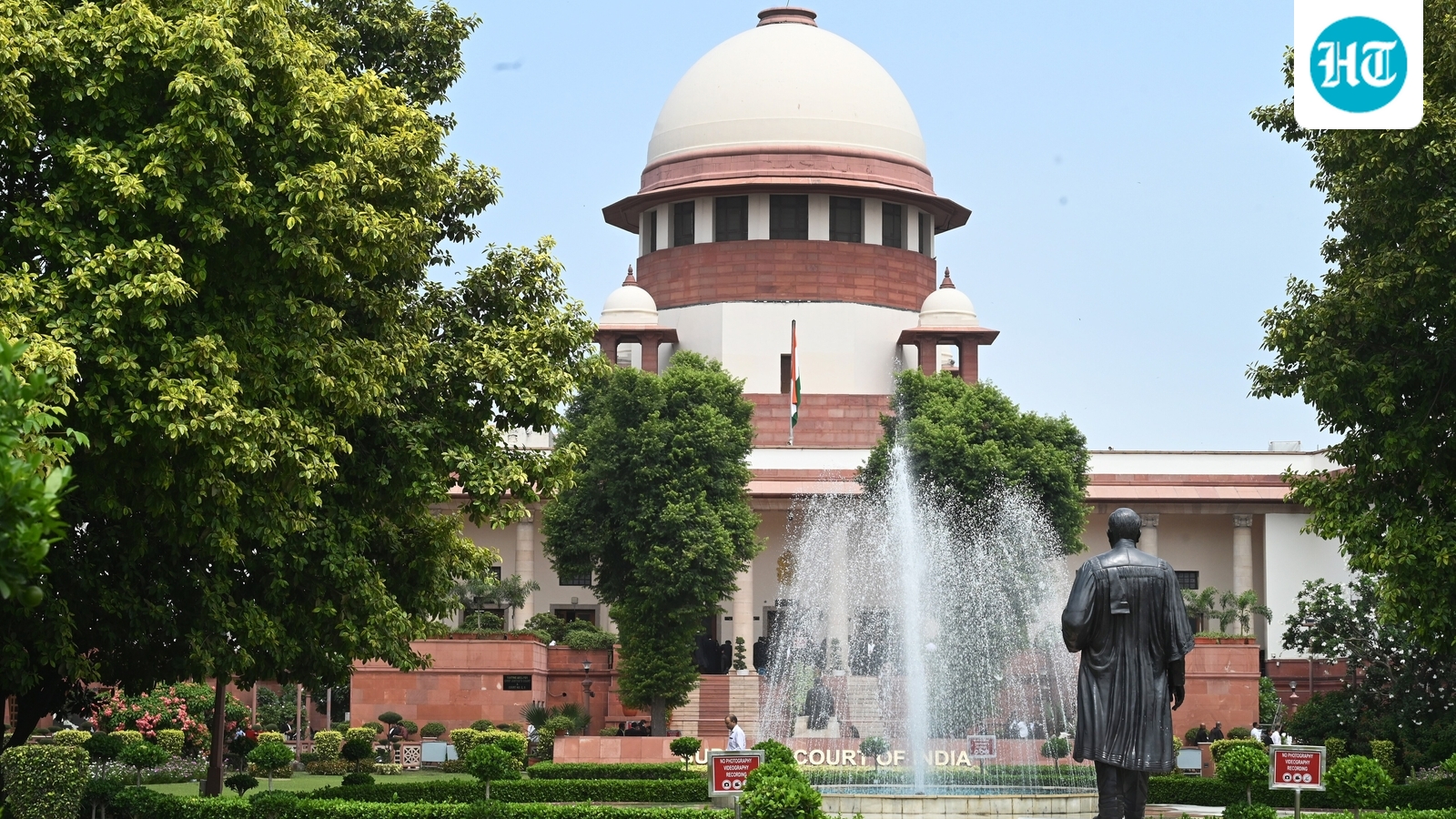
The case concerned Devilal Gond, who was arrested in December 2012 in a murder case and sentenced to life imprisonment by a trial court in August 2013.

 Prefer HTon Google

Every wrongful loss of liberty must be compensated adequately to give the victim a genuine opportunity to rebuild his life with dignity, the Supreme Court underlined on Monday, enhancing to ₹30 lakh the compensation payable to a man who remained in jail for more than seven years even after being acquitted of murder.
Setting aside a Chhattisgarh high court order that had awarded him just ₹2 lakh, justices Augustine George Masih and Sanjeev Sachdeva said compensation for wrongful incarceration cannot be reduced to symbolic or nominal relief but must be enough to help the victim regain financial independence, secure sustainable livelihood, and overcome material disadvantages caused by the unlawful deprivation of liberty.
Also Read I ₹75-crore settlement">Supreme Court ends marital dispute with ₹75-crore settlement
“...it (compensation) must serve as a meaningful remedial measure capable of assisting the victim in rebuilding his life and restoring, to the extent possible, the opportunities and independence of which he has been deprived,” it noted.
The case concerned Devilal Gond, who was arrested in December 2012 in a murder case and sentenced to life imprisonment by a trial court in August 2013. The Chhattisgarh high court acquitted him on January 20, 2018, setting aside his conviction and sentence. However, Gond stayed behind bars until May 19, 2025 —seven years, three months and 29 days after his acquittal.
A case of ‘complete remissness’
The state government attributed the prolonged detention to a communication and coordination failure between prison authorities and the concerned legal aid functionaries. The jail superintendent had written to the panel lawyer in April and June 2018 seeking the status of Gond’s appeal, but the outcome of the proceedings did not reach the prison administration. The discrepancy was detected during a records verification exercise in May 2025, following which a release warrant was issued.
Calling the episode a case of “complete remissness” and “institutional dysfunction”, the Supreme Court said Gond had lost the prime years of his youth because of the authorities’ apathy and failure to act promptly. He was around 28 when acquitted and 35 when finally released.
“No monetary award can fully compensate for the loss of liberty, time, and opportunities that can never be restored,” said the court. It stressed that enabling a wrongfully incarcerated person to regain self-sufficiency and rebuild his life was not an act of charity by the state, but the bare minimum to redress the injustice inflicted upon him.
The court directed the state to pay enhanced relief in four weeks. Of the ₹30 lakh, ₹5 lakh will be transferred to Gond’s savings account, while the remaining will be placed in an interest-bearing fixed deposit (FD) in his name. The monthly interest will be credited to his savings account. He won’t be allowed to withdraw or prematurely encash the FD, or take a loan against it, without the district legal services authority’s permission.
No legal framework for wrongful incarceration
The judgment also flagged the absence of a legislative framework in India to compensate and rehabilitate people who suffer wrongful incarceration, observing that constitutional courts have, so far, granted such relief in individual cases, without making it readily accessible to everyone similarly placed.
Referring to the top court’s earlier rulings, the bench said that constitutional courts can award monetary compensation under Articles 32 and 226 (writ proceedings before the Supreme Court and high courts) for established violations of fundamental rights. Such compensation is a public law remedy founded on the principle of strict liability.
Also Read I Supreme Court proposes compensation for families of murder victims even if accused acquitted
The court explained that compensation in such cases does not prevent the victim from pursuing other remedies, including a civil suit for damages or criminal proceedings against officials responsible. It also drew attention to the Law Commission’s 277th report of August 2018 on wrongful prosecution and miscarriage of justice, which recommended a framework providing both financial and non-financial assistance to victims.
The Supreme Court also asked all high courts to consider safeguards along the lines of those introduced by the Madhya Pradesh high court after an earlier Supreme Court ruling in the case of Sohan Singh alias Bablu, who stayed in jail for over four years after completing his sentence.

Utkarsh Anand is the National Legal Editor at Hindustan Times, where he leads the newspaper's coverage of the Supreme Court, constitutional law, the judiciary and the Union law ministry. He joined Hindustan Times in 2020 after stints at Press Trust of India (PTI), The Indian Express and CNN-News18, and has over two decades of experience reporting on law, governance and public policy. His work has focussed on some of India's most consequential constitutional and legal developments, including the Supreme Court's judgments on Article 370, marriage equality, decriminalisation of homosexuality, the Babri Masjid dispute, electoral reforms and judicial appointments. He specialises in making complex legal proceedings and judgments accessible to readers while examining their wider social and political impact. Beyond daily reportage, Utkarsh has led investigative projects and enterprise reporting that have shaped public debate and prompted institutional responses. His work has received several journalism awards, including the Ramnath Goenka Excellence in Journalism Award. As National Legal Editor, he has also played a key role in expanding Hindustan Times' legal journalism footprint, mentoring reporters and strengthening coverage across platforms. A Chevening South Asia Journalism Programme Fellow, Utkarsh regularly writes analyses on the judiciary and constitutional issues, and his reporting is widely followed by lawyers, judges, policymakers, academics and readers seeking clarity on India's evolving legal landscape.Read More
KioskNews shows a cleaned-up reading view extracted from the publisher’s page — the original always lives on their site, not ours.