10 new sweepers join Delhi civic body’s dust-fighter fleet, 9 other vehicles to assist older machines work
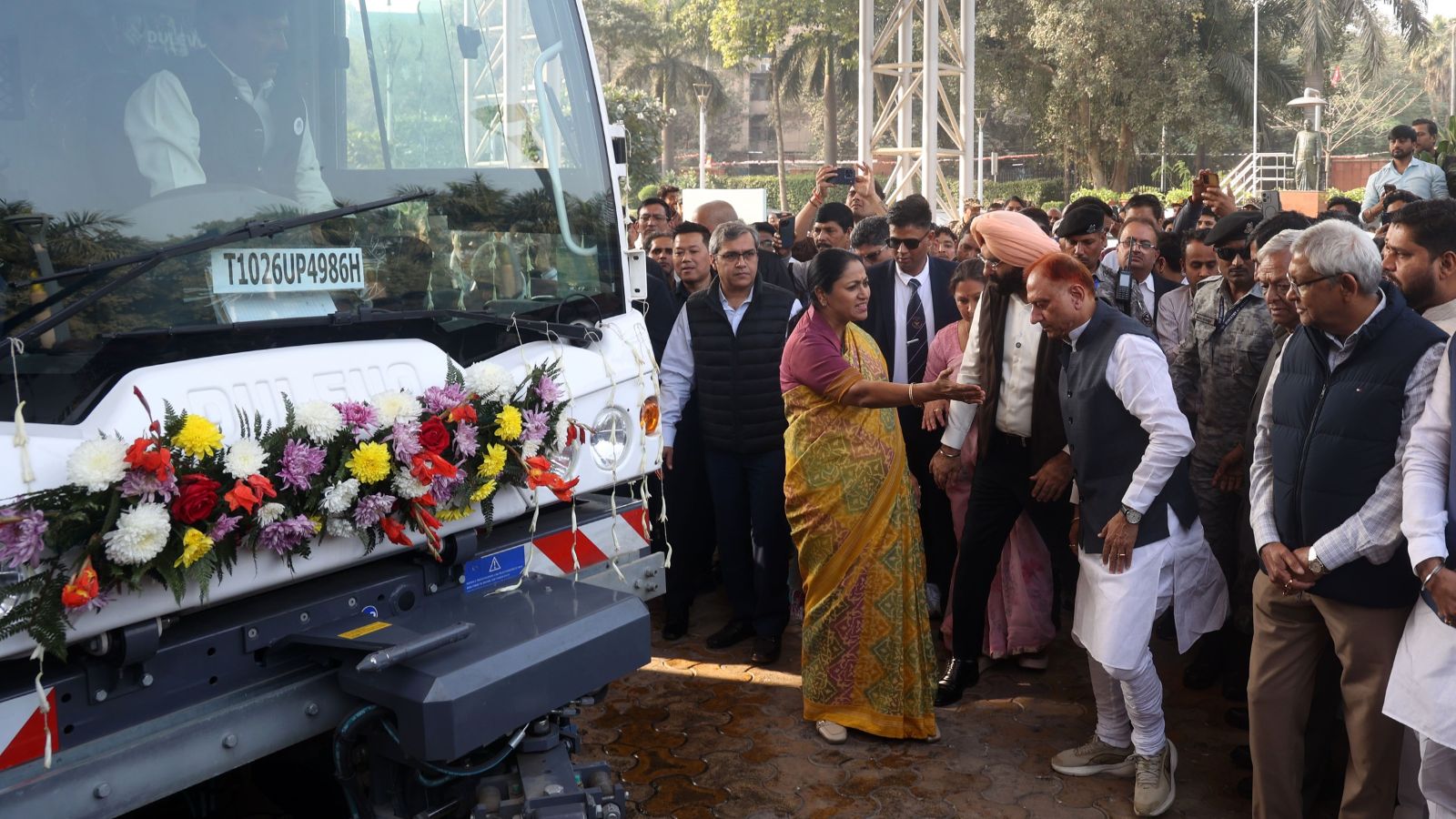
In an effort to fight road dust more effectively, the Municipal Corporation of Delhi (MCD) has for the first time added water tankers and dust-dump vehicles to its fleet of road-sweeping machines.
Chief Minister Rekha Gupta flagged off five tankers and four dust dumpers along with 10 new Mechanical Road Sweeping Machines (MRSMs) on Friday.
The new MRSMs are the first of the 70 additional sweepers that the MCD had said it would induct by October, before the winter pollution season kicked in.
Sweeper vehicles are Delhi’s sole weapon against road dust, which multiple studies have identified as a major source of the capital’s air pollution, and the primary contributor to both PM10 and PM2.5.
The civic body’s existing sweeper fleet comprises 66 machines, far fewer than the optimal number of 505 recommended by the Centre. Chief Minister Gupta said 60 more sweepers would be inducted soon.
The water tankers and dust-dump vehicles commissioned on Friday are an innovation that is expected to mitigate a major operational inefficiency in the existing sweeping machines.
The machines use a large brush to disturb settled road-side dust, which is pulled into a container by a suction pump. The vehicle then releases water to wash the surface and prevent a resuspension of the dust.
While the vehicles log a daily mileage of up to 70 km, they effectively sweep only 30 km – the rest of their time on the road is spent making trips to refill water or empty their dust containers at designated sites or sanitary landfills.
The tankers and dust dumpers can reach a sweeper whenever its driver calls in to report an empty water container or a full dust container.
“We plan to reduce the off-route distances travelled and the dead mileage of the machines, so they are available mainly for sweeping work,” an officer said. “Once the sweeper’s container is full, the dust can be emptied into the dust-dump vehicle.”
These assisting vehicles are CNG-run, and will reach the location of the sweeping machine using GPS, the officer added.
The 10 new MRSMs that joined the MCD’s fleet on Friday include one large CNG-operated machine with a container capacity of more than 4 cubic metres, and nine medium-capacity electric machines with bin capacities of 2 cubic metres each.
Each cubic metre typically holds 1,000-1,100 kg of dust, depending on whether the dust is dry, slurry, or has horticultural waste, an MCD officer said.
The new MRSMs, manufactured by Dulevo, Boschung, and Tenax, and imported from Switzerland and Italy, are “self-propelled and built only for road-sweeping”, and employ more efficient technology, the officer said.
“A central brush that is almost two-and-a-half-foot wide picks up both small debris and larger objects, and allows the machines to sweep without needing workers to clear the road ahead.
“The machines use a vacuum suction process to collect waste, and have cloth filters that help to keep fine dust from escaping back into the air,” the officer said.
The Chief Minister said that the 10 new machines are equipped with state-of-the-art technology, sensors, and artificial intelligence (AI).
“They will make road-cleaning and dust control more effective. Through the modern monitoring system, the control room will be able to track the distance covered by the machines, their working hours, and the quantity of dust collected. Fixed working hours and daily cleaning targets will ensure transparency and accountability in the system,” she said.
KioskNews shows a cleaned-up reading view extracted from the publisher’s page — the original always lives on their site, not ours.