The 10 Best Book Sequels of All Time, Ranked

Luc Haasbroek is a writer and videographer from Durban, South Africa. He has been writing professionally about pop culture for eight years. Luc's areas of interest are broad: he's just as passionate about psychology and history as he is about movies and TV. He's especially drawn to the places where these topics overlap.
Luc is also an avid producer of video essays and looks forward to expanding his writing career. When not writing, he can be found hiking, playing Dungeons & Dragons, hanging out with his cats, and doing deep dives on whatever topic happens to have captured his interest that week.
Sign in to your Collider account
Writing a great novel is difficult enough. Writing a sequel that expands the original, deepens its themes, rewards returning readers, and justifies its own existence is an even bigger challenge. Too many sequels merely repeat familiar ideas or exist simply because the first book was a hit.
The finest examples, however, treat the original as a foundation rather than a formula, building upon what came before while taking the characters and stories in bold new directions. This list looks at some of the most memorable of them, from the fresh tone of Doctor Sleep to Chamber of Secrets' perfect dash of darkness.
10 'World Without End' (2007)

"The past shapes every generation." The Pillars of the Earth is a beloved, megabestselling historical novel set in England roughly one thousand years ago. Rather than attempting to recreate the original novel, its follow-up World Without End takes place in the same town but two centuries later, with an entirely new cast. We meet a sprawling cast of characters whose lives become intertwined through love, ambition, plague, religious conflict, and political upheaval as the Black Plague strikes.
Author Ken Follett excels at balancing intimate personal drama with sweeping historical events. His storytelling also gets a little more sophisticated here. The plot of World Without End feels less repetitive and allows its conflicts to develop organically over decades. Likewise, while there are strong thematic echoes of Pillars of the Earth, including characters reminiscent of those from the first book, the characterization is generally deeper, and the protagonists grapple with more nuanced moral dilemmas.
9 'Harry Potter and the Chamber of Secrets' (1998)
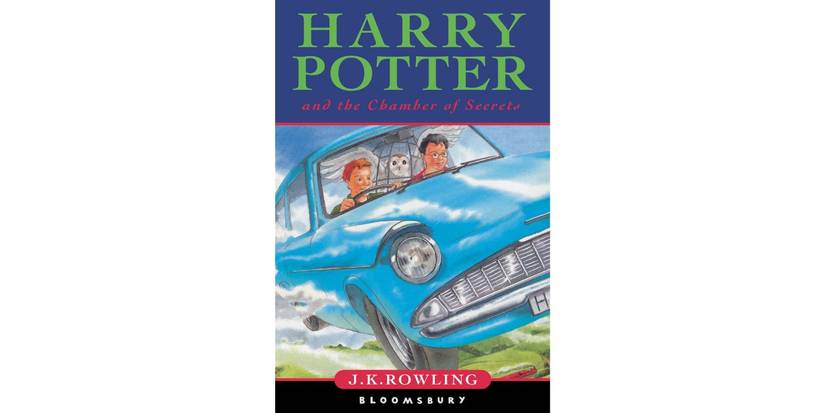
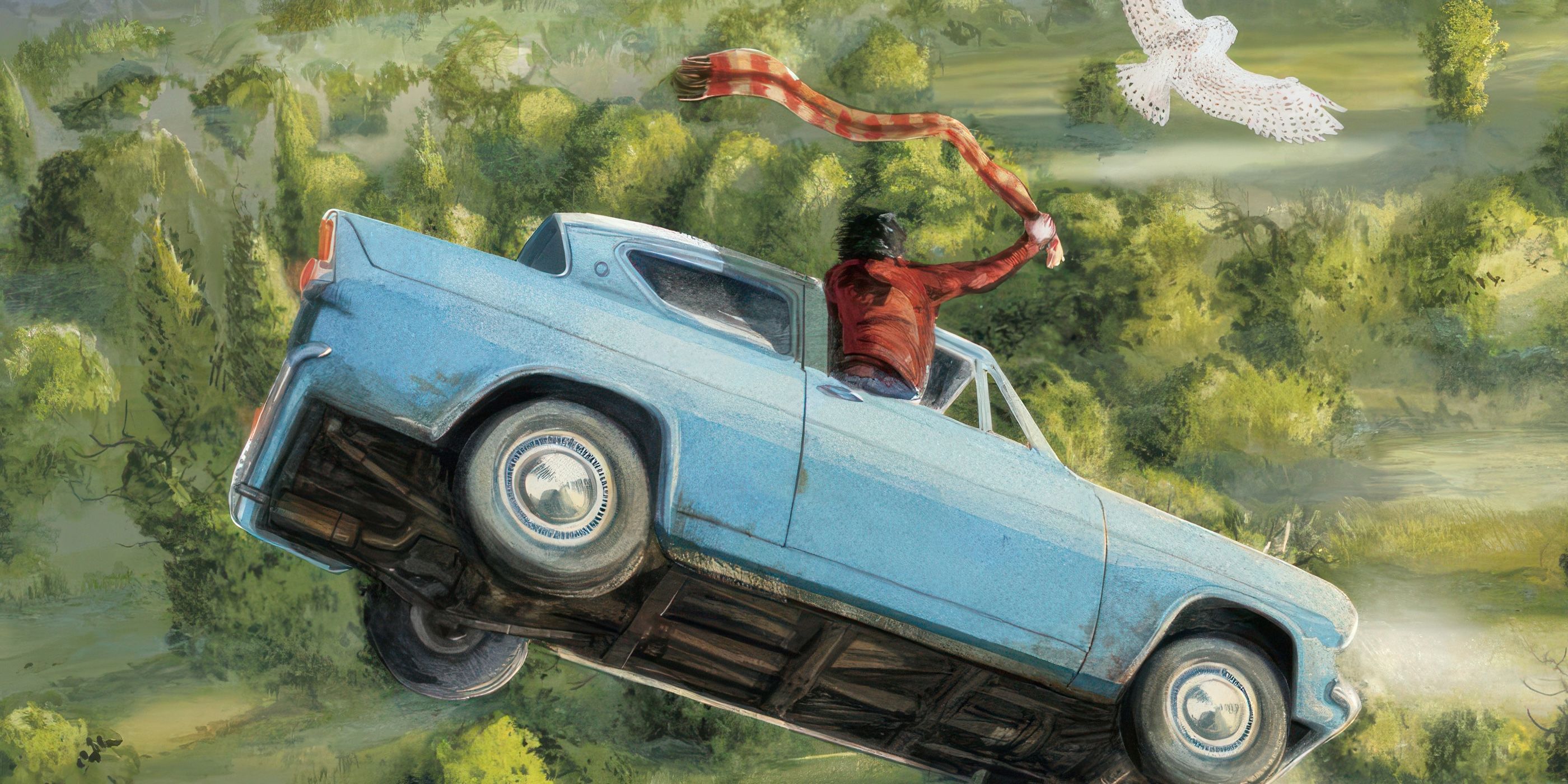
"The Chamber of Secrets has been opened." The second Harry Potter book subtly expands both the world and the emotional stakes of Philosopher's Stone, adding the perfect touch of darkness and scariness to the original's whimsy. Indeed, at times, Chamber of Secrets even verged on gothic horror. The boy wizard's second year at Hogwarts begins with mysterious attacks that leave students petrified. As suspicion spreads and danger escalates, the golden trio find themselves investigating one of Hogwarts' grimmest secrets... all while Harry tries to reckon with his ability to talk to snakes, something the other students find horrifying.
So much stellar world-building is on offer here, all of it woven directly into the plot itself. House-elves, Parseltongue, magical history, ancient legends, 'Mudblood' prejudice, and the diary of Tom Riddle all deepen our understanding of the wizarding world while quietly laying essential groundwork for later books.
8 'The Wise Man's Fear' (2011)

"There are always more stories waiting beyond the horizon." Patrick Rothfuss burst onto the fantasy scene with 2007's The Name of the Wind, quickly canonized as one of the genre's modern classics, and followed it up with the arguably superior Wise Man's Fear (though the series as a whole remains frustratingly unfinished). It continues protagonist Kvothe's account of his remarkable life as he leaves the magical University behind to encounter nobles, mercenaries, mysterious civilizations, legendary warriors, and otherworldly beings.
Perhaps most strikingly, this book hugely expands the series's world. While The Name of the Wind was largely localized to one or two settings, The Wise Man's Fear blows the map wide open, introducing us to entirely new cultures and political landscapes, including the decadent court of the Maer in Vintas, the matriarchal and deeply philosophical warrior society of the Ademre, and the surreal, dangerous, sensual realm of the Fae.
7 'The Subtle Knife' (1997)

"There are countless worlds beyond our own." The first entry in His Dark Materials, The Golden Compass (AKA Northern Lights), is a landmark in children's fantasy, showing just how philosophical the subgenre could get while still serving up an engaging story. The sequel, The Subtle Knife, built on that foundation perfectly. Whereas the first book centered only on Lyra Belacqua, this one throws in Will Parry, a boy from our own world, whose life unexpectedly becomes intertwined with Lyra's after both discover a mysterious city linking countless realities.
The partnership between Lyra and Will forms the emotional backbone of the rest of the trilogy. They balance each other perfectly: Lyra is a wild, intuitive liar, while Will is a fiercely protective, fiercely honest pragmatist. Their shared trauma and growing bond ground the massive cosmic stakes in something very human.
6 'The Dark Forest' (2008)

"The universe is far more dangerous than humanity imagined." The Dark Forest is the sequel to Liu Cixin's The Three-Body Problem, one of the 21st century's finest works of hard sci-fi to date. It takes the abstract alien threat established in the first book and turns it into an intense, high-stakes psychological war of survival. With humanity awaiting the eventual arrival of the Trisolaran fleet, the plot focuses on the Wallfacer Project, an ingenious strategy allowing selected individuals to formulate secret plans hidden even from humanity's technologically superior enemies.
The Dark Forest uses that story as a vehicle to explore big-brain ideas from physics and philosophy, including how society might unravel given the certainty of impending doom. Themes aside, the novel also features one of the most chilling military engagements in modern sci-fi writing. When humanity's massive, overconfident space fleet encounters a single, beautiful, mirror-like Trisolaran probe (known as the "Droplet"), the resulting slaughter is harrowing.
5 'Doctor Sleep' (2013)
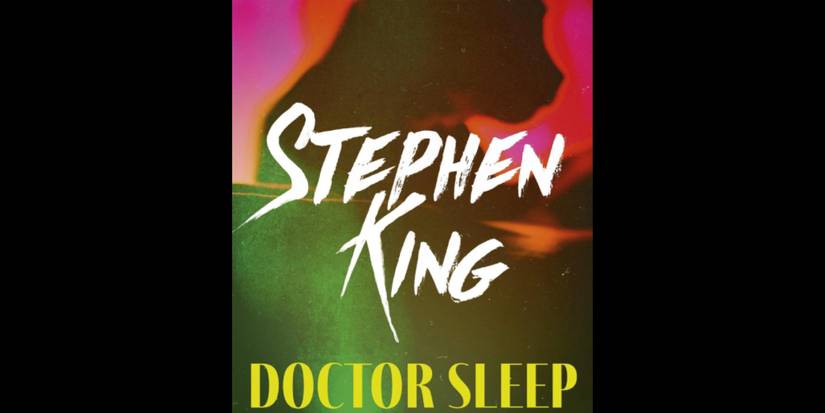
"Some scars never truly heal." Most sequels to masterpieces crash and burn, but Stephen King pulled off this one with surprising grace. Doctor Sleep is the follow-up to The Shining, one of the most acclaimed horror books ever, following an adult Danny Torrance as he struggles with alcoholism and attempts to build a meaningful life despite the psychological wounds left by the Overlook Hotel. He finds purpose working in a hospice, where his psychic abilities comfort dying patients.
However, the plot kicks into gear when Danny is drawn into a deadly conflict with the True Knot, a group that feeds upon children possessing the shining. From here, Doctor Sleep plays out as more of a thriller/adventure/drama/character study than a true horror, which is a big part of why it succeeds. It doesn't tread on The Shining's toes or attempt to recapture its dark magic. Doctor Sleep very much has its own identity, and it's great.
4 'Through the Looking-Glass' (1871)

"It's no use going back to yesterday." Alice's Adventures in Wonderland is one of the foundational works of children's fantasy, shaping so much that followed. Its successor, Through the Looking-Glass, manages to reach the same level of quality, while also carving out a unique tone. Once again, Alice enters a fantastical world where ordinary logic no longer applies. This time she journeys across a giant living chessboard, encountering unforgettable figures such as Tweedledum and Tweedledee, Humpty Dumpty, the Red Queen, and the White Queen as she gradually advances toward becoming a queen herself.
Here, Lewis Carroll constructs an entirely new fantasy governed by the rules of chess instead of playing cards, creating another masterpiece of linguistic invention and playful absurdity. Through the Looking-Glass also includes some of the author's most iconic pieces of writing, like the nonsense poem masterpiece "Jabberwocky" and the beautifully melancholy "The Walrus and the Carpenter."
3 'Olive, Again' (2019)

"People continue changing long after they believe they won't." Author Elizabeth Strout very much avoided the sophomore slump with Olive, Again, the successor to her Pulitzer-winning novel Olive Kitteridge. The book once again presents a series of interconnected stories centered on Olive as she grows older, navigates new relationships, confronts mortality, and continues observing the lives of those around her with her unique mixture of bluntness and compassion. It makes for a beautiful, sometimes heartbreaking exploration of the twilight years.
Indeed, philosophical depth is at a premium here, with the novel engaging honestly with incredibly complex moral problems, never reducing any of them to a cartoon or caricature. Indeed, the characters in Olive, Again are perhaps even more three-dimensional than they were in Olive Kitteridge. For example, the protagonist herself, while still wonderfully prickly, begins to possess a startling new capacity for self-reflection.
2 'A Man in Love' (2009)

"The ordinary becomes extraordinary through absolute honesty." Karl Ove Knausgård's monumental, six-part autobiographical novel series My Struggle is one of the great works of 2000s literature, and one could make the case that it gets better with every installment. The second volume, A Man in Love, sees Knausgård relocating to Sweden, falling in love, becoming a father, and struggling to balance family responsibilities with artistic ambition. The result is an unflinching, unsentimental portrait of early fatherhood in modern literature.
Indeed, the author is remarkably honest about his guilt over feeling suffocated by the daily domestic routines, despite loving his children fiercely. That said, while at times bleak, the book is still energetic and intense, full of life, passion, and occasional bursts of comedy. In particular, it has a lot to say about Knausgård's relationship with his wife, both their consuming intellectual and physical attraction and the messiness of two complicated people trying to build a life together.
1 'The Two Towers' (1954)

"The road grows darker before the dawn." Following the Fellowship's tragic breaking, The Two Towers divides into parallel storylines. Aragorn, Legolas, and Gimli pursue the captured Merry and Pippin across Rohan while Frodo and Sam continue their perilous journey toward Mordor, guided by the treacherous Gollum. That dual structure allows Tolkien to explore multiple corners of Middle-earth while steadily building tension across every storyline.
Along the way, the novel significantly deepens the mythology, politics, and cultures of Middle-earth without slowing the narrative momentum. Indeed, The Two Towers boasts some of the series' most unforgettable moments, including the Ents' assault on Isengard, Gandalf's remarkable return as the White Wizard, and, of course, the Battle of Helm's Deep. In writing that section, Tolkien leveraged his own experience in the trenches of World War I. The resulting combat scenes, visceral, exhausting, and grounded, established the gold standard for fantasy battles.
Collider Exclusive · Middle-earth Quiz
Which Lord of the Rings
Character Are You?
One Quiz · Ten Questions · Your Fate Revealed
The road goes ever on. From the green hills of the Shire to the fires of Mount Doom, every soul in Middle-earth carries a destiny. Ten questions stand between you and the truth of who you are. Answer honestly — the One Ring has a way of revealing what we most want to hide.
💍Frodo
🌿Samwise
👑Aragorn
🔥Gandalf
🏹Legolas
⚒️Gimli
👁️Sauron
🪨Gollum
01
You are handed a responsibility that could destroy you. What do you do? The weight of the world falls on unlikely shoulders.
02
Your closest companion is heading into terrible danger. You: True loyalty is revealed not in comfort, but in crisis.
03
Enormous power is within your reach. Your instinct is: Power corrupts — but only those who reach for it.
04
What does "home" mean to you? Where we long to return reveals who we truly are.
05
When a battle is upon you, your approach is: War reveals what we are made of — whether we like it or not.
06
Someone comes to you for advice in their darkest hour. You: Wisdom is not knowing all the answers — it's knowing which questions to ask.
07
How do you see yourself, honestly? Self-knowledge is the most dangerous kind.
08
Which of these best describes your relationship with the natural world? Middle-earth speaks to those who know how to listen.
09
You encounter a wretched, pitiable creature who has done terrible things. You: How we treat the fallen reveals the height of our character.
10
When the quest is over and the songs are sung, what do you hope they say about you? In the end, we are all just stories.
The Fellowship Has Spoken Your Place in Middle-earth
The scores below reveal your true character. Your highest number is your match. Even a tie tells a story — the Fellowship was never made of simple people.
💍 Frodo
🌿 Samwise
👑 Aragorn
🔥 Gandalf
🏹 Legolas
⚒️ Gimli
👁️ Sauron
🪨 Gollum
You carry something heavy — and you carry it alone, even when you don't have to. You were not born for greatness, and that is precisely why greatness chose you. Your courage is not the roaring, sword-swinging kind; it is quiet, stubborn, and terrifying in its refusal to quit. The Ring weighs on you more than anyone can see, and still you walk toward the fire. That is not weakness. That is the rarest kind of strength there is.
You are, without question, the best of them. Not the most powerful, not the most celebrated — but the most essential. Your loyalty is not a trait; it is a force of nature. You would carry the person you love up the slopes of Mount Doom if it came to that, and we both know you'd do it without being asked. The world needs more people like you, and the world is lucky it has even one.
You were born to lead, and you have spent years running from it. The crown is yours by right, but you know better than anyone that right means nothing without the will and the worthiness to back it up. You are tempered by loss, shaped by long roads, and defined by a code of honour you hold to even when no one is watching. When you finally step forward, the world shifts. Because it was always waiting for you.
You have seen more than you let on, and you say less than you know — which is exactly as it should be. You are a catalyst: you do not fight the battles yourself, you ignite the people who can. Your wisdom comes not from books but from an age of watching what happens when it is ignored. You arrive precisely when you mean to, and your presence alone changes what is possible. A wizard is never late.
Graceful, perceptive, and almost preternaturally calm under pressure — you see things others miss and act before others react. You do not need to make a scene to be remarkable; your presence speaks for itself. You are loyal to those you choose to stand beside, and that choice is not made lightly. You have lived long enough to know that the most beautiful things in this world are also the most fragile, and that is why you fight to protect them.
You are loud, proud, and absolutely formidable — and beneath all of that is one of the most fiercely loyal hearts in Middle-earth. You don't do anything by half measures. Your friendships are forged like iron, your grudges run as deep as mines, and your courage in battle is the kind that makes legends. You came into this fellowship suspicious of everyone and ended it willing to die for an elf. That is not a small thing. That is everything.
You think in centuries and act in absolutes. Order, dominion, control — not because you are cruel by nature, but because you have decided that the world left to itself always falls apart, and you are the only one with the vision and the will to hold it together. You were not always this. Something was lost, or taken, or betrayed, and the version of you that stands now is the answer to that wound. The tragedy is that you're not entirely wrong — just entirely too far gone to course-correct.
You are a study in contradiction — pitiable and dangerous, cunning and broken, capable of both cruelty and something that once resembled love. You are defined by loss: of innocence, of self, of the one thing that gave your existence meaning. Two voices war inside you constantly, and the tragedy is that the better one sometimes wins, just not often enough, and never at the right moment. You are a warning, yes — but also a mirror. We are all a little Gollum, given the right ring and enough time.
KioskNews shows a cleaned-up reading view extracted from the publisher’s page — the original always lives on their site, not ours.