Uefa investigating allegation Israel player spat at Ireland coach
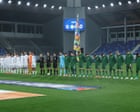
Uefa has launched an investigation into claims a member of the Republic of Ireland coaching staff was spat at during the heated Nations League encounter with Israel on Sunday.
The European governing body has confirmed that post-match reports submitted by match officials “contained an allegation of an incident in or around the tunnel at half-time” and that it will be the subject of a disciplinary investigation “regarding potential misconducts from player(s)”.
Witnesses at the match, held in the Serbian town of Backa Topola, reported hearing a member of the Irish staff – understood to be the fitness coach Damian Doyle – claim he had been spat on by an Israeli player as the teams went down the tunnel at half-time.
A spokesperson for the Israeli Football Association denied the reports, saying “no one had spat towards the coach”.
After the match Ireland’s coach, Heimir Hallgrímsson, said his team had been subject to a number of apparent provocations in the buildup and sought to defuse the incident.
“There have been a lot of those ‘accidents’ and we were clever enough to avoid it before it went too far,” Hallgrimsson said. “I felt it was their intention to intimidate us and make us do something stupid. I give big credit to how the players handled their emotions.”
The investigation will probably extend the rancour that turned this double-header between Ireland and Israel into a geopolitical flashpoint. Ireland had been under intense pressure from supporters at home to boycott the matches and conducted a vote over whether to fulfil the opening fixture in Hungary.
Quick GuideHow do I sign up for sport breaking news alerts?
Show
In the Guardian app, tap the Profile settings button at the top right, then select Notifications. Turn on sport notifications.
If you already have the Guardian app, make sure you’re on the most recent version.
If you don't have the Guardian app, download it from the iOS App Store on iPhone or the Google Play store on Android by searching for 'The Guardian'.
The second match, nominally an Ireland home fixture, was held in Backa Topola after the Football Association of Ireland said “operational challenges” would prevent them from staging it safely in Dublin.
The buildup involved increasingly heated accusations made by both parties, and two Israeli journalists were banned from attending Ireland’s post-match press conference after Uefa found they had brought “football into disrepute by using a press conference for politically motivated purposes” and displayed “improper behaviour” during and after a pre-match press conference.
Hallgrímsson has asked that Uefa keep Ireland and Israel separate from each other in future draws. A Uefa spokesperson said: “Decisions to avoid certain teams being drawn against each other are made taking into consideration several factors, especially conditions between the two countries leading to structural risks for security. Uefa handles every situation very carefully on its own merits and monitors all facts and developments.”
KioskNews shows a cleaned-up reading view extracted from the publisher’s page — the original always lives on their site, not ours.