10 Most Perfect Movie Endings of the 2010s, Ranked


Michael Block is a 14 time GLAM Award nominated writer, producer, and host of the podcast Block Talk. Throughout his time in the entertainment industry, he has worked on and off Broadway as a stage manager, written several produced plays, critiqued hundreds of theatrical performances, drag and cabaret shows, and has produced events randing from drag competitoons to variety concerts!
On Block Talk, he interviews nightlife personalities, covers the wide world of entertainment through features, ranking episodes, and recaps ALL of Drag Race, as well as Dragula and Survivor. He has interviewed hundreds of RuGirls that span the globe at DragCon NYC, DragCon LA, and DragCon UK.
In his free time, he makes one-of-a-kind jewelry and gift baskets with his mom. He is a proud member of the LGBTQ+ community.
Sign in to your Collider account
This article includes extreme spoilers!
A good movie leaves audiences satisfied. A great movie leaves the audience feeling more than satisfied. And that is often brought about by a perfect ending. Whether it's an emotional gut punch, a shocking conclusion, a heartwarming glance, or pure ambiguity, a perfect ending lets audiences talk about it for years to come. The 2010s were responsible for some of the greatest movies of all time. And that meant many concluded in historic fashion.
From a snap that took half of a cinematic universe’s greatest heroes to a spinning top that still has fans arguing to this day, these perfect endings defined the decade. Whether they thematically wrap up a story emotionally or leave the door open to another story, we continue to discuss their impact. While the 2010s produced many other brilliant films, they lack that perfect final beat.
10 'A Star Is Born' (2018)

It’s safe to say that A Star is Born is a generational film as the 2018 version became the fourth iteration of the story. This time, the modern tale tells the tragic love story between Jackson Maine (Bradley Cooper), a fading musician struggling with addiction, and Ally Campana (Lady Gaga), a talented unknown singer whose career explodes into fame. In his directorial debut, Cooper’s version made the music its own character. It’s why the ending hits home so viscerally. After struggling with severe alcoholism, tinnitus, and depression, Jackson’s relapse at the Grammy Awards and a stint in rehab, Ally’s manager Rez Gavron (Rafi Gavron) tells Jackson that he is weighing Ally down and ruining her potential. Bigger down by shame and overwhelmed that he might be a burden to the women he loves, Jackson takes his own life. A devastated Ally honors him by performing an unreleased song, “I’ll Never Love Again,” and introduces herself as Ally Maine.
From the heartbreaking performance to the final image of Ally staring down the barrel of the camera, you can’t help but become emotionally overwhelmed. Her look symbolizes her stepping into the full identity of the star Jackson knew she’d be. For a story centered on music, there was absolutely no other way to conclude the story. With a powerhouse of a generation, Lady Gaga was transcendent. The film relies on a structural setup-and-payoff. Jackson writing an intimate song for Ally in private pays off when she performs it as a solemn, public tribute. By bringing the narrative full circle, it honors their story fully. Taking a beat backward, having Jackson’s end come by suicide felt like the most grounded and honest portrayal of the cyclical, inescapable pain of severe, untreated alcoholism and depression. It’s an ending that resonated with many, especially in the realm of the entertainment industry. At the end of the day, A Star Is Born’s greatest triumph is telling a richly human romance.
9 'Midsommar' (2019)
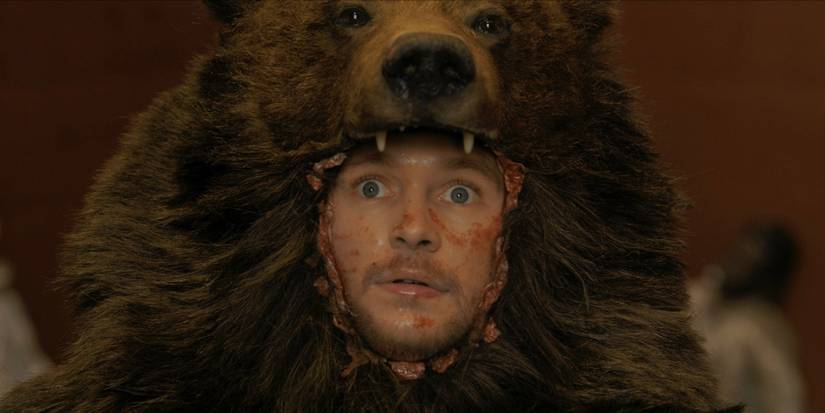
The tail end of the 2010s introduced a new Golden Age of horror, with Ari Aster’s folk horror Midsommar leading the charge. The instant hit centers on Dani (Florence Pugh), a grieving American woman who travels to an isolated Swedish commune with her emotionally distant boyfriend, Christian (Jack Reynor), and his friends Josh (William Jackson Harper), Mark (Will Poulter), and their Swedish friend Pelle (Vilhelm Blomgren) to attend a rare, once-every-90-years midsummer festival at Pelle’s rural commune, the Hårga. What initially looks like a sunlit, pastoral paradise slowly devolves into a nightmare. By the end of the rituals, Dani is crowned the May Queen, where she is given the choice to pick the ninth and final person for the sacrificial fire. She selects Christian, who has been paralyzed with a love potion and sewn inside the disemboweled carcass of a bear. As the temple burns, the female members of the Hårga cult scream and wail in unison with the pain of the dying, mirroring Dani's emotional anguish.
The final moments with Dani confirm why Aster crafted the perfect ending. From shock to a serene, cathartic smile, Dani’s reaction reflects her complete break from her past trauma, the purging of her toxic relationship with Christian, and her full emotional integration into the cult as her new "family". Beyond the terrifying sun-laced horrors, Midsommar is a story about grief and trauma. By infusing the defeat with those themes, it signifies a dark, emotional release from previous pain. Sacrificing Christian is the ultimate symbolic rejection of a man who made her feel invisible. While the cult's actions are abysmal, Dani is finally acknowledged. Her shared communal bond gave her a feeling of belonging. Midsommar is a dark, twisted fable after all!
8 'Moonlight' (2016)
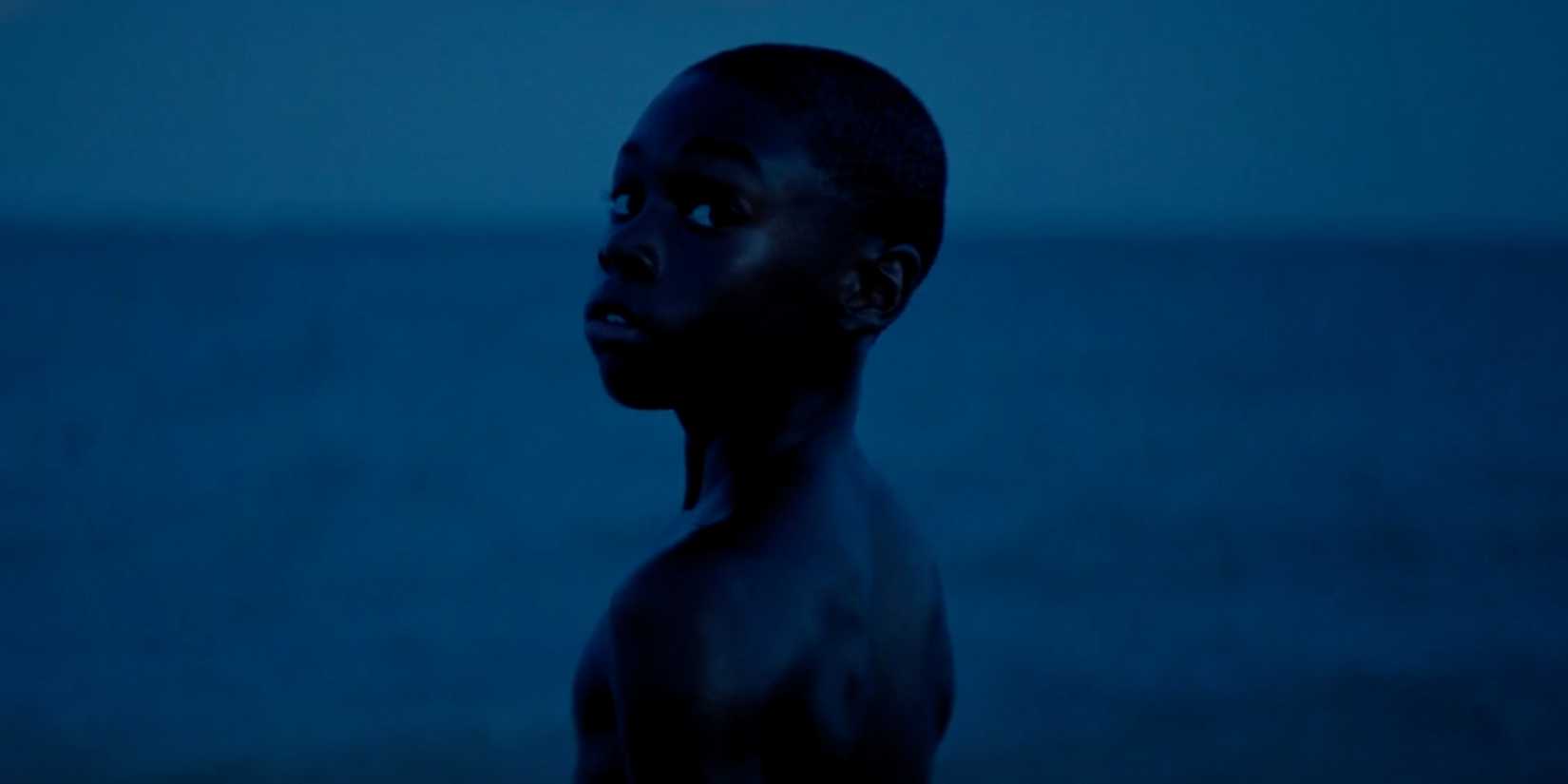
One of the decade's most underappreciated Oscar-winning films is the simply beautiful Moonlight. Written and directed by Barry Jenkins, Moonlight follows a young Black man named Chiron Harris across three distinct chapters in Miami, exploring his identity, sexuality, and struggles with masculinity. Little Chiron (Alex Hibbert) grows up in impoverished Liberty City, where he lives with his mother, Paula (Naomie Harris), who struggles with severe crack cocaine addiction and emotional abuse. A local drug dealer, Juan (Mahershala Ali), and his girlfriend, Teresa (Janelle Monáe), take Chiron under their wing, offering him a safe haven and teaching him to swim. In high school, Chiron (Ashton Sanders) remains a target for bullying, but shares an intimate sexual experience on a beach with his childhood friend, Kevin (Jharrel Jerome), who is eventually peer-pressured into a physical assault on Chiron. Ten years later, an adult Chiron (Trevante Rhodes) lives in Atlanta as a hardened, muscular drug dealer, having consciously adopted the physical appearance and demeanor of his late mentor Juan. He receives an unexpected phone call from Kevin (André Holland) that prompts a long-awaited, tender reconciliation. It’s that meeting that leads to a truly beautiful conclusion.
Sitting together in Kevin’s apartment, Chiron drops his tough exterior, admits he's tried to block out his past, and confesses that Kevin is the only man who has ever touched him affectionately. Kevin cooks for him, listens to his vulnerability, and they share a gentle, deeply tender embrace. When the scene cuts to a surreal, peaceful flashback of Little standing alone on a moonlit beach, it echoes the earlier moment with Juan about choosing your own identity and how "in the moonlight, black boys look blue." The final look into the camera signifies his final release of the armor he wore as an adult and an ultimate self-acceptance. Moonlight celebrates an ending of healing. But to reach that moment, Chiron and Kevin’s conversation about intimacy and the power of touch feels honest to a man who spent decades locked away. The ending offers a flicker of hope that a man can find the strength to grow.
7 'Whiplash' (2014)
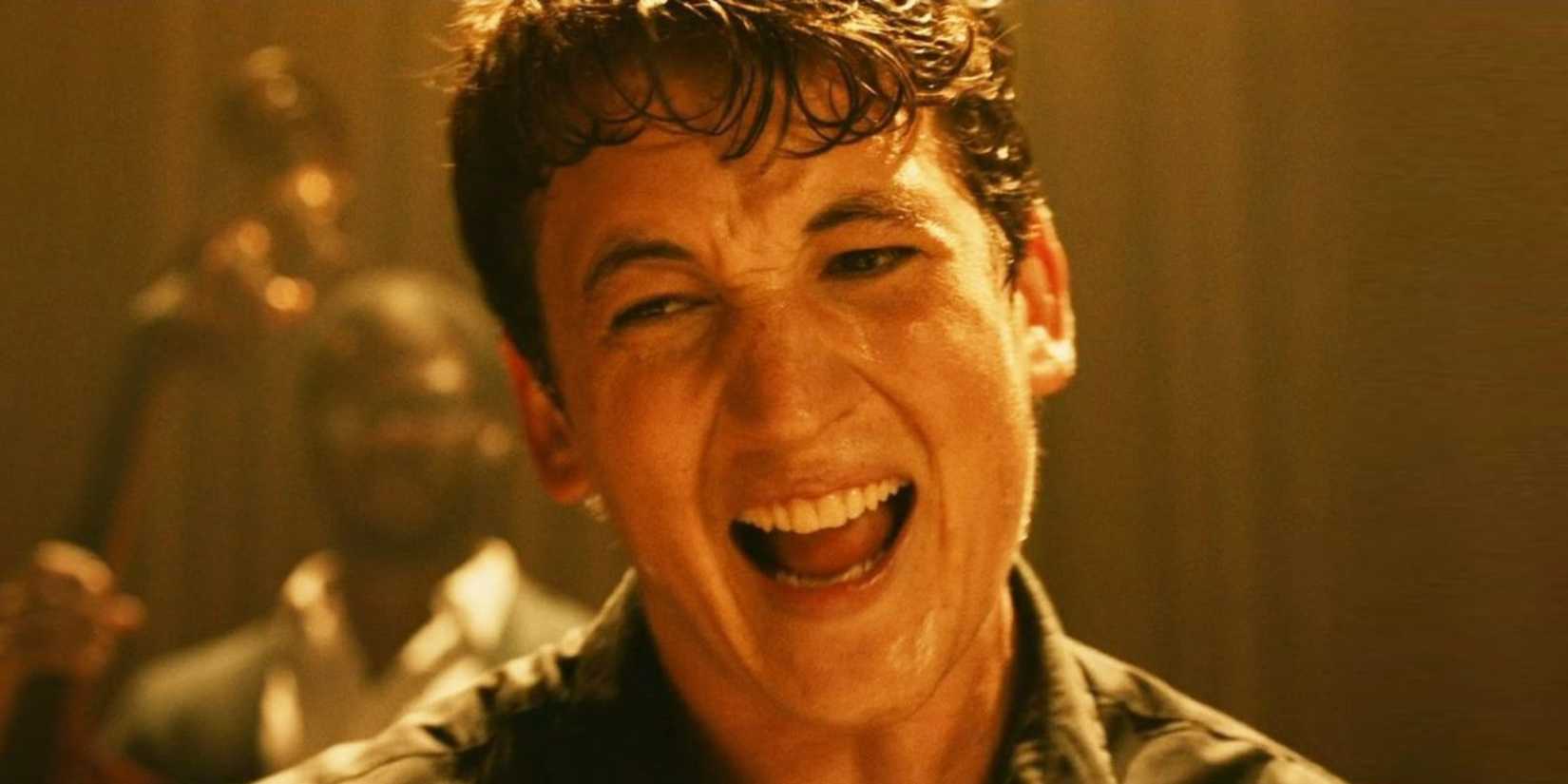
An unexpected masterpiece, Whiplash tells the story of great ambition and the lengths one will push another to achieve it. Written and directed by Damien Chazelle, the drama hones in on the destructive, high-stakes relationship between 19-year-old Andrew Neiman (Miles Teller), an ambitious young jazz drummer, and Terence Fletcher (J.K. Simmons), a ruthless, abusive music instructor at the elite Shaffer Conservatory. Fletcher quickly reveals his true nature, using extreme psychological and verbal abuse, humiliation, and physical intimidation to push Andrew, whose desire for perfection turns into a dangerous obsession. By the film's climax, a vengeful Fletcher invites Andrew to play at a major jazz festival, with the mission of sabotaging him for testifying against him, which leads to his firing. Andrew flails, panics, and humiliates himself on stage after Fletcher forces him to play a chart he’s never seen or practiced. But instead of letting Fletcher win, Andrew returns, seizes complete control of the tempo and the band, and turns it into a massive, bleeding-knuckle, extended drum solo.
In another example of how impactful a glance and smirk can be, the film’s final shot of Fletcher nodding in grim, triumphant approval, Andrew smiling back, and then a sudden blackout proves the psychological battle has been won. The 14-minute sequence provides the ultimate power shift as Fletcher moves from crushing his adversary, pleading for him to stop, and ultimately realizing Andrew has transcended, and stepping in as a true collaborator to guide the solo. The final glances blur the line between artistic victory and soul-crushing obsession. Chazelle matches the editing directly to the frantic tempo of the drums, building unrelenting anxiety before its cathartic crescendo. This extraordinary ending helped solidify the film as an all-time artistic great.
6 'Logan' (2017)

At the time in 2017, Logan ended in a way that it appeared that it would be the end of an era. Of course, we know now that’s not true, yet it doesn’t detract from the sheer brilliance of James Mangold’s film. Set in the year 2029, when natural mutant births have ceased, an aging Logan (Hugh Jackman) works as a limousine driver in Mexico as his healing powers fade. Simultaneously, he cares for a 90-year-old Professor Charles Xavier (Patrick Stewart), who suffers from severe dementia and dangerous, uncontainable psychic seizures. Their recluse life is upended when he is tasked with bringing a young mutant girl named Laura (Dafne Keen) to a safe Canadian sanctuary called Eden. The journey is anything but easy as transigen mercenaries and a cloned younger, feral version of Logan named X-24 relentlessly pursue the group. After taking a temporary combat serum, Logan and Laura defeat X-24, but Logan is fatally impaled on a tree branch. As he lies dying, he tells Laura not to become the weapon she was created to be, prompting her to refer to him as “Daddy.”
The film ends with Laura and the other children burying Logan in the forest as Laura recites the final monologue from the Western film Shane. She picks up the wooden cross on his grave and tilts it sideways to form an "X", honoring his legacy as an X-Man. Logan ends in a way that honors Wolverine's exceptional arc across the franchise and gives Jackman a poignant send-off as the iconic character. Rather than a superhero spectacle, Logan goes for emotional and definitive closure. Logan finally experiences what it means to care for and protect a family. His death is not filled with rage but solace. Mangold frames the finale more like a classic Western and gritty road trip thriller, reminding audiences there is room for different types of finales in superhero films.
5 'Avengers: Infinity War' (2018)

And now for the other end of the spectrum with one of the most shocking and brutal cliffhangers in superhero movie history. Avengers: Infinity War was heading toward heartbreak, but no one anticipated the toll it would take. Directed by Anthony and Joe Russo, the core of the film follows galactic warlord Thanos (Josh Brolin) as he hunts for all six Infinity Stones. Driven by the belief that destroying half of all living things will balance the universe's finite resources, Thanos seizes the collection despite the heroes' efforts on Titan and in the jungles of Wakanda. Upon extracting the Mind Stone from Vision (Paul Bethany), he completes the Infinity Gauntlet and snaps his fingers. Half of all life across the universe turns to dust, including numerous Avengers and Guardians, while Thanos retires to a peaceful planet and Nick Fury (Samuel L. Jackson) transmits a pager signal to Captain Marvel (Brie Larson).
Perhaps one of the most devastating experiences Marvel fans have ever witnessed, the end of Avengers: Infinity War was a brutal reminder that even the heroes were vulnerable. They were not unstoppable. The MCU showed what happens when tyrannical power gains total control. Like Star Wars: Episode V— The Empire Strikes Back, the villain wins and the heroes fail, as the narrative commits to genuine consequences. It shattered all expectations, as the victims of the snap were as heartbreaking as watching a terrifying, irreversible loss of friends and mentors. Tony Stark (Robert Downey Jr.) holding Peter Parker (Tom Holland) as he turns to ash is an image that is instantly ingrained in your brain forever. While audiences knew a sequel existed, there was no guarantee all our friends would return, even if they found victory in Avengers: Endgame, another MCU entry with a brilliant end. The truth is, Avengers: Endgame wouldn't have resonated emotionally if Avengers: Infinity War hadn't hit home as it did.
Collider Exclusive · 8 Questions · 2 Minutes Which MCU Villain Do You Align With? Killmonger · Namor · Zemo · Thanos
Eight honest questions about how you actually are: what you do about something unfair, how long you will wait for what you want, who you are really loyal to, how easily you let a thing go. Answer them and we will tell you which one of these four you have more in common with than you would like. Every one of them thinks they are the reasonable person in the room.
🐆Killmonger(Black Panther)
🔱Namor(Wakanda Forever)
🎭Zemo(Civil War)
🧤Thanos(Infinity War)
01
How do you react to something you think is unfair? All four of these men started here.
02
How long will you wait for something you want? Patience separates these four more than anything else.
03
Who are you actually loyal to? Answer for the real one, not the polite one.
04
How do you win an argument? Everybody has one method and uses it every time.
05
How easily do you let something go? This is the question that makes villains out of people.
06
What do you think about breaking the rules? Nobody on this list has ever felt guilty about it.
07
What do people say about you behind your back? You already know which one it is.
08
What would you do with real power? Eight questions in, this is the one that picks your villain.
The Case Is Made You Align With…
Four villains, and four arguments the films were honest enough to actually let them make. Here is the one you lean towards, the part of it that holds up, and the exact point where it stops holding up.
Erik Killmonger
You align with the one who was right about the problem and wrong about the solution. Killmonger is the most persuasive villain Marvel has produced because the film never pretends his anger came from nowhere.
- You notice who was abandoned and you cannot let it go, which is a moral instinct before it is anything else.
- His argument lands because Wakanda really did watch and do nothing, and the film makes T'Challa admit it out loud.
- Where it breaks is the method, since a man who was failed by power decided the answer was to hold more of it.
- Michael B. Jordan plays him as somebody performing certainty over grief, which is why the last scene of that film still works.
Namor
You align with the protector, which is the most understandable and most dangerous position on this list. Namor is not chasing power or revenge, he is doing whatever keeps his people hidden, and he has been doing it for centuries.
- Your loyalty has a hard border around it, and everything inside that border matters far more to you than anything outside it.
- Talokan is the best realised world Marvel has built since Wakanda, and the film makes you understand exactly what he is guarding.
- His logic is airtight right up until it requires somebody else's people to pay for his people's safety.
- He would rather be feared by the surface world forever than trust it once, and history has given him reasons.
Helmut Zemo
You align with the patient one, the only man on this list with no powers, no army and no hurry. Zemo lost his family in Sokovia and then spent years working out that you do not fight the Avengers, you introduce them to each other's secrets.
- You go quiet when you are hurt, and the quiet is where the thinking happens.
- Zemo is the only MCU villain who completely won, and he did it with a notebook, a plan and a great deal of self control.
- His grief is real, and the film is careful never to let you forget that he started as an ordinary man with a family.
- Where it fails is the cost, since taking apart the people who hurt him meant hurting a great many people who did not.
Thanos
You align with the one who decided the answer was arithmetic. Thanos is not angry and not grieving in any way he will admit to, he simply reached a conclusion and never once revisited it, which is precisely what makes him frightening.
- You are capable of holding a position that costs you everything, and you would call that conviction rather than stubbornness.
- Infinity War works because it is structured as his film, with a goal, a journey and a sacrifice, and the heroes are the obstacle.
- The flaw in the plan is not the cruelty, it is that he never seriously considered a single alternative to it.
- Josh Brolin plays him tired rather than triumphant, which is the choice that turned a purple giant into a real character.
4 'La La Land' (2016)

While some may point to the Oscar debacle as the true end of La La Land, the picture itself ended pitch-perfectly. Written and directed by Damien Chazelle, the ode to Hollywood follows Mia (Emma Stone), an aspiring actress, and Sebastian (Ryan Gosling), a dedicated jazz pianist, as they fall in love while struggling to pursue their artistic dreams in Los Angeles. As their relationship grows, the pressures of real life and career compromises cause friction between the pair. After a setback with Mia's one-woman play, she temporarily retreats home, but Sebastian later helps her land a life-changing film audition that launches her into stardom. By the end of the film, the story leaps ahead five years as they both achieve their individual professional dreams—Mia is a famous actress married to someone else, and Sebastian owns his jazz club—sharing a bittersweet, silent acknowledgment of the alternate life they imagined together.
For those in the entertainment world, the serendipitous meeting resonates. And for a story that brilliantly plays into the world of fantasy, the montage encapsulates the scenario of what if. As the music plays, a stylized, dreamlike montage imagines an alternate reality where they stay together: Sebastian supports her acting career, they travel to Paris, raise a family, and live out a storybook Hollywood romance. But alas, it’s just a fantasy. In reality, their long, understanding, bittersweet smile acknowledges their love, their shared history, and the reality of their separate lives. Hollywood endings aren’t real, and defying that lets La La Land capture the reality of dreamers so poetically. La La Land needed to subvert romantic expectations and treat a fairy tale as just that. The epilogue is the perfect final coda for a bittersweet symphony.
3 'Toy Story 3' (2010)

It may have taken a little over a decade to arrive, but the third chapter in the Toy Story franchise came to a sensational close. A story for children and kids at heart, Toy Story 3 follows 17-year-old Andy (John Morris) as he prepares to leave for college; his toys, including Woody (Tom Hanks), Buzz Lightyear (Tim Allen), and Jessie (Joan Cusack), are mistakenly thrown out with the trash and donated to Sunnyside Daycare. Sunnyside initially looks like a paradise, but Lots-o'-Huggin' Bear (Ned Beatty) runs it like a harsh prison state. The toys try to escape to a little girl named Bonnie’s house, only to get dragged onto a garbage truck and end up at a local landfill, sliding toward a massive, toxic incinerator. Lotso abandons them to the fire, but the aliens operate a giant claw crane to save them. The toys return to Andy's house, and Woody leaves a note that convinces Andy to donate his entire toy collection to Bonnie. Andy spends a final afternoon playing with Bonnie and his toys before driving off to college, marking the bittersweet end of his childhood.
The ending of Toy Story 3 requires an entire box of tissues. Though two films followed, should this have been the final farewell, the passing-the-torch moment was as sentimental as it could get. The toys get to continue their purpose, making a child happy, rather than being stuck in an attic box, which is beautifully bittersweet. As Andy drives away to college, Woody and the rest of the toys watch him go, and Woody says his final goodbye: "So long, partner,” it serves as the perfect reflection of the circle of life. Seeing the clouds mirror the wallpaper in Andy’s room is sensationally poetic and serves as the perfect button. The franchise has remained a crucial part of certain generations, so growing up with the toys gives the audience a way to say goodbye to their childhood as well. Toy Story 3 may have closed a chapter, but we’ll always have friends in Woody, Buzz, and the whole gang.
2 'Arrival' (2016)

Directed by Denis Villeneuve, one of the greatest science fiction films of the 21st century remains Arrival. It depicts humanity's first contact with extraterrestrial visitors and the transformative power of language and time. After twelve massive, shell-shaped alien spacecraft touch down around the world, linguistics professor Dr. Louie Banks (Amy Adams) and theoretical physicist Ian Donnelly (Jeremy Renner) are recruited to establish communication. While nations struggle to translate the alien language, fear and miscommunication push the planet toward the brink of global war. Louise discovers that the hetapods' written language represents entire thoughts simultaneously rather than sequentially. Her perception of time begins to shift from linear to nonlinear. What initially appears to be tragic flashbacks of Louise raising and losing her young daughter are actually visions of the future. Louise is left with a choice: even though the future is filled with pain and loss, Louise chooses to embrace and live through every moment anyway.
Arrival thrives on its masterful twist. The entire final sequence is actually flash-forwards, as her brain has now been rewired to perceive the past, present, and future together. In a vision of the future, Chinese General Shang (Tzi Ma) thanks Louise for saving the world, prompting her to use the future knowledge to help China stop the attack. She realizes she will marry Ian and Hannah is her daughter, who will die of a rare, incurable illness. Watching Louise accept life's beauty allows the story to end on an optimistic note. The film's structure mirrors the hetapods' circular symbols, inviting the audience to experience the story as Louise does. By zooming back into an intimate, quiet moment of humanity, we are reminded that time is painful, but love is worth every second of the pain.
1 'Inception' (2010)

A decade and a half later and cinephiles are still debating the end of Christopher Nolan's masterpiece, Inception. The story follows Dom Cobb (Leonardo DiCaprio), a fugitive extractor, who uses experimental military-grade technology to enter people's dreams and steal confidential corporate secrets from their subconscious. Tasked with an impossible job by wealthy businessman Saito (Ken Watanabe), Cobb is offered a way to clear his criminal record and return home to his children: he must use inception to plant a new idea in his target, Robert Fischer (Cillian Murphy), the young heir to a massive energy conglomerate. As Cobb and his specialized team pull off the multi-layered dream heist, he is haunted by the projection of his deceased wife, Mal (Marion Cotillard), whom he previously performed inception on, which led to her suicide. After succeeding in his mission, Cobb finds an aged Saito, who reminds him of their agreement, which he honors when all of the dreamers awake. Cobb finally reunites with his children, who are older and wear different clothes than in his dreams. He then spins a top in a dream to verify that he is in the real world. As the camera pans onto the spinning top, Cobb instead walks away, leaving it intentionally vague whether he is awake or dreaming.
For those individuals seeking a clear, finite conclusion, steer clear of Inception. Nolan has noted that the ending's question is an intellectual puzzle rather than an emotional one. Cobb no longer cares where he is because he has finally freed himself of the guilt and reunited with his family. For a film about mind puzzles, after nearly two hours of tracking the rules, dream levels, and totems, ending on this note was brilliantly brazen. Spinning the top and walking away signifies a decision to live in the present rather than remain trapped in the past. The abrupt cutoff to black is a gift to audiences who, too, must struggle to distinguish reality from illusion. If the ending frustrated you, go back and watch again.
KioskNews shows a cleaned-up reading view extracted from the publisher’s page — the original always lives on their site, not ours.