America's pharmaceutical industry is facing a 'monkey problem' & reason is China
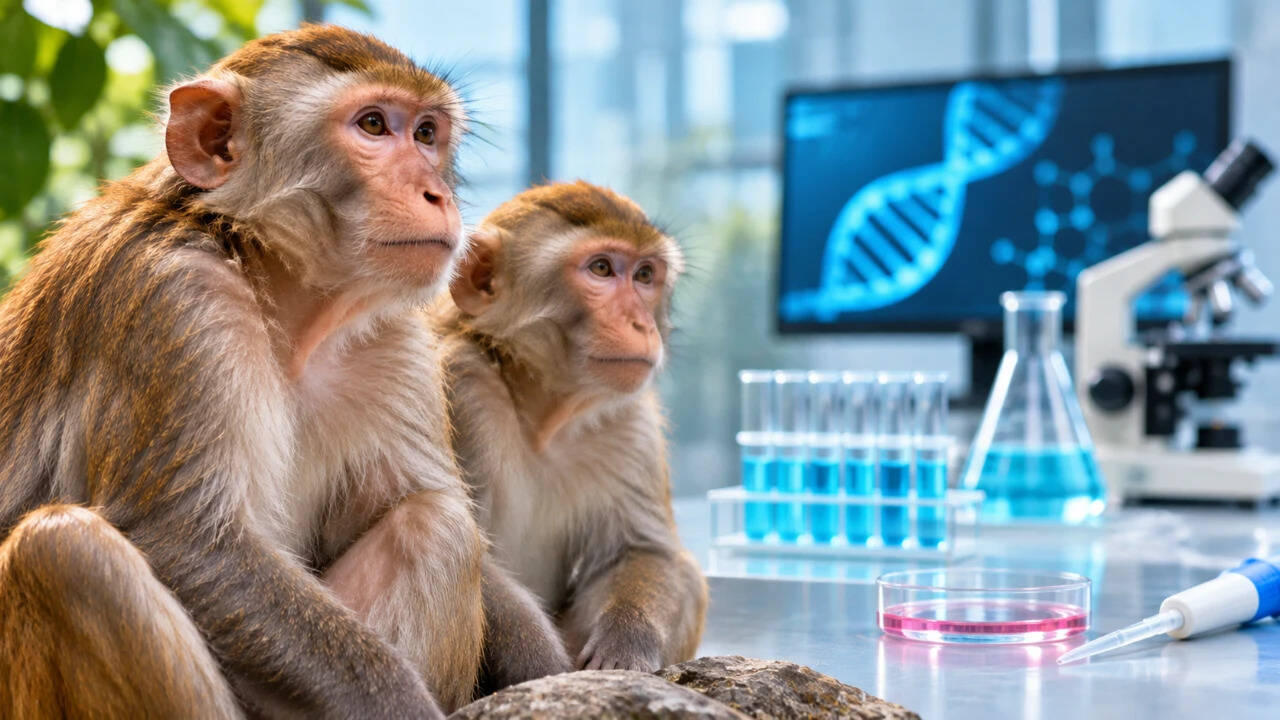
AI-generated image for representation purpose
America's pharmaceutical industry is facing a lab monkey crisis because of AI. A TechCrunch report says that the rising costs and restrictions on imports are adding pressure on laboratories.
China has played a major role in supplying laboratory monkeys to the US. China, as stated in the report, accounted for nearly 60% of America's laboratory monkey imports before it banned exports in 2020. Facing supply constraints, American laboratories subsequently turned to Cambodia. However, a 2022 investigation found that wild-caught monkeys were falsely represented as captive-bred animals. Now, a startup backed by Palantir cofounder Joe Lonsdale plans to establish a large-scale monkey breeding facility in the US to help address the problem.
Palantir co-founder's startup aims to tackle monkey problem of American pharmaceutical industry
As stated in the report, Safer Human Medicine, said to be backed by Joe Lonsdale aims to eventually breed 30,000 macaques over the next twenty years. The proposed facility is intended to reduce American laboratories' dependence on imported monkeys, which are widely used in pharmaceutical research and testing.The shortage has become more pressing as AI helps researchers discover potential drugs faster, increasing the number of experimental treatments that may need to be tested.
However, the supply problem existed even before the recent growth of AI-assisted drug discovery.
Why is America facing a monkey shortage
As mentioned above, China was one of the key suppliers of laboratory monkeys to the US. Since the export ban in 2020, the pharmaceutical industry has been hit with shortages. This in turn has also added to the cost.As stated in the report, macaques reportedly cost around $3,000 in 2019. But today their prices have since climbed to more than $20,000 with China reportedly charging approximately $26,000 per macaque.
Why are monkeys important for pharmaceutical research
According to estimates, US laboratories import around 20,000 monkeys every year. Macaques are commonly used in medical experiments because of their biological similarities to humans. Researchers use them to study the safety, toxicity and biological effects of potential treatments before they move into human clinical trials.AI is also changing the drug discovery process. Researchers can use AI tools to identify potential medicines and generate more drug candidates in less time. However, promising candidates may still require laboratory studies, including animal testing, before human trials can begin.
KioskNews shows a cleaned-up reading view extracted from the publisher’s page — the original always lives on their site, not ours.