Greens push to let Australians sue Big Tech in digital safety overhaul
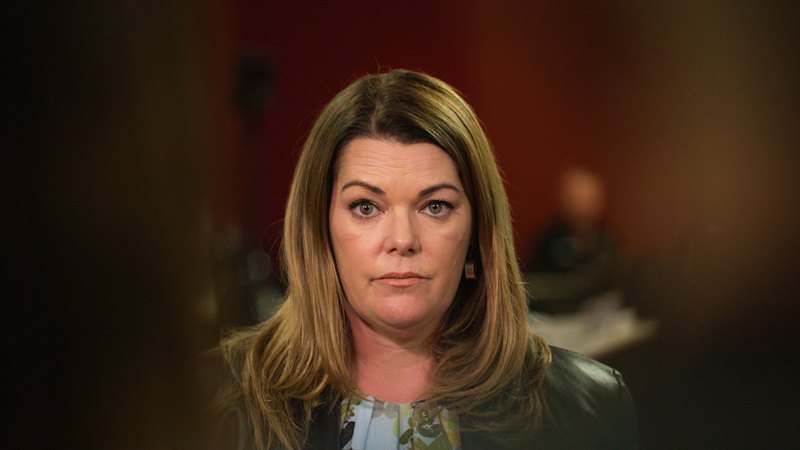
Individual Australians would be able to sue big tech companies for compensation if they believed they were harmed online under changes the Greens are proposing to the government’s latest digital protection laws.
The digital duty of care laws unveiled by the Albanese government last month are due to be introduced to parliament this week, alongside laws that would change the tax treatment of trusts and a bill to establish a gas reservation policy to lower prices.
The government is preparing to ditch the ministerial discretion to designate new harms from the legislation, which critics in the Coalition, One Nation and the Greens say gives Communications Minister Anika Wells too much power, but Greens senator Sarah Hanson-Young said her party wanted additional modifications to the laws.
The proposed laws are designed to hold social media companies such as Meta and X to account, with requirements to screen out harmful content for under-18s including pornography, content that promotes eating disorders, and sites promoting hostility to women.
There would also be a “my feed, my way” initiative that would allow all Australians to opt out of receiving content recommended by algorithms instead of a chronological feed of accounts they already follow.
The Coalition and One Nation both appear unwilling at this time to strike a deal with Labor to pass the laws, which means the government will probably have to negotiate with the Greens.
But Hanson-Young said the laws should be amended so individual Australians could sue big tech corporations for the harm they had fostered online. The minor party also wants stronger guardrails on addictive algorithms and fines linked to a percentage of technology firms’ global revenue.
“To meaningfully change the behaviour of big tech companies, the digital duty of care laws must include the right for Australians who have been harmed online to be able to take legal action and seek compensation for the damage done,” she said.
“Enforcement of the digital duty of care cannot be left to the eSafety Commissioner alone. To really put Australians’ online safety at the heart of this reform, individuals and the community need to have the right to take on Big Tech through a private right of action.”
Social media giant Meta, which owns Facebook, Instagram and WhatsApp, recently agreed to an $US18 billion settlement ($25 billion) with some US states and territories to resolve claims the company had harmed children.
If the federal government were to accept the Greens’ amendments to allow individuals to sue big tech, that could place the Albanese government on a collision course with US President Donald Trump and his administration, which has already made known its loathing for the digital duty-of-care laws.
Asked about the latest policy changes, White House economics spokesman Kush Desai said: “President Trump has unequivocally warned trading partners against imposing digital services taxes, fines, and other forms of extortion on America’s leading technology sector.”
Under Labor’s draft laws, only the eSafety commissioner could step in to sue or fine tech companies up to $109.2 million if they fail to take steps to protect Australians from proscribed online harms.
Hanson-Young said that amount was insufficient because “huge tech companies make billions of dollars trapping Australians on their addictive platforms. To change their behaviour, they will only respond to one thing: penalties that really hit their bottom line”.
The Coalition and One Nation have called the proposed laws a form of censorship, with opposition communications spokeswoman Sarah Henderson describing them on Sunday as “dangerous and undemocratic”.
“Labor must scrap its proposed digital duty of care and go back to the drawing board,” Henderson told this masthead. “This is a blank cheque for political censorship by a government desperate to shut down its political opponents.”
Wells is due to address the National Press Club about the draft laws on Thursday, while Resources Minister Madeleine King will address the club on Wednesday about the government’s plan to create a gas reservation.
The government’s plan to introduce a minimum 30 per cent tax on discretionary trusts will also come before parliament this week, prompting opposition treasury spokesman Tim Wilson to call for the government to abandon the legislation.
“If he won’t abandon his trusts legislation, the treasurer should have the humility to commit to checking his work and putting the updated legislation straight back out for further consultation,” he said.
“Small and family businesses have already spent four months paying for legal, financial and valuation advice, and been told restructure costs could hit $50,000.”
Cut through the noise of federal politics with news, views and expert analysis. Subscribers can sign up to our weekly Inside Politics newsletter.
KioskNews shows a cleaned-up reading view extracted from the publisher’s page — the original always lives on their site, not ours.