Iran has proposed a plan during U.S. talks to reopen Hormuz within a week: minister
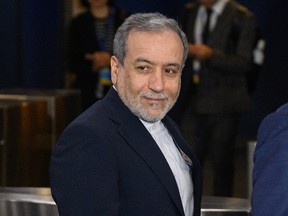
UNITED NATIONS — Iran’s Foreign Minister Abbas Araghchi said Friday that Tehran had offered Washington a plan that would see the Strait of Hormuz reopened to maritime navigation within seven days once agreed.
Sign In or Create an Account
Araghchi met for talks on Tuesday with U.S. President Donald Trump’s envoy Steve Witkoff, and previously set out conditions for ending the war and reopening the vital energy shipping channel.
“Iran has conveyed to the United States, through Qatar, a concrete seven-day plan. If the necessary conditions are met, the strait can be reopened, and normal maritime passage restored within seven days,” Araghchi said at the UN Friday.

Columnist Jesse Kline keeps you up to date with what’s happening in Israel and the effects of antisemitism on life here in Canada. Friday mornings.
By signing up you consent to receive the above newsletter from Postmedia Network Inc.
A welcome email is on its way. If you don't see it, please check your junk folder.
The next issue of Channel Israel will soon be in your inbox.
We encountered an issue signing you up. Please try again
“The choice now rests with the United States. Iran does not accept coercion, threats, or intimidation, and Iran will not surrender its sovereign rights under pressure.
“I can tell you if there is seriousness in the U.S. side to come to a deal and reopen the Strait of Hormuz, everything is now prepared.”
Earlier media reports suggest the new plan calls for a cessation of all hostilities in the Middle East for seven days, including in Lebanon.
It also reportedly calls for the release of frozen Iranian assets estimated to be worth at least US$12 billion, as well as the lifting of sanctions on Iranian oil and an end to the U.S. naval blockade of Iran.
On the seventh day of the truce, Iran would reopen Hormuz.
Hossein Mohebi, a spokesman for the Revolutionary Guards, the ideological arm of Iran’s military, told AFP in an exclusive interview on Tuesday that ending hostilities in Yemen was also among Tehran’s demands.
The U.S. and Iran signed a memorandum of understanding in June that aimed to end the war, reopen the strait and launch talks on Iran’s nuclear program.
But the deal broke down shortly afterward when Iran fired on commercial ships in Hormuz that it accused of deviating from its approved route through the waterway.
Iran requires ships to obtain authorization before passage, citing security and sovereignty reasons.
Ships that refuse to comply are regularly targeted, while the United States sporadically bombs Iranian coastal areas in retaliation.
Join the Conversation
This website uses cookies to personalize your content (including ads), and allows us to analyze our traffic. Read more about cookies here. By continuing to use our site, you agree to our Terms of Use and Privacy Policy.
KioskNews shows a cleaned-up reading view extracted from the publisher’s page — the original always lives on their site, not ours.