Iran hosts Russia’s FM Lavrov as Moscow seeks benefit from US sanctions relief - analysis
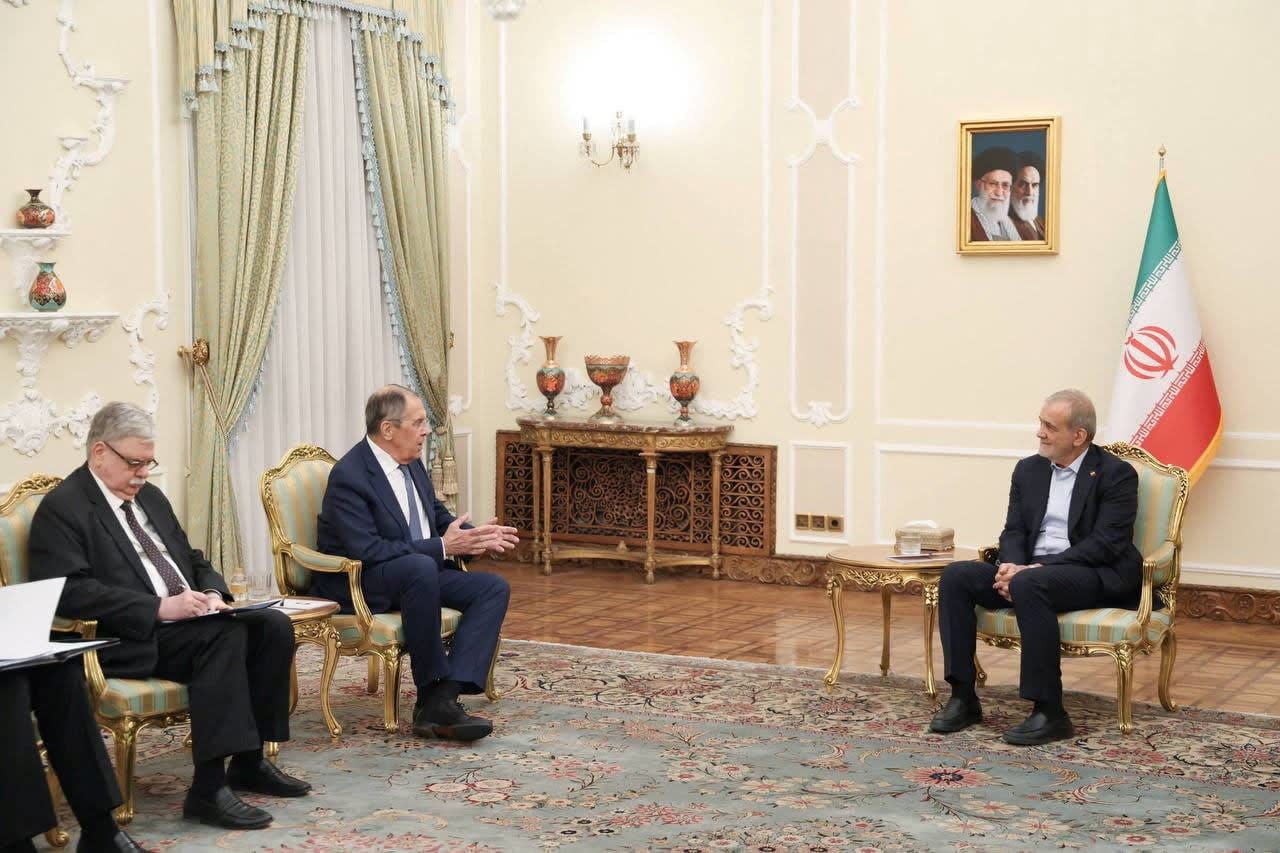
Iranian President Masoud Pezeshkian met with Russian Foreign Minister Sergey Lavrov in Tehran this week. This comes as the Russian Foreign Minister Sergey Lavrov said Monday that Moscow would honor its economic agreements with Iran despite the “challenging situation.” Moscow is reaffirming its commitment to cooperation with Iran. Lavrov met with his Iranian counterpart, Abbas Araghchi.
This comes as the relationship between Ukraine and the United States is facing a crisis. US President Donald Trump has been more critical of Ukrainian leader Volodymyr Zelensky. The US apparently wants Ukraine to stop attacks on Russian energy sites. The US has also decided to give Russia sanctions relief. Meanwhile, the US appears to be gearing up for a possible escalation with Iran. Trump has endorsed Israel’s Prime Minister Benjamin Netanyahu to remain in power, hinting that the US can only work with Netanyahu to keep the Iran war going.
As such, Lavrov’s arrival in Iran comes at a key time. It follows reports that the US Secretary of War visited Israel. It also comes as Pakistan’s army chief, Field Marshal Asim Munir, arrived in the Iranian capital Tehran on Tuesday. A lot is in play. With Russia and Pakistan holding high-level meetings with Iran, it is clear Iran feels it is in the driver’s seat of regional developments. Russia feels it is in the driver’s seat of global developments. It hopes the US will abandon Ukraine. Iran and Russia both want to exploit the upcoming US elections.
"Russian Foreign Minister Sergey Lavrov has met and held talks with the President of the Islamic Republic of Iran," a post on the Iranian president’s Telegram channel said. Russian state media was relatively quiet on the trip. TASS news in Moscow noted that “Lavrov and Pezeshkian discussed bilateral relations as well as recent regional and international developments. They also exchanged views on strengthening cooperation between Tehran and Moscow.”
Lavrov said that “Iran’s struggle against the aggression unleashed upon it is a just cause, Russian Foreign Minister Sergey Lavrov told a joint news conference after talks with his Iranian counterpart, Abbas Araghchi,” TASS noted. “According to the top Russian diplomat, neither Kyiv nor its European sponsors are ready for talks. Russia has never targeted Ukrainian infrastructure that is not used for terror attacks on Russia, he stressed.”

Lavrov calls Iran's war with US and Israel a just cause
TASS also summarized Lavrov’s other statements. Lavrov spoke about Ukraine. He also stressed how Iran’s struggle against the US and Israeli “aggression” was a just cause, TASS said.
"People should not have to suffer because of events that occur against their will…Therefore, I am confident that Iran’s cause - much like Russia’s - is a just cause." Russia said that it “is ready to help look for ways to settle the conflict between the United States and Iran.”
Lavrov said, “We analyzed the situation that had emerged as a result of an unprovoked US-Israeli aggression against Iran. I once again outlined our country’s readiness to render assistance in searching for mutually acceptable solutions to resolve this artificially created crisis."
Russia is ready to honor economic agreements with Iran. As Russia receives sanctions relief, this may benefit Iran. “Speaking at a joint news conference in Tehran, Lavrov said Russian-Iranian cooperation is developing dynamically despite ‘known circumstances,’ supported by a comprehensive strategic partnership treaty that entered into force last year,” Turkey’s Anadolu noted. Turkey is closely watching developments in Iran. It has hedged its bets on this conflict. Turkey also has amicable ties with both Ukraine and Russia.
Of interest is Moscow’s continued role in rail links and Iran’s nuclear program. The report noted that Lavrov said Russian specialists are gradually returning to Iran’s Bushehr nuclear power plant, noting “significant prospects in the field of hydrocarbon extraction and redistribution.” He also said that Russian contractors continued engineering work on the planned Rasht-Astara railway, Anadolu noted. “Despite the challenging situation … Russia has no intention of abandoning the implementation of agreements with Iran in the economic and investment spheres,” Lavrov said.
Russia sees the work with Iran as part of its larger attempt to change the world order. Russia wants to weaken US hegemony that emerged in the 1990s. Russia will exploit the Ukraine war and Iranian conflict to get what it wants. Over the last 15 years, meetings between senior Iranian officials and Russian Foreign Minister Sergei Lavrov, as well as President Vladimir Putin, have reflected the steady expansion of Tehran-Moscow ties from pragmatic cooperation to a strategic partnership.
Lavrov previously worked with Iran on 2015 nuclear agreement
Lavrov worked closely with Iranian Foreign Minister Mohammad Javad Zarif during negotiations that produced the 2015 nuclear agreement. He continued regular talks with Zarif afterward, including talks in Tehran in April 2021 covering the nuclear issue, Syria and bilateral relations.
Under Iranian President Ebrahim Raisi, Lavrov developed a similar relationship with Foreign Minister Hossein Amir-Abdollahian, meeting him in Moscow in October 2021 and subsequently discussing Afghanistan, Syria, the Caucasus, economic cooperation and the nuclear agreement. More recently, Lavrov has met Foreign Minister Abbas Araqchi repeatedly. In February 2025, Lavrov visited Tehran and met both Araqchi and President Masoud Pezeshkian. Araqchi then visited Moscow in April, where he met Lavrov and Putin and delivered a message from Supreme Leader Ayatollah Ali Khamenei. Reuters
Putin's contacts with Iran have developed in parallel. He held numerous meetings with President Hassan Rouhani, including during Putin's 2015 and 2017 visits to Tehran and a meeting in Yerevan in 2019. Raisi met Putin in Moscow in January 2022. Six months later, Putin traveled to Tehran, meeting Raisi and Khamenei as Russia increasingly turned toward Iran following its invasion of Ukraine.
Pezeshkian continued this trajectory, meeting Putin in 2024 before traveling to Moscow in January 2025 to sign a comprehensive strategic partnership treaty. The agreement institutionalized expanding political, economic, and security cooperation.
KioskNews shows a cleaned-up reading view extracted from the publisher’s page — the original always lives on their site, not ours.