Is it true that … dock leaves cure nettle stings?
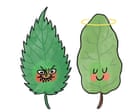
If you’ve ever brushed against a stinging nettle, chances are someone told you to find a dock leaf. The wide green leaves of dock plants seem to grow conveniently nearby, and rubbing one on a sting is a time-honoured remedy. But does it actually work?
Probably not in any way that’s unique to the plant, says John Tregoning, a professor at Imperial College London and the author of Live Forever? A Curious Scientist’s Guide to Wellness, Ageing and Death.
When you brush against a nettle, tiny hairs on the plant can pierce the skin and release a mixture of chemicals, including histamine, acetylcholine and serotonin. These trigger burning, itching and redness.
Could dock leaves contain chemicals that counteract the sting, such as antihistamines? “Maybe, but probably not,” says Tregoning. There is little evidence that dock leaf sap contains substances capable of significantly relieving the reaction.
after newsletter promotion
So why do people swear by them? Rubbing a leaf against the skin may provide a competing sensation that temporarily distracts from the pain, says Tregoning. “There’s a limit to the number of sensations that the nerve cells can process, so if you overstimulate them with the rubbing there’s less feedback from the pain.”
The distraction of searching for the leaves may also help. “The short burst of pain is relieved in the time spent hunting for the dock leaves.” Tregoning suggests that applying the sap may also have a cooling or soothing effect. But none of these things are unique to dock leaves.
A small study compared dock leaves with lettuce leaves as a treatment for nettle stings in nine medical students. It found no meaningful difference between the two. Tregoning suspects that any perceived benefit is most likely to be a placebo effect.
KioskNews shows a cleaned-up reading view extracted from the publisher’s page — the original always lives on their site, not ours.