Don’t scan that ‘Carousell invoice’: Scam hits 63 sellers in Singapore
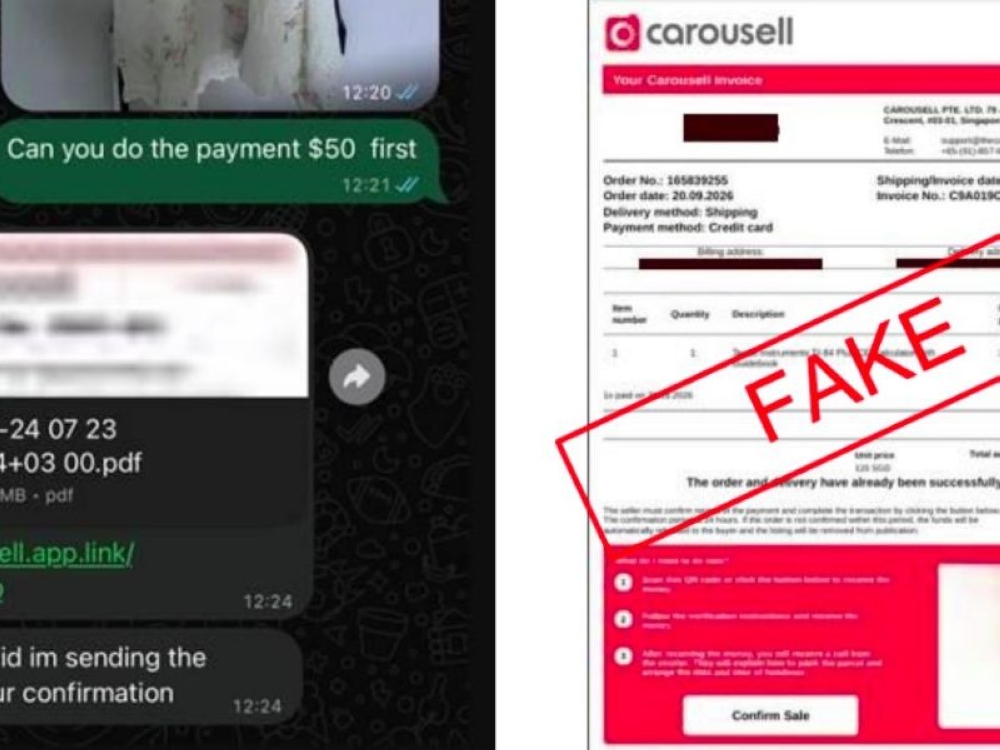

Scammed victims say they received a PDF file resembling a Carousell invoice, purportedly to facilitate payment or to confirm the transaction. — Singapore Police Force pic via AsiaOne
First Published: Saturday, 24 Oct 2026 11:44 AM MYT
SINGAPORE, Oct 24 — Scammers have swindled at least S$180,000 (RM575,136) from Carousell sellers since July, with at least 63 cases reported.
The police warned in a statement on Friday (October 23) that scammers are posing as interested buyers to trick victims into giving their personal banking details.
First, victims are persuaded to continue the conversation on other messaging platforms including WhatsApp and Telegram.
Then, scammers send a “Carousell invoice” in a PDF file format, containing a QR code and a link to supposedly facilitate payment or to confirm the transaction.
In some cases, scammers sent an additional link using the “carousell.app.link” domain to create a sense of trustworthiness.
Once victims scan the QR code or click the link in the file, they would be directed to a fake Carousell website and guided by a chatbot to supposedly verify their bank account to receive payments.
Victims would subsequently be directed to a phishing website mimicking a bank’s website and prompted to provide their internet banking credentials, card details, OTP and/or approve digital token notifications.
They would later discover unauthorised transactions made from their card or bank accounts, including transfers to overseas cards.
Members of the public are advised to remain vigilant and adopt the ACT (Add, Check, Tell) framework, which includes adding the ScamShield app and enabling security features.
Those who suspect they have fallen victim to a scam should contact their bank immediately to report and block fraudulent transactions and lodge a police report.
For more information on scams, members of the public can visit the ScamShield website at www.scamshield.gov.sg. — AsiaOne
KioskNews shows a cleaned-up reading view extracted from the publisher’s page — the original always lives on their site, not ours.