China didn’t just host an Apec summit. It ran a year-long campaign
The image everyone will remember from Shenzhen is three men in one frame – Chinese President Xi Jinping, US President Donald Trump and Russian President Vladimir Putin, with Xi at the centre. But the story is not the smiling photos, or even the week. It is the 11 months that produced it. Beijing did not just host a summit. It ran a year-long campaign.
Since last December’s meeting opened the Asia-Pacific Economic Cooperation forum’s “China Year”, China has held three senior Apec officials’ meetings and 10 ministerial gatherings, with more than 300 events drawing more than 10,000 participants.
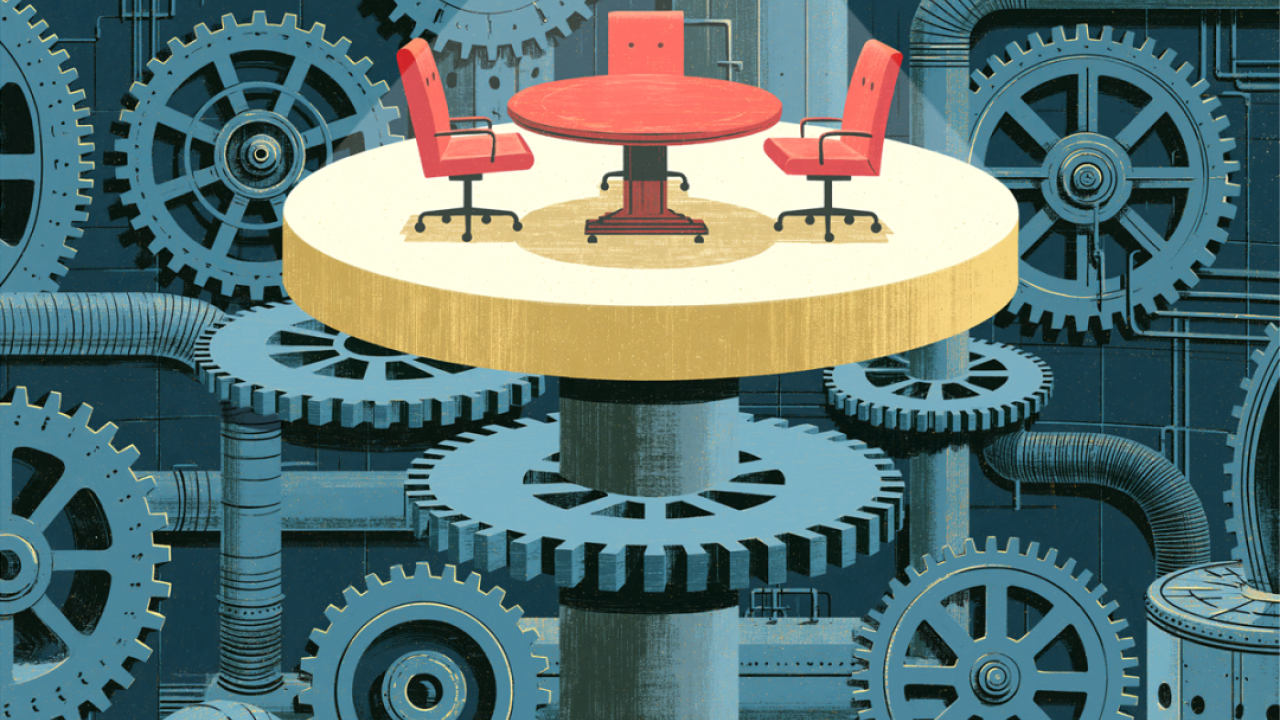
The West saw a photo opportunity. China was assembling an architecture.
The theme, “Building an Asia-Pacific Community to Prosper Together”, was set out in the Shenzhen Outlook declaration. In his keynote speech, Xi said Apec members were “like passengers riding the same ship”; cooperation was the refrain, the message discipline as deliberate as the seating chart. Pledges gave it weight – US$20 million for Apec cooperation, a new research centre and outcome documents on trade, connectivity and innovation.
Xi calls for Asia-Pacific ‘integration’ and cooperation at Apec summit
Consider the machinery. At the CEO summit on November 17-18, more than 2,000 gathered – 115 Fortune 500 companies, every Apec economy represented – with American firms forming the largest contingent at near 20 per cent. It issued the “Shenzhen Initiative”, the first initiative in the summit’s 30-year history.
The point: Beijing can convene the world’s capitals on its own calendar and stage.
Consider who got rewarded. Canadian Prime Minister Mark Carney arrived to find Beijing had lifted punitive tariffs on Canadian canola meal, peas, lobster and crab. Ottawa had done the same for Chinese electric vehicles earlier and hosted a yuan-denominated Chinese sovereign green bond in a North American first.
South Korean President Lee Jae Myung got the warm embrace: a third meeting with Xi in a year, the free trade pact’s second phase concluded – a courtship to keep Seoul leaning on Beijing for a reopening to the North even as Trump ties any meeting with North Korean leader Kim Jong-un to Xi. That is the relationship Tokyo wants to pull into its containment arc, and Beijing won’t let it go.
Consider who was left in the cold. Japanese Prime Minister Sanae Takaichi was kept at arm’s length – a handshake, a brief exchange, a second-row position. The Philippines, mired in South China Sea friction, got none of the favoured treatment. The sidelining was deliberate: you cannot elevate some without excluding others.
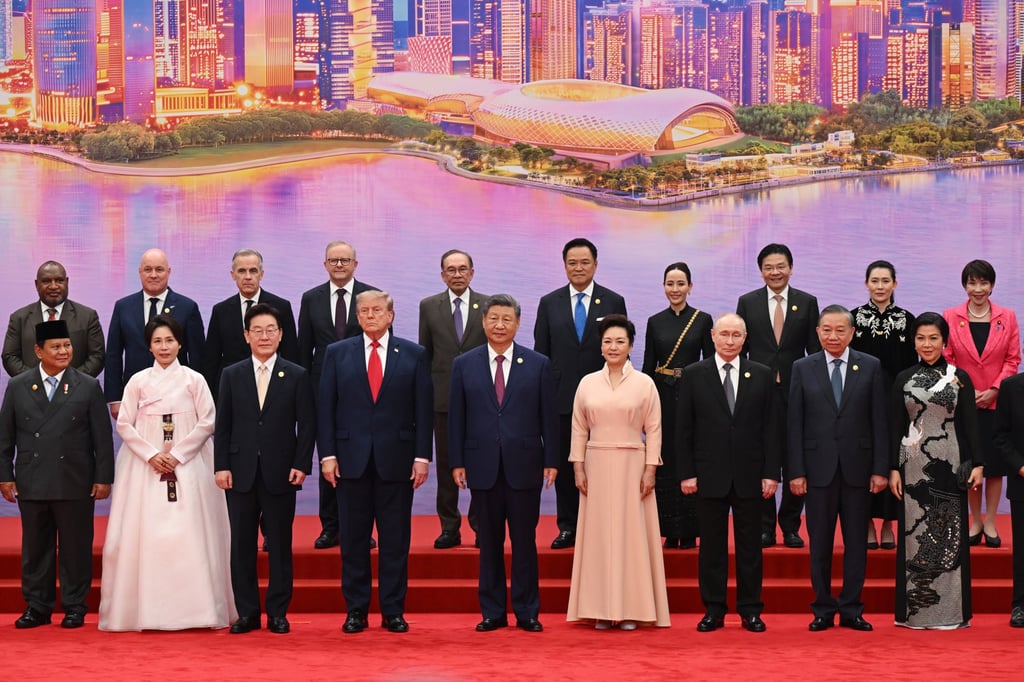
Beneath the hospitality, Beijing set out three tiers: the multilateral Apec floor of 21 economies, a middle band of bilateral meetings meted out as reward – or withheld – and, at the peak, the US-China-Russia trilateral meeting.
The tiers were worked across five dimensions. Security: the trilateral’s most concrete item, a push for norms governing artificial intelligence (AI) in nuclear command, with human control non-delegable. Economy: Shenzhen, the mainland’s first city to top 5 trillion yuan in trade, showcasing chips, robotics and the green industry. Technology: the AI dialogue began in September. Environment: statements touched on green technology and sustainable finance.
Finance was the quietest, most structural thread. It was also the connective tissue. Nearly a third of China’s trade is now settled in yuan, up 18 percentage points in a decade; the China-Russia share has jumped from 17 to 62 per cent in five years; more than 140 Association of Southeast Asian Nations (Asean) institutions sit on China’s payments system.
It’s the old strategy of “encircling the cities from the countryside” – the Global South first, the rich later. It captures the year: build the base first, the glittering capital last.
02:48
Xi, Trump and Putin meet for historic trilateral summit at Shenzhen Apec meeting
Which brings us to Thursday afternoon – the peak of the pyramid. Trump arrived weakened by a US midterm election defeat and left calling Xi a “friend”; Putin arrived to be told, gently, that he still matters. Xi arrived having spent a year as the indispensable node.
SCMP Plus is a new premium news platform that gives you an
all-inclusive edge to stay ahead on China news.
To access our exclusive content you’ll need to subscribe.
Already a subscriber?
LOG IN
The three then issued a joint “declaration towards peace” – UN reform, stable energy, a curb on international courts and a pledge that a nuclear war “cannot be won and must never be fought” – with Xi trusting that “the seeds sown at [Shenzhen] will surely take root, sprout, blossom and bear fruit”. The trilateral was the smallest, most photographed tier – and, for Beijing, the capstone of the game.
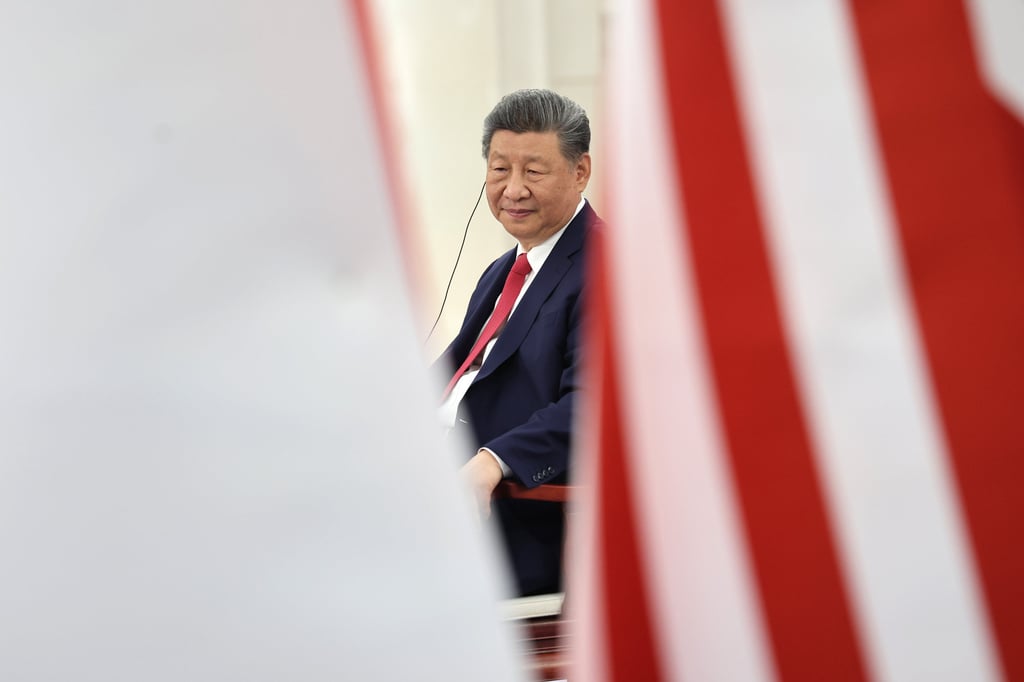
This is what the power-politics reading gets backwards. It scans the room for a carve-up and finds three men posturing. But Beijing did not exercise leverage in the room; it accumulated it over the year, across every layer. China did not need to dominate the trilateral because it had already elevated itself across the region, sidelined critics, opened its market and deepened its currency’s reach.
None of this is settled. A year of staging cannot substitute for a convertible currency or a recovering property market, and Beijing knows it cannot afford to look all-powerful. Power politics has never required perfection – only a plan, a year and the discipline to let the world chase the spotlight while you build the stage.
Yalta was a world divided over a week. Shenzhen was something harder to read: a world reordered across a year, the decisive moves made not at the table everyone photographed but at the hundreds of others around it.
That, at least, is the bet behind the year-long effort – that when the trilateral spotlight fades, as it soon will, the architecture underneath outlasts it. Whether it does is a question only the years ahead can answer; the week in Shenzhen settled it for no one.
KioskNews shows a cleaned-up reading view extracted from the publisher’s page — the original always lives on their site, not ours.