Apec leaders suit up with Chinese-style scarves for family photo in Shenzhen
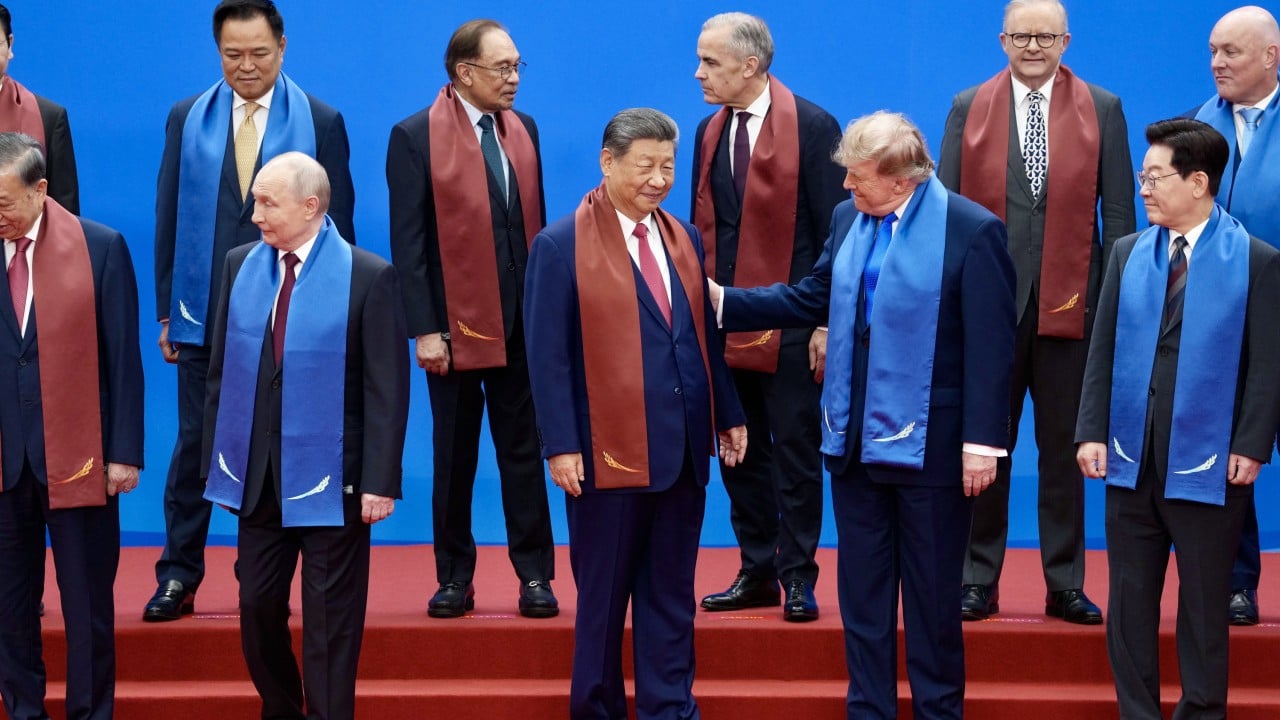
Apec leaders were given Chinese-style scarves to wear for the group summit photo on Thursday.
It was a pared-back nod to the forum’s tradition of dressing attendees in the host economy’s sartorial heritage.
The scarves came in two colours: red and blue. Most leaders, including Chinese President Xi Jinping, opted for red, while US President Donald Trump and his Russian counterpart Vladimir Putin wore blue.
The hem of each scarf is embroidered with the summit emblem, which features 21 intertwined feathers forming the silhouette of a soaring dapeng – a mythical giant bird closely associated with Shenzhen’s nickname, “Pengcheng”, or “City of Peng”.
The design symbolises interdependence and cooperation among the 21 member economies, as well as their joint efforts to build an Asia-Pacific community.
The tradition of attendees wearing an element of the host nation’s dress for the Asia-Pacific Economic Cooperation summit goes back to Blake Island near Seattle in 1993, when then-US president Bill Clinton presented world leaders with leather jackets to encourage an informal, relaxed atmosphere.
In the decades since, leaders have worn various distinctive regional clothes, ranging from Malaysia’s batik shirts to Vietnam’s tailored ao dai.
Yet the tradition has not always produced a natural fit for leaders accustomed to tailored business suits.
Some of the clothes with vivid colours, elaborate patterns or loose silhouettes have appeared awkward or ill-fitting, prompting some hosts in recent years to streamline or dial down their choices.
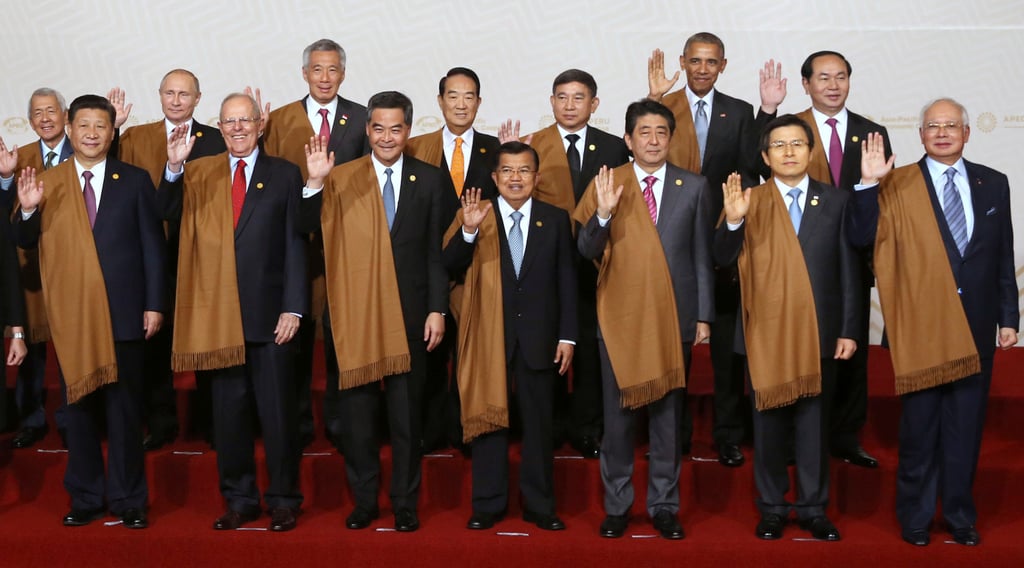
In 2016, Peru replaced the baggy, shapeless alpaca wool ponchos it had offered in 2008 with long ultra-fine vicuna shawls draped over business wear.
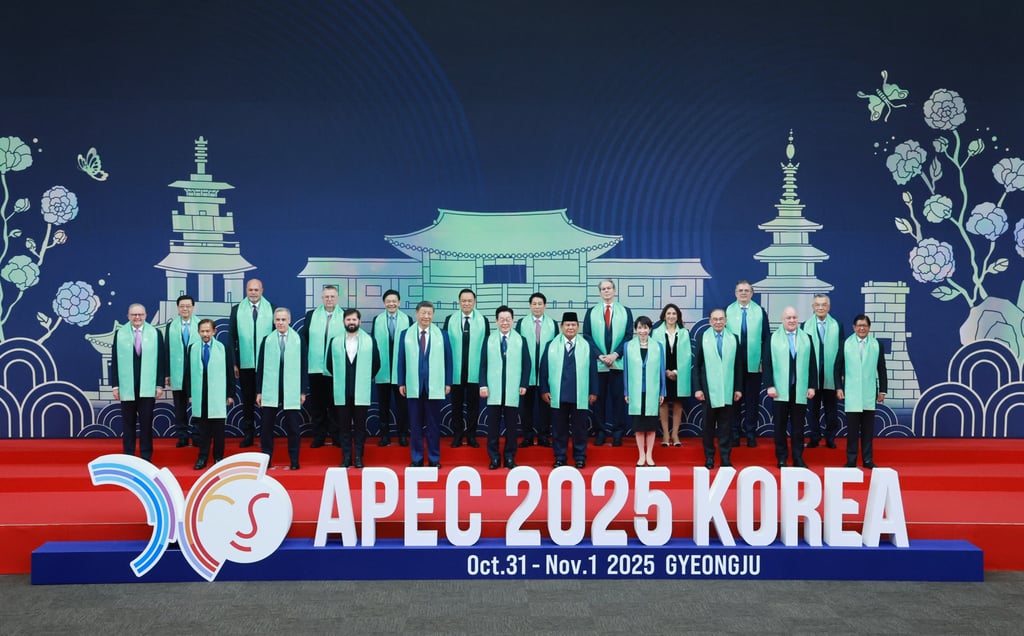
South Korea followed suit in 2025 with understated scarves inspired by traditional Korean hanbok rather than the full-length silk overcoats it featured when it hosted the summit in 2005.
China has consistently opted for modernised, tailored interpretations of traditional clothes that balance ceremonial Chinese motifs with contemporary executive wear.
At the 2014 Beijing summit, leaders wore tailored “new Chinese-style” jackets that incorporated classic design elements from several dynasties, cut from lustrous Song-dynasty (960-1279) brocade – a fabric inscribed on the national intangible cultural heritage list.
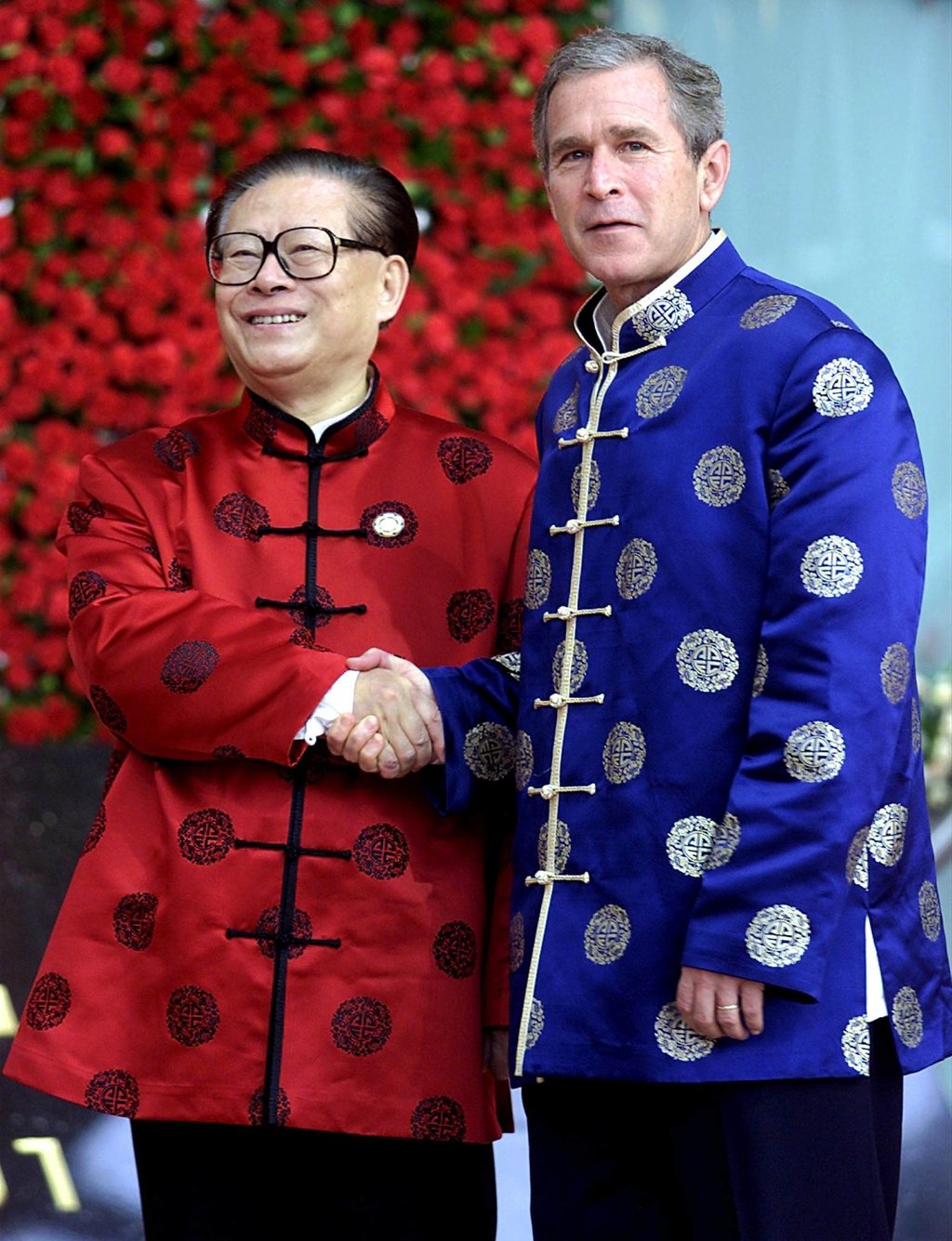
In Shanghai in 2001, China opted for silk jackets inspired by the Tang dynasty (618-907) and featuring peony flowers encircling the Apec acronym.
KioskNews shows a cleaned-up reading view extracted from the publisher’s page — the original always lives on their site, not ours.