Iranian-backed militia Badr admits it killed, wounded thousands of protesters in Iraq in 2019

A video of Hadi al-Amiri saying "the resistance stood bravely in the face of (the October fitna, as it was dubbed) and preserved the state and political system,” began circulating.

The head of the powerful Badr militia, Hadi al-Amiri, appears to have admitted that his group was behind the killing of thousands of protesters in Iraq in October 2019. For years, it was known that Iranian-backed militias were likely unleashed by the government to suppress the protests. However, there was a lack of confirmation and evidence for the role of the militias. Now, the head of the powerful Badr militia. In Iraq, social media is focused on this story.
In 2019, Iraq was in a transition period. Adil Abdul-Mahdi was prime minister. He was relatively weak and ineffectual. Powerful Iranian-backed militias that had been empowered by the war on ISIS were increasing their control across Iraq. Instead of Iraq receiving a kind of “peace dividend” when the war on ISIS largely ended in 2018, Iraq transitioned to new rounds of violence and economic stagnation. Militias also began targeting US-led Coalition forces.
Tishreen movement
This led to protests in October 2019. The protests have often been called the Tishreen movement. Amnesty International noted in 2025 that “Iraqi authorities continue to persecute activists and protestors while failing to deliver meaningful justice and accountability for the killings of hundreds and the maiming of thousands of protesters by security forces and militias or to reveal the fate and whereabouts of those disappeared, Amnesty International said today.”
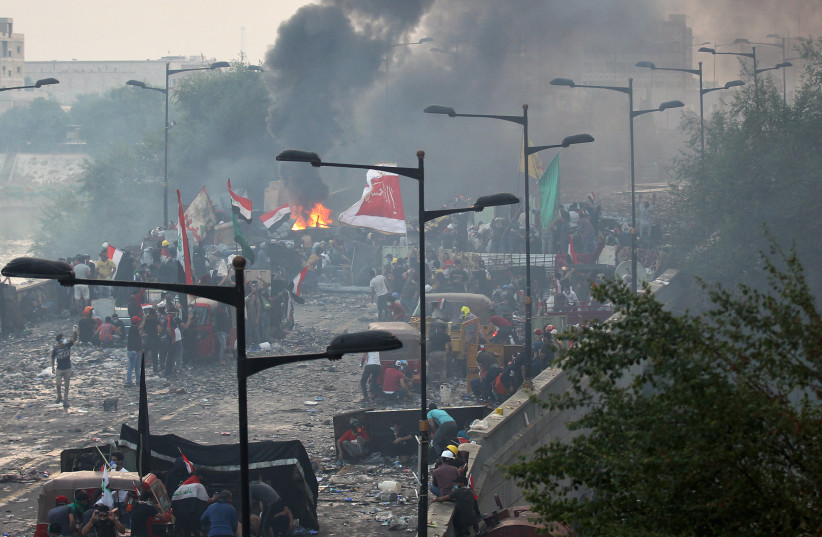
Amiri uses the word “fitna,” which has a number of meanings but essentially accuses the protesters of sedition and heresy. It accuses the protesters of undermining the state and trying to create civil strife. Amiri was basically admitting that the Iranian-backed militias, such as Badr, massacred hundreds or thousands of people. He was accusing the protesters of being traitors who were then put down.
Amiri’s speech comes as Iraq is seeking to disarm and rein in the militias. Several of the most powerful militias have said they will not disarm or have presented new conditions to placing their arms under state control. These include Harakat Hezbollah al Nujaba, Kataib Hezbollah and Kataib Sayyid al-Shuhada. Badr is not usually seen as one of the most extreme militias. However, Amiri has long played a role as a power behind the throne in Iraq, with Badr as an enforcer of Iran’s agenda.
Lawyer submits report to Prosecutor General
Amiri’s comments have now led to controversy in Iraq. Some social media have been circulating images from the October 2019 protests showing the protesters being oppressed. A report on September 2 said that a lawyer has now submitted a report to the Prosecutor General of Wasit Province, demanding an investigation and lawsuit into Badr and the comments by Amiri. Al-Sharqiya TV in Iraq described the lawyer as seeking to sue Amiri after his statements.
There is debate in Arabic media in the region now about what Amiri said.
Has he revealed the “true face” of the “resistance” by appearing to admit the mass killings? “Was it a slip of the tongue by Hadi al-Amiri, head of the Badr Organization and one of the most prominent leaders of the Coordinating Framework that runs the sectarian power structure in Iraq?” another report asks. One question is whether his statement is actually a threat today that the militias could use force again against protesters or against a government that seeks to disarm them.
Asharq al Awsat in Arabic notes that “the wave of anger and popular criticism against the head of the Badr Organization, Hadi al-Amiri, continues, following statements in which he admitted the involvement of what he called the ‘resistance’ in the events that accompanied the ‘October Movement’ of 2019, which lasted for about two years and during which more than 600 demonstrators were killed and more than 20,000 others were injured.” Families of victims now say they will file lawsuits. There are calls to prosecute Amiri.
This is important because unlike some of the other militia leaders, Amiri has always been able to avoid sanctions and controversy. Badr has been the one major Iranian-backed militia in Iraq that is not sanctioned by the US. Most of the others are seen as Foreign Terrorist Organizations or Specially Designated Terrorist Groups. As such, Badr has a unique role. It continues to play a major role in the Interior Ministry and other parts of Iraq.
The role of the militias in the massacres is very similar to the IRGC’s role in Iran in massacring protesters. In January 2026, Iran was accused of massacring tens of thousands of people. It has done this before, and it has exported this model to Iraq and other countries. The militias have also kidnapped journalists and assassinated people. They have also attacked Americans and targeted the Kurdistan Region.
KioskNews shows a cleaned-up reading view extracted from the publisher’s page — the original always lives on their site, not ours.