It’s time for Korea to let go of the myth that America’s defense spending makes it invincible
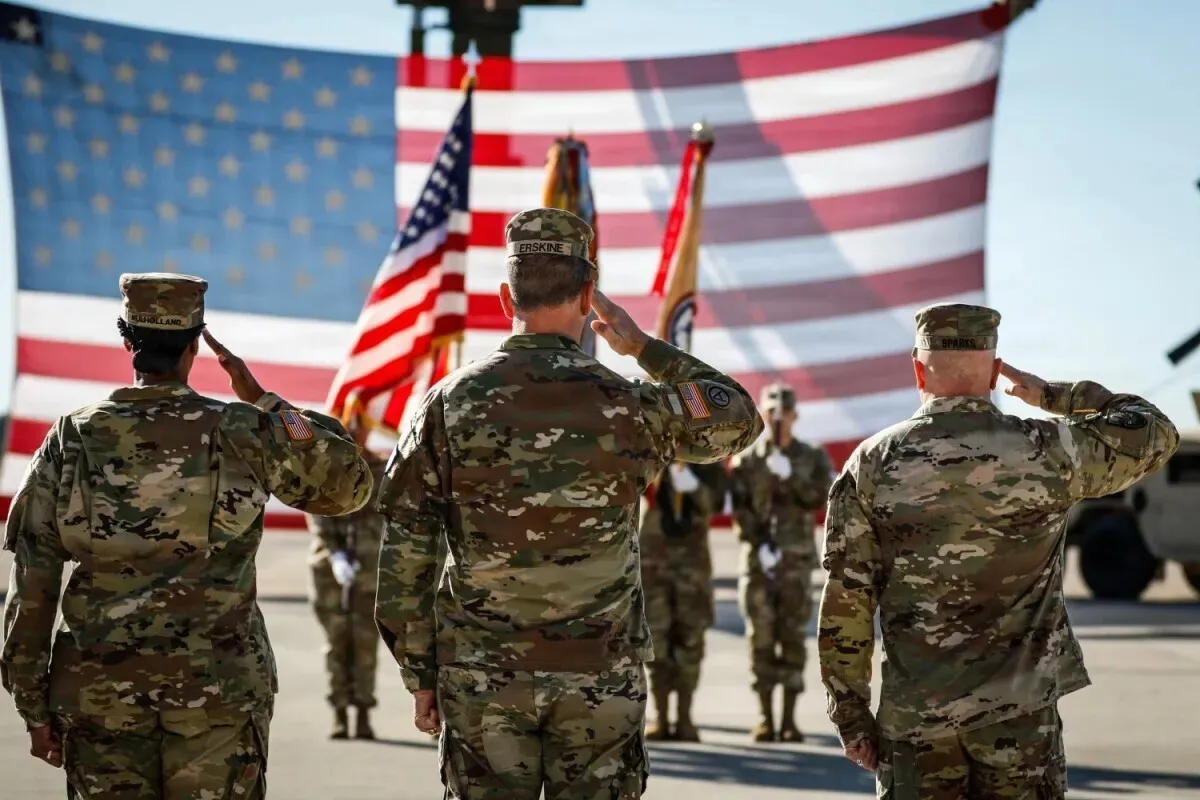
US soldiers salute the flag at Joint Forces Training Base Los Alamitos in California on Jan. 11, 2026. (via US Army)
At a parliamentary audit of the Korean Ministry of National Defense on Oct. 26, Rep. Sung Il-jong of the People Power Party expressed concerns about Korea regaining wartime operational control (OPCON) of its military, arguing that “even the US, the world’s most powerful country, is struggling in its war with Iran.”
Defense Minister Kang Shin-chul responded by asking, “If that’s the case, can we trust those same American forces if war breaks out with North Korea?”
“Since that’s not the case, we need to carry out the OPCON transfer while maintaining mutual trust. We need to establish a system in which a Korean general who understands Korea takes command and US forces provide support,” Kang continued.
The conservative opposition, including the People Power Party, denounced Kang’s remarks as “an act of self-sabotage that completely repudiates the value of the South Korea-US alliance.”
The Defense Ministry clarified that Kang had been “responding with a rhetorical question to a suggestion that the US was struggling in its war with Iran” and that “his answer emphasized mutual trust between the two allies.”
Underlying the criticism of Kang’s remarks is a perception of the US as a “cheonjo-guk,” referring to a country with a defense budget of 1 quadrillion won, which comes to US$1.5 trillion. The term is used in Korean online communities to describe the US and its enormous military spending.
By comparison, Korea’s proposed defense budget for 2027, as submitted to the National Assembly, is 73 trillion won.
The term cheonjo, which originally meant the imperial court, was used during the Joseon dynasty to refer to China’s Ming dynasty. Today, cheonjo-guk is shorthand for the overwhelming influence that the US’ wields over the world order through its military might.
Those who regard the US in such terms fear that the OPCON transfer would be disastrous and threaten Korea’s very survival.
Such concerns were more persuasive when Korea relied on free US military aid to cover most of its defense spending. Until the mid-1960s, Korea depended on US military assistance for more than 60% of its total defense budget. The US even got to set the size of the Korean military, which once numbered 600,000 troops.
Although the US ended that form of military aid in 1974, the belief in the US as all-powerful guardian persists, serving as an argument for delaying the OPCON transfer.
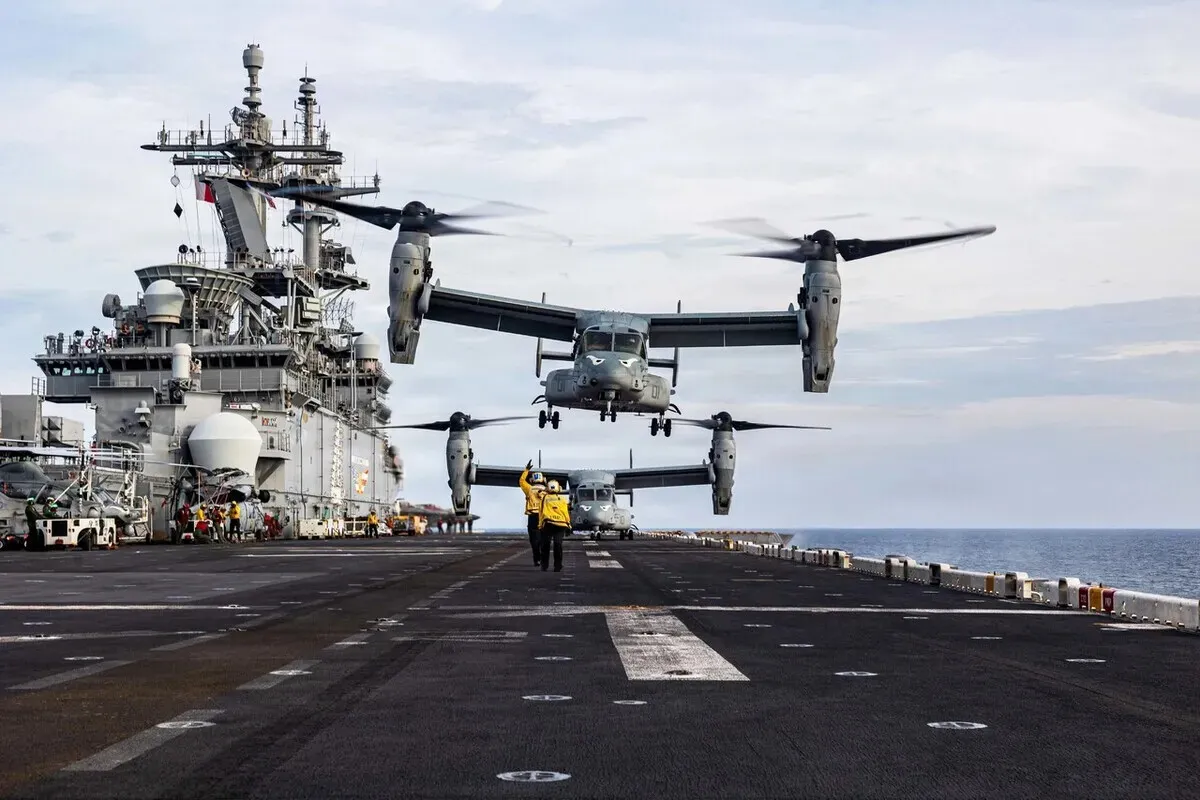
A US Marine Corps MV-22B Osprey tiltrotor aircraft takes off from the flight deck of the amphibious assault ship USS Boxer in the South China Sea on June 10, 2026. (via US Department of Defense)
Jin Jae-il, who formerly served as the director of the Center for Military Analysis and Planning at the Korea Institute for Defense Analyses, challenges this conventional view of the US, arguing that “there’s a gap between the size of a country’s defense budget and its actual military strength.”
“Although the US defense budget is nominally larger than the combined defense budgets of the next eight highest-spending countries, China and Russia’s combined defense budgets exceed that of the US when measured in purchasing power parity,” he argued.
Jin’s reasoning is that higher labor costs and procurement prices in the US mean it obtains fewer troops, supplies and services for the same amount of money.
US defense contractors are also private companies driven by profit, producing a higher cost structure than for state-owned (or effectively state-owned) counterparts in Russia and China, under this argument.
Consider the Russian Borei-class and American Columbia-class nuclear-powered ballistic missile submarines, both of which displace roughly 24,000 metric tons. A Borei-class submarine costs between 360 billion won and 1.2 trillion won (US$270 million-US$900 million) to build, compared with 12 trillion won (US$8.9 billion) for a Columbia-class submarine.
“It costs the US 10 to 33 times as much to build a nuclear-powered ballistic missile submarine as Russia, but that doesn’t mean its submarines perform any better,” Jin argued.
There are counterarguments to the claim that China and Russia’s combined defense spending exceeds that of the US in purchasing power terms. Differences in domestic prices and wages have a major impact on expenditures such as personnel, food and construction, meaning that China and Russia have greater purchasing power than their nominal dollar-denominated budgets would suggest. But the same calculation does not necessarily apply to tech-heavy weapons systems with jet engines, semiconductors and precision optics among their inputs.
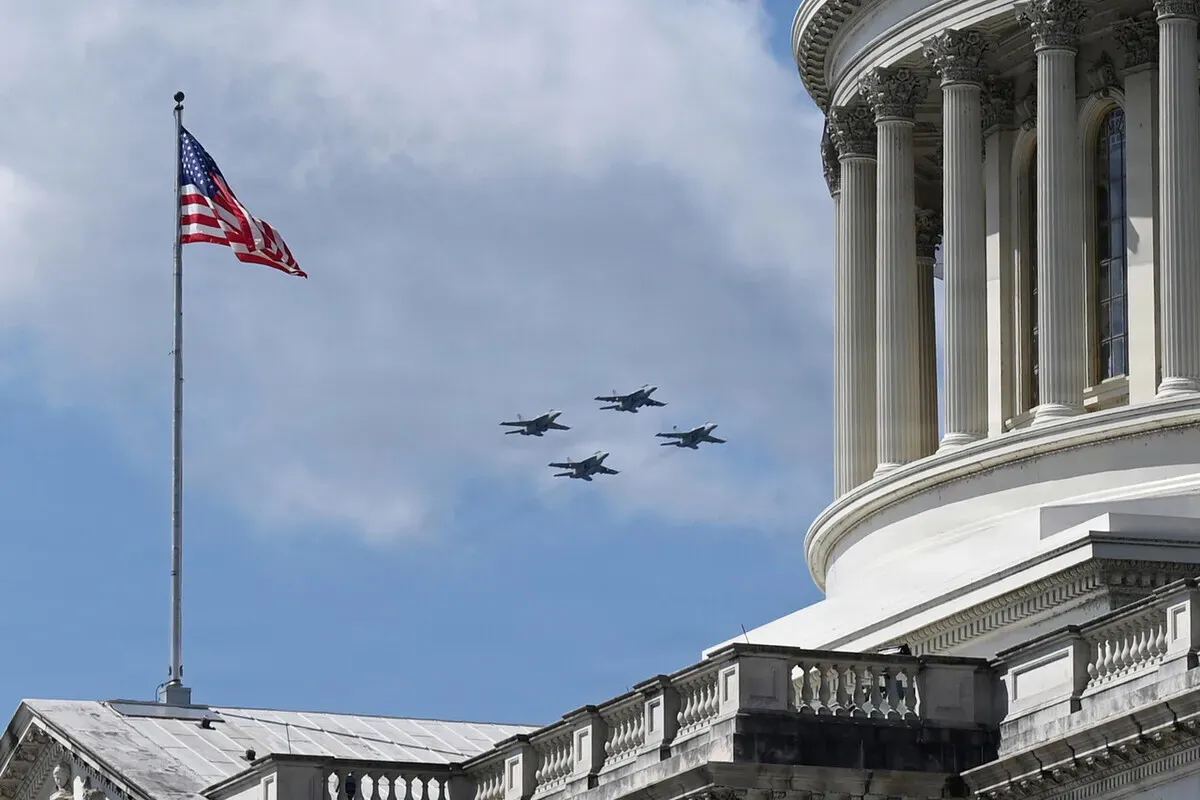
F-18 fighter jets fly near the US Capitol in Washington, DC, on Aug. 23, 2026. (via US Department of Defense)
Another reason to question the notion of US military supremacy concerns the shortcomings of American precision-strike weapons in actual combat. Although the US reorganized its military around smart bombs after the Gulf War in 1991, critics argue that their effectiveness against Russia and other global military powers has not been sufficiently tested.
For instance, The Washington Post reported in 2024 that some of the weapons the US supplied to Ukraine — including the High Mobility Artillery Rocket System (HIMARS) and Joint Direct Attack Munition (JDAM) — initially had hit rates of around 70%, but their accuracy plummeted after Russia deployed electronic countermeasures.
The US’ war against Iran has also reportedly exposed the limitations of America’s much-vaunted missile defense systems, with their anti-air system unable to defend against Tehran’s tactic of sending out swarms of low-cost drones until the US and Israel have exhausted their interceptor missiles and then using precision missiles to take out radar and bases.
According to Jin, the war with Iran has also demonstrated the limits of the strategic assets that have come to symbolize US might, such as its aircraft carriers. American aircraft carriers are parked some 1,000 kilometers from the Strait of Hormuz in order to avoid attack by Iran. The further they are from the area of operations, the harder it is for them to provide aerial refueling and maintenance for aircraft.
“Entrusting a country’s national security because you’ve bought into the idea that the US’ astronomical defense budget makes it the strongest in the world without actually verifying that notion is dangerous,” said Jin. “We need to take our alliance with the US from one in which we receive help to one in which we fight side-by-side by regaining OPCON.”
KioskNews shows a cleaned-up reading view extracted from the publisher’s page — the original always lives on their site, not ours.