Undas 2026: Latest News, Traffic Updates, Guides, and Everything You Need to Know
Undas is the Filipino term for the observance of All Saints’ Day on November 1 and All Souls’ Day on November 2, when families remember and honor deceased loved ones.
It is a time for Filipinos to remember and honor loved ones who have passed away, as families gather in cemeteries, travel to their home provinces, and observe traditions that celebrate the lives of the departed.
As technology becomes part of everyday life, some Filipinos also observe Undas online by sharing tributes, photos and memories of their departed loved ones on social media, while others join virtual masses and online prayer services.
Stay updated with the latest Undas news, travel advisories, weather forecasts, cemetery guidelines, transport updates, and safety reminders to help you and your family prepare for a safe, orderly, and meaningful observance.
Follow along with the latest updates on our Live Updates page.
Watch the live monitoring of the traffic situation in Metro Manila and NLEX for Undas 2026.
- MPTC expects expressway traffic to rise 12% on peak Undas days
- San Miguel Infrastructure sees 10% traffic increase along expressways during Undas
- Drug, roadworthiness tests at bus terminals as PH readies for Undas 2026
- NAIA braces for 1.25M Undas travelers; Oct. 30 seen as busiest day
- Parañaque City issues traffic plan, guidelines for Undas2026
- Caloocan City announces road closures, traffic rerouting for Undas
- TRB all set to assist motorists during Undas 2026
Latest headlines:
PNP: Over 72,000 personnel to be deployed for Undas2026
LTFRB: Student, senior citizen, PWD fare discounts honored during Undas exodus
NCRPO to deploy around 13,084 personnel for Undas2026
LTFRB warns taxi drivers vs overcharging, snubbing passengers amid Undas exodus
LTO: Normal flow of travelers at bus terminals ahead of Undas 202
Undas 2026: Bus terminals see early passenger surge for holiday exodus
LTFRB issues special permits to 1,131 buses for Undas2026
UNDAS 2026: Manila North Cemetery says Oct. 27 is last day for cleaning tombs
Daughter laments delay in cremation of mother's remains
Cemeteries in Pasay, Parañaque undergo cleanup ahead of Undas 2026
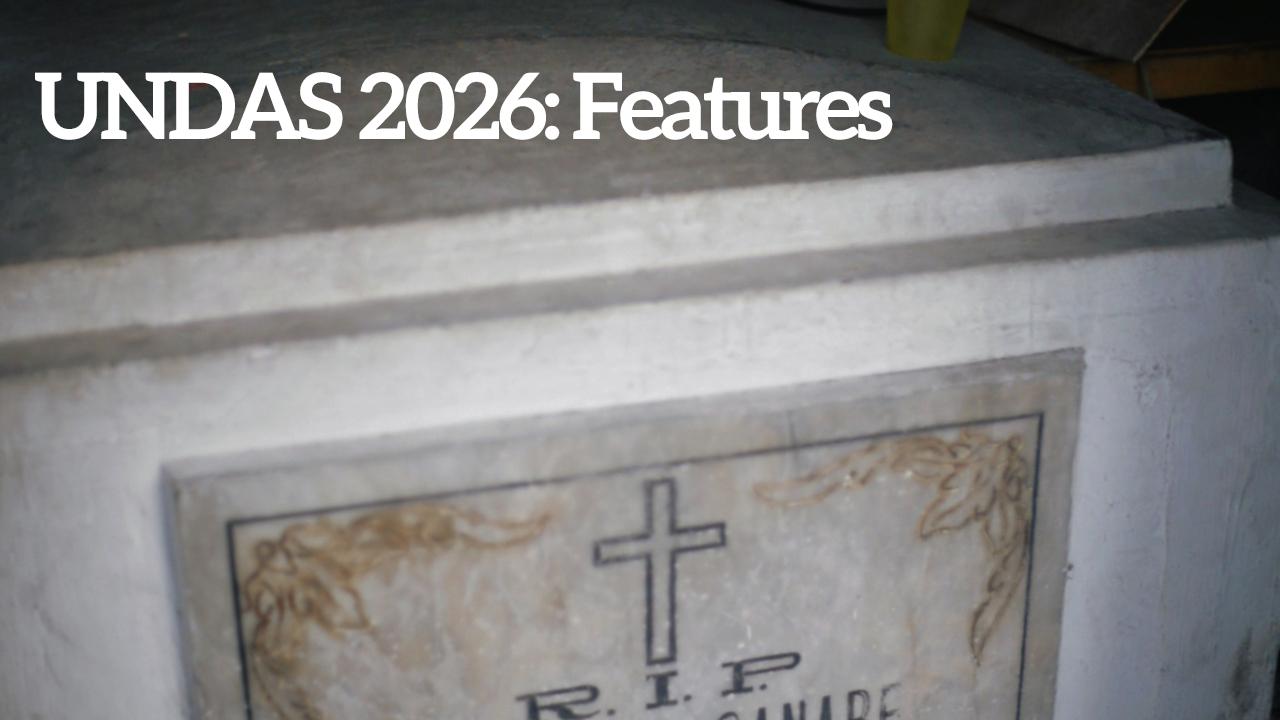
EXPLAINER: What is the Free Funeral Services Act?
Did you know that the government is mandated by law to provide free funeral services to poor Filipinos who cannot afford a decent burial for their loved ones?
On September 28, 2025, Republic Act No. 12309, or the “Free Funeral Services Act,” lapsed into law after remaining unacted upon for 30 days without the signature of President Ferdinand Marcos Jr.
This law institutionalized the Department of Social Welfare and Development’s (DSWD) funeral assistance initiative through its Aid to Individuals in Crisis Situation (AICS) program.
Click here to read more
Under RA 12309, free funeral services must be extended to families in crisis situations, as determined by the DSWD, including indigent families, those affected by calamities or disasters, and individuals facing emergency circumstances that prevent them from affording dignified burial services.
How does the law grant its beneficiaries a decent funeral?
Beneficiary
According to the Free Funeral Services Act, the service is provided to “poor families per death of a family member.”
The law defines “poor families” as those whose income falls below the poverty threshold as defined by the Department of Economy, Planning, and Development.
This classification also includes those unable to meet basic needs, such as food, health, education, and housing, as defined under the Social Reform and Poverty Alleviation Act.
For 2025, the poverty threshold was set at a national average of P14,634 per month, up from P13,873 in 2023. Meaning, this figure represents the minimum income required for a family to meet its basic food and non-food needs.
Under this 2025 threshold, a family whose monthly income falls below the threshold is considered poor.
How to avail the assistance?
Free funeral services may be obtained from accredited funeral establishments nationwide that offer a standardized indigent funeral package.
“Free funeral services shall be provided to poor families per death of a family member by accredited funeral establishment anywhere in the country,” the law said.
Funeral establishments refer to licensed businesses that provide services such as funeral parlors, chapels, and similar facilities used for preparing, transporting, storing, and caring for the deceased prior to burial or cremation.
The free funeral package covers the preparation of funeral documents, embalming, burial, cremation, inurnment, transportation, and the provision of a casket or urn.
To avail of the indigent funeral package, under the law, the bereaved family or an authorized representative must present the following requirements:
- Valid identification card of the claimant or beneficiary;
- Death certificate issued by the hospital or city/municipal health office, or certification from the tribal chieftain;
- Funeral contract signed by the representative of the deceased's family, the funeral establishment, and an authorized DSWD personnel; and
- Social care study prepared by any registered social worker
At present, the DSWD also requires additional documents depending on the specific services requested. Further details are available through the DSWD AICS Funeral Assistance Portal.
Upon the approval of the DSWD Regional Director, the agency pays the funeral establishment for the indigent package rendered to the beneficiary.
“The payment will be based on the stipulations of the signed contract between the representative of the deceased's family, the funeral establishment, and the authorized DSWD personnel,” the law notes.
Penalties for violations
Funeral establishments that refuse to provide free funeral services face a maximum fine of P400,000, alongside the revocation of their operating license.
Meanwhile, individuals who fraudulently avail of the free funeral service face up to six months of imprisonment and a maximum fine of P500,000.
Data from the DSWD show that from 2014 to September 2025, the agency extended burial assistance to families of 1,439,160 individuals, releasing a total of P10.9 million through the AICS program. —Lyjah Tiffany Bonzo/LDF, GMA News
Cebu Archbishop: Honor departed loved ones through peaceful, prayerful visit to cemeteries
Cebu Archbishop Alberto "Abet" Uy has issued a "gentle reminder" asking the faithful to ensure a "peaceful and prayerful" observance of All Saints' Day and All Souls' Day or Undas this weekend.
"As we bring flowers, light candles, and offer prayers, let us remember one important thing: the cemetery is sacred ground. It is not simply a place we visit once a year. It is a place of prayer and remembrance, where our loved ones rest as we await the resurrection," he said.
"For this reason, I appeal to everyone: Let us keep our cemeteries peaceful and prayerful. Let us avoid unnecessary noise, loud music, shouting, and boisterous laughter. Families will naturally gather and share stories, but let us always be mindful that beside us may be someone quietly praying, grieving, or simply spending a few precious moments with a loved one who has gone before them. Our joy should never disturb another person’s prayer," he added.
Click here to read more
Archbishop Uy also called on the people to "keep our cemeteries clean and care for our common home."
An advocate of environmental protection, he encouraged cemetery visitors to bring their own tumbler or water container, use reusable bags, and avoid single-use plastics.
Do not leave trash at the site, use designated garbage bins, and do not burn waste.
"As Christians, caring for creation is also part of our faith. And perhaps one beautiful way of honoring those who have gone before us is to care for the place where they rest. So when we leave the cemetery, may we leave nothing behind except our prayers, gratitude, and love," said Uy.
"Let us honor our departed loved ones. Let us respect sacred ground. Let us respect those who come to pray. And together, let us care for our common home. May God bless you and your families." — BAP, GMA News
When no one bids the dead goodbye
The smell hit Rhiannah Sta. Ana before she ever laid eyes on the cadavers.
A first year physical therapy student at a Metro Manila university, Sta. Ana likened the pungent odor to the strong smell of hair dye at a salon.
These bodies have been preserved with a chemical called formalin, Sta. Ana explained. While their facilitators told them what to expect, nothing could quite prepare the students once the covers were removed and the cadavers were revealed for the first time.
Many were taken aback. After all, the bodies before them used to be living people, Sta. Ana said. Yet to the students, they were strangers, their identities lost to time. She found herself wondering: Who were they when they were alive? Where did they live? What were their names?
Historically, cultures all around the world have different ceremonies to commemorate their dead. These days, people typically bury their loved ones or cremate them, giving them the final respects.
But what happens when someone dies, and there is no one left to claim their body, let alone bid them goodbye?
Click here to read more
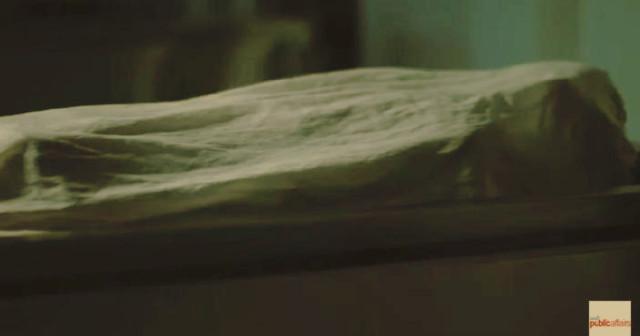
Responsibility over the dead
Presidential Decree No. 856, or the Code of Sanitation of the Philippines, outlines several rules on the proper handling of human remains, including the provision allowing the use of unclaimed bodies for research.
“Unclaimed remains may be used by medical schools and scientific institutions for studies and research subject to the rules and regulations prescribed by the Department,” the decree read.
The Department of Health would later update and elaborate the presidential decree through Administrative Order 2010 - 0033, or the “Revised Implementing Rules and Regulations of the Code on Sanitation of the Philippines Chapter XXI Disposal of Dead Persons."
Under the rules, funeral parlors or embalming establishments are not allowed to hold unclaimed bodies for more than 60 days.
While some might find the thought unpleasant, there have been many instances of bodies seemingly being abandoned by their relatives and friends. In 2022, the bodies of 176 of Bilibid inmates were unclaimed at the Eastern Funeral Homes — many of them had to be buried because they were already rotting.
Based on the data provided by the Bureau of Corrections (BuCor), there are 1,144 unclaimed bodies from 2020-2025 in the New Bilibid Prison.
The recorded unclaimed bodies are as follows:
- 2020: 258 cadavers
- 2021: 285 cadavers
- 2022: 187 cadavers
- 2023: 128 cadavers
- 2024: 135 cadavers
- 2025: 151 cadavers
Correctional Technical / Corrections Chief Superintendent (CT/CSUPT) Ma. Cecilia Villanueva, BuCor Deputy Director General for Reformation, explained that families are unable to claim the deceased persons deprived of liberty (PDL) because their homes are far.
"Usually yung mga tawid-dagat, yung malalayo, Visayas, Mindanao, but we send letters," Villanueva told GMA News Online.
(Those people cross the seas; they are from Visayas and Mindanao, but we send letters.)
Once a PDL is declared dead, the body is brought to Eastern Funeral Home in Muntinlupa City for documentation, while the Bureau of Corrections contacts the deceased’s family.
However, in some cases, family members cannot be contacted, or no one claims the bodies due to financial constraints, while others just retrieve the death certificates.
Unclaimed bodies are then buried in the New Bilibid Prison Cemetery, also in Muntinlupa City.
“Kasi kahit sabihin naman natin na mga PDL, they have the same rights as any public person,” Villanueva said.
“Meron din silang dignidad kahit pa naman sabihin natin na mga PDL ’yan. May dignity pa rin in their death," she added.
(Even though they are PDLs, they have the same rights as any public person. They still have dignity, even in death.)
BuCor data showed the highest number of unclaimed bodies in 2021 (285 cadavers) and 2020 (258 cadavers), the years when the COVID-19 pandemic disrupted operations worldwide.
“Yung period namin for [claiming the deceased persons] lumampas nga sa 60 days. Kasi nga, may mga limitations sa movement,” Villanueva said.
(Our period for claiming the deceased exceeded 60 days due to restrictions on movement.)
“Kahit nga yung cremated, yung iba hindi na nila claim yung remains ng relatives nila,” Villanueva said, adding that PDLs who died from the coronavirus were immediately cremated.
(Even those that were cremated, some relatives were unable to claim them.)
According to the BuCor data, 89 cremated bodies were claimed while 23 were unclaimed.
Left behind
Quezon City’s Burial Assistance Program serves indigent residents by providing free burial services. Vivs Funeral Homes is one of the funeral parlors accredited by the local government in the project.
Vivs Funeral Homes Operations Manager Larry Leccio said that although rare, there have been instances when they had to bury an unclaimed body.
There are various reasons why bodies go unclaimed, Leccio explained. In some cases, they belong to impoverished people who die on the streets and are brought to hospitals.
“Itong isang patay ay dinala ng pamilya niya sa ospital doon sa East Avenue. Tapos, hindi na binalikan. Tapos hindi na mahanap yung pamilya,” Leccio said.
(One of the dead was brought by the family to the hospital there in East Avenue. After that, they did not come back. And the family could no longer be found.)
The process typically began at the hospital, according to Leccio. The hospital then alerts the barangay, which makes a report. Details about the found body are then circulated in newspapers for 30 days in hopes of finding a claimant. During those 30 days, the body remains at the morgue of the funeral home.
However, once the body hits the 60-day mark, the local government needs to act on the matter.
Since the Quezon City local government has a free funeral service program, a barangay representative will be interviewed by the city’s Social Services Development Department on behalf of the unclaimed body.
Once local government officials handle all the necessary documentation, the funeral parlor can process the death certificate.
In case that no one knows the body’s name, the cadavers are simply issued a case number and labeled as “unknown” before being buried in a public cemetery. Their tombstones would also be labeled as such, Leccio said.
There would be no ceremonies for the body.
“Direct na libing na po siya. Wala na po siyang pamisa,” Leccio said. (It is a direct burial. There will be no masses.)
The dead as a teacher
Despite the initial shock of seeing the cadavers before them, Sta. Ana said that the students would eventually get used to them because of how invaluable they were as learning instruments — they could even freely go in and out of the laboratory where the cadavers were just to study them.
As the semester went on, the students got used to dealing with the cadavers. So much so that they almost forget that bodies used to be people.
“We still have to remember to be respectful to it, kasi nga, habang na nasasanay ka sa nakikita mo sa harapan mo, nakakalimutan mo na this was a person, this is a person we're dealing with, kahit hindi na siya nagsasalita,” Sta. Ana said.
(We still have to remember to be respectful to it, because while you get used to seeing it in front of you, you forget that this was a person, this is a person we’re dealing with, even if they no longer speak.)
As a result, the students would always begin their sessions with the bodies with a prayer, offering them gratitude.
They had also given the anonymous bodies names, and spoke to them as if they were still alive.
“Mami” was the name of the cadaver assigned to Sta. Ana and her group. She still has a personal bracelet on her wrist, which the students kept on.
Whenever an incision needed to be made, or if skin needed to be pulled back, the students would inform the cadaver that it could hurt and apologize to them.
“We talk to them as if they are still alive, so even if we know that they are physically not with us, we still find a way to talk to them and say ‘thank you’, and say ‘sorry’... it helps us humanize the experience,” Sta. Ana said.
While they knew nothing of the stories of the bodies before them, sometimes, the bodies themselves offered signs of how they died. Both the teachers and students could make their own inferences on how the cadavers wound up dead. Sta. Anna recounted that one of the first bodies she saw had red marks around the neck.
Regardless of how the bodies ended up before the students, one thing was certain: they were invaluable teachers. As physical therapy students, they had to become familiar with human anatomy. And these bodies could teach them things that no book ever could, Sta. Ana said.
They would often go around looking at different types of bodies just to learn more, she added.
Sta. Ana hopes of becoming a doctor one day, a path that would likely introduce her to even more cadavers.
“We recognize that we’re learning so much through their bodies and we understand that they make significant contributions to our education as physical therapists,” Sta. Ana said.
While the bodies that reached Sta. Ana and her classmates were anonymous, it was unlikely that they were prisoners.
Villanueva said the agency has not been providing cadavers to be dissected in medical schools after they were flagged by human rights groups.
“I started in 1998. Parang around that time na pinagbawal ng human rights yung paggamit ng body para sa mga medical schools,” Villanueva shared.
(I started in 1998. Around that time, it was around that time, I think, that the use of bodies for medical school purposes was prohibited after being flagged by human rights groups.)
“Marami naman kaming letter requests from medical schools na hindi namin na-approve,” she added.
Currently, BuCor is looking into building more buildings across the country to decongest existing detention facilities and bring PDLs closer to their families.
“More regional prison facilities [kasi] dapat yung nandito, yung taga-NCR, yung malapit. Eh hindi eh. Marami dito na taga-tawid-dagat pa rin,” Villanueva said.
(BuCor is working on regional prison facilities because PDLs from NCR should be detained here, but that’s not the case. Many PDLs here are from far away areas.)
The Holy Body
We are all made according to God’s likeness, according to Father John Paulo Bautista of the Mary Immaculate Parish in Dasmariñas City.
“The Church teaches very clearly that everybody, every Christian, Catholics or not, every human person, whether it is unclaimed or claimed bodies, we bear the image of God,” Bautista said in an interview.
However, this does not mean that priests could simply bless abandoned bodies, as they may not be certain if the corpses were Catholic when they were still alive, Bautista explained. Priests would need the permission of the deceased’s kin to bless the body.
Bautista recounted a time when he saw a motorcycle rider who died in a road crash incident. While he was initially inclined to give the body blessing, he had to stop and think. Would it have been an act of charity? Would he have to wait for the family?
Priests were not strictly prohibited from blessing a body that they were unsure of being Catholic however, Bautista explained. But it was still discouraged.
In cases where the body is used as a learning instrument — as was the case with the physical therapy students — Bautista maintained that it should be done morally.
“It should be done in a right way, legal way, in a moral way, at the same time, with a reverence to the body,” Bautista said.
“The human body is sacred,” he added.
There are a few ways to honor the unclaimed dead, according to Bautista. For Catholics, they could offer a Mass, prayer, or even the act of remembrance.
But what if there was no one left to remember the dead? Bautista said that Catholics could offer a prayer for a soul in purgatory.
“The Church is praying for them, in Masses, they are remembered… If you will pray for them, generally, we could say prayers for the souls in purgatory, and for those who have not attained a peaceful, holy, or blessed death,” Bautista said. —Jean Mangaluz and Mariel Celine Serquiña with GMA News Research/Joviland Rita/ LDF, GMA News
- Here are the hotlines commuters, motorists may use for Undas 2026 —DOTr
- PAGASA Undas 2026 Weather Outlook: 3 weather systems to bring cloudy skies, rains
- NTC to monitor telco services, emergency radio groups during 'Undas'
- Manila North Cemetery expects 2M visitors on Undas2026
- San Juan cemetery extends hours ahead of Undas
- Manila DRRM council on red alert for Undas 2026
- MTRCB reminds bus operators to screen only age-appropriate content for Undas
- Flower prices slightly increase ahead of Undas
KioskNews shows a cleaned-up reading view extracted from the publisher’s page — the original always lives on their site, not ours.