David Kaufman: Why more and more Black voters are turning away from the Democrats
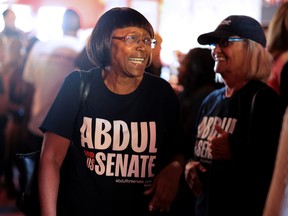
Barely two weeks before America’s crucial midterm elections, Black voters could very well emerge as the unanticipated kingmakers in key state races nationwide. But this year — as they clamour to retake Congress amid President Donald Trump’s final White House bow — the Democrats are facing an unexpected problem with African-American support, and they’re not entirely sure what to do about it.
Sign In or Create an Account
Make no mistake, Black voters are certain to cast the majority of their weight behind Democrats on Nov. 3. But uncontested Black support for the party is waning. It is true that in 2024, then-vice-president Kamala Harris received roughly 80 per cent of the Black vote during her failed campaign against Donald Trump. But that was down from 92 per cent four years earlier, according to Pew Research, when Trump ran against Joe Biden. And Harris is … well … actually Black (as well as South Asian).

Columnist Jesse Kline keeps you up to date with what’s happening in Israel and the effects of antisemitism on life here in Canada. Friday mornings.
By signing up you consent to receive the above newsletter from Postmedia Network Inc.
A welcome email is on its way. If you don't see it, please check your junk folder.
The next issue of Channel Israel will soon be in your inbox.
We encountered an issue signing you up. Please try again
Indeed, not only did Harris receive less Black support than her Caucasian predecessor, Black support for Trump hit historic levels. Especially among younger Black men, the most unreliable Black voter cohort. Some 30 per cent of black men voted for Trump two years ago, double the figure four years earlier. Despite MAGA attacks on diversity, equity and inclusion (DEI) and landmark voter rights initiatives, there’s still no guarantee they’ll return to the Democratic fold in a few weeks.
Which brings us to 2026 — and ultimately 2028. No state has better earned the “battleground” moniker this year than Michigan, where Democratic nominee Abdul El-Sayed is running a must-win race for the Senate that will almost certainly determine whether his party can recapture Congress.
An Egyptian-American physician and longtime public servant, El-Sayed has done a masterful job of sounding like the type of candidate Black voters are supposed to love — better public services, a focus on affordability — but many African-Americans are not buying what he is selling. And with El-Sayed maintaining a razor-thin edge over his Republican opponent Mike Rogers, Black support will matter more than ever.
Two years back, Harris scored 87 per cent of Michigan’s Black vote — which is heavily concentrated in major urban areas like Detroit. Solid numbers, indeed. But recent polls show El-Sayed with just 67 per cent of Michigan’s Black vote — which skews overwhelmingly Democrat — in early September.
And those numbers could fall even further. Back in 2016, Hillary Clinton was heavily criticized for ignoring key battleground states across the Midwest, which helped to ultimately cost her the White House. A decade on, Black voters in Michigan increasingly say they feel ignored, overlooked and taken for granted by the El-Sayed campaign. Rogers cleverly builds off this trope in a new advertisement that features Black Michiganers bemoaning that El-Sayed “cares more about the West Bank than West Detroit.”
They may not be entirely incorrect. In fact, it’s El-Sayed’s excessive focus on the Gaza conflict that has actually made Black voters — who would appear to have little stake in either side — so important. Just like Blacks, Democrats have historically over-relied on Jewish voters to help them win. But El-Sayed is alienating Jews ever more than Blacks. And while their absolute numbers are far more modest, a shift of Jewish support from Blue to Red could make Black Democratic votes all the more essential. Sadly for the Dems, they might lose with both factions.
The campaign, it appears, is listening, calling on Black party elders like Kamala Harris — who stumped for El-Sayed in September — and former president Barack Obama, who is slated to appear at a rally with him Iater this month. Obama, in particular, is important for optics, but it’s hard to think his presence will make much of a difference this late into the campaign.
Black voters will weigh heavily on the outcomes of closely watched races in Texas and Florida, as well. In the former, Democratic challenger James Talarico has little chance of winning the state’s Senate race without winning big with Blacks. And there are 2.7 million Black voters in Texas, the most nationwide.
Like with El-Sayed in Michigan, Obama campaigned with Talarico in May, eager to help turn Texas Democrat after almost 30 years under Republican control. Talarico’s greatest handicap may be his candidacy, which he won during a primary challenge against fellow Democrat Jasmine Crockett. The latter — a Black woman — has yet to formally endorse the former, who is white and male, which could cost Black support on election day.
In Florida, meanwhile, the Black, female Angie Nixon is running for the Senate as a Democrat, despite her affiliation with the Democratic Socialists of America (DSA). The DSA alignment is likely impacting Nixon in the polls, which place her 10 points behind Republican challenger Ashley Moody.
Nixon may be out-raising Moody in terms of campaign financing, but voters nationwide are souring on the DSA, which is why Nixon must maintain her huge lead with Black voters if she has any chance of winning. Nixon has also urged Black Floridians — of all parties — to not support the Republican Byron Donalds for governor. Even though he is Black. This could cost Nixon Black support, which she and all Democrats are in need of this cycle.
National Post
Join the Conversation
This website uses cookies to personalize your content (including ads), and allows us to analyze our traffic. Read more about cookies here. By continuing to use our site, you agree to our Terms of Use and Privacy Policy.
KioskNews shows a cleaned-up reading view extracted from the publisher’s page — the original always lives on their site, not ours.