6 Fantasy Books That Tried to Be The Lord of the Rings

The first time I tried to read The Fellowship of the Ring, I gave up somewhere around the hobbits’ long walk out of the Shire. Since there were too many songs, maps, and far too many pages about pipe-weed. A year later, I tried again, and this time something clicked. By the time the Fellowship entered the dark mines of Moria, I was completely hooked, and I stayed up way past bedtime to finish it.
J.R.R. Tolkien didn’t just write a great story. He basically wrote the rulebook for an entire genre. For decades after, fantasy writers kept circling back to his farm boys, wise wizards, dark lords, and long quests across beautiful, dangerous lands. Some borrowed a little, and some borrowed almost everything. Here are six that walked in his footsteps, ranked from the lightest touch to the most obvious copy.
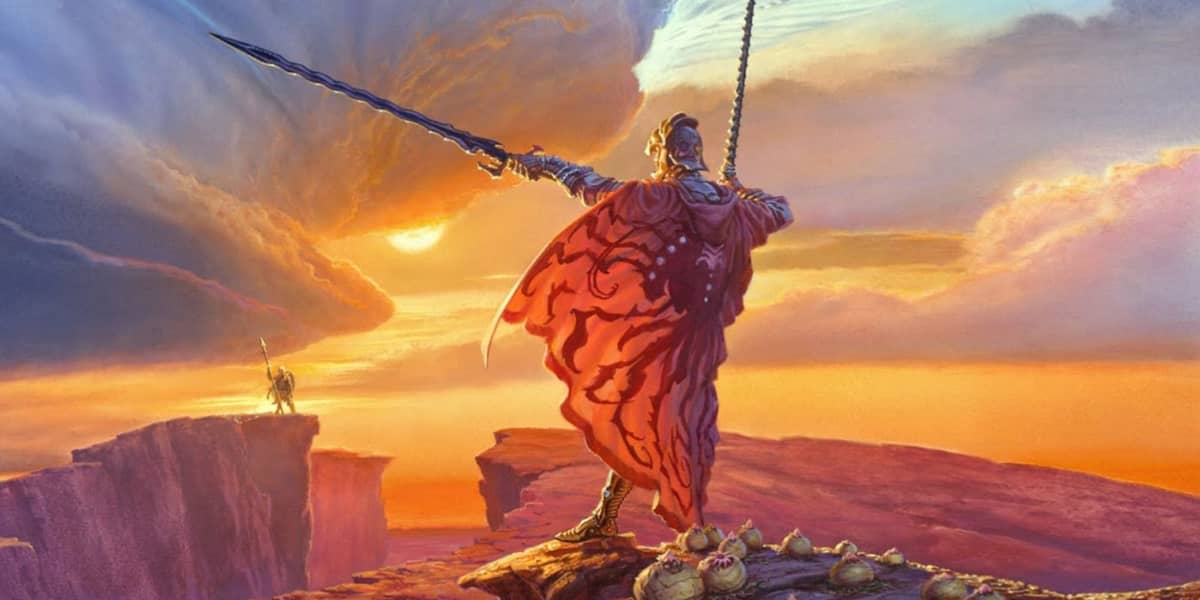
6 ‘The Way of Kings’ — Brandon Sanderson
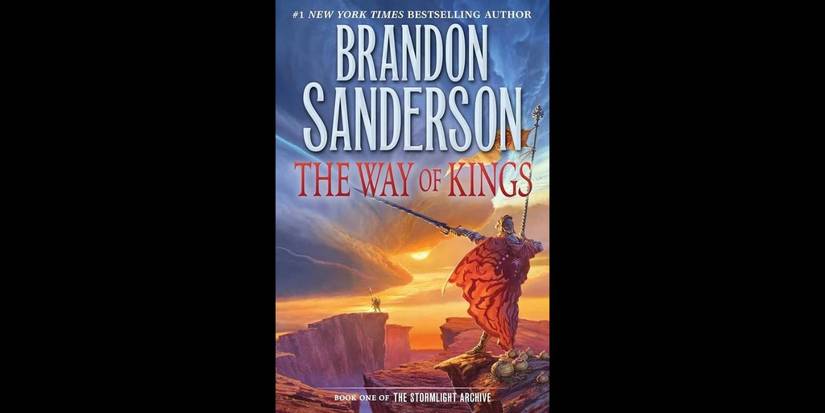
Storms rule the world of Roshar, and they’re so violent that even the plants hide inside shells to survive them. On a wide, broken battlefield, a young man named Kaladin, once a surgeon’s son, is now a slave forced to carry bridges into enemy arrows. Elsewhere, a clever girl named Shallan plans to steal a powerful magic object, and an old warlord, Dalinar, is haunted by strange visions he can’t explain.
Of all the books here, The Way of Kings owes the least to Tolkien. Brandon Sanderson borrows the huge scale, the ancient wars, and the feeling of a world much older than its characters. Beyond that, he invents almost everything from scratch, from the magic system to the strange creatures. Fun fact: Sanderson is also the writer who finished the next book on this list after its author passed away. At over 1,000 pages.
5 ‘The Eye of the World’ — Robert Jordan
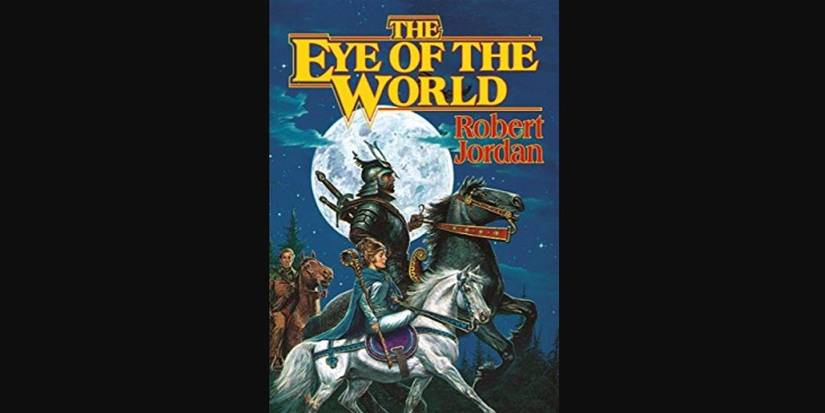
Life in the quiet village of Emond’s Field is simple, and Rand al’Thor likes it that way. Then, on a festival night, monsters attack, and a mysterious woman named Moiraine arrives with her silent warrior, Lan. She tells Rand and his two best friends, Mat and Perrin, that the Dark One is hunting one of them. Before long, the boys are fleeing home, chased by hooded, eyeless creatures called Fades.
Readers who know Tolkien will feel right at home in the opening chapters of The Eye of the World. The cozy village is the Shire, the scary riders feel like the Black Riders, and Moiraine plays a Gandalf-like role. Robert Jordan admitted the early echoes were on purpose. Luckily, the series grows into something much bigger and more original. Amazon adapted it into a show starring Rosamund Pike as Moiraine and Josha Stradowski as Rand, which ran for three seasons.
4 ‘Eragon’ — Christopher Paolini
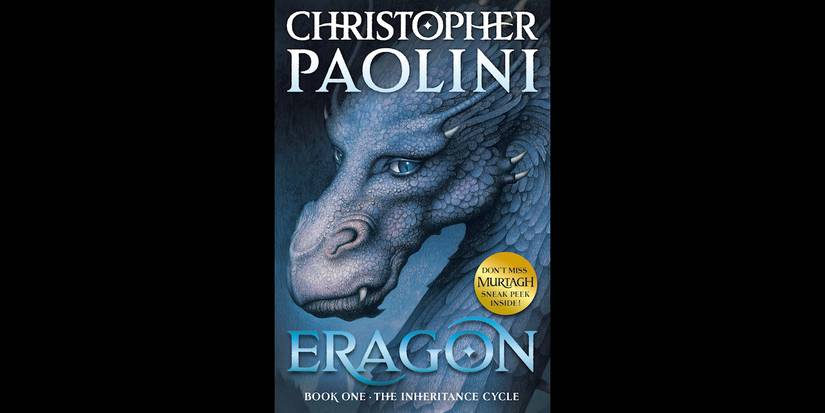
While hunting in the mountains, a 15-year-old farm boy named Eragon finds a smooth blue stone. It turns out to be a dragon egg, and soon a baby dragon named Saphira hatches and bonds with him. Of course, the cruel king Galbatorix wants that egg badly. After his uncle is killed, Eragon sets off with Brom, an old village storyteller who clearly knows far more than he’s letting on.
Christopher Paolini started writing it when he was just 15, and his family first published it themselves before a big publisher picked it up. You can tell a teenager wrote it, though, since the elves, dwarves, and wise old mentor all feel lifted from Tolkien (with a sprinkle of Star Wars). The 2006 film, with Ed Speleers as Eragon and Jeremy Irons as Brom, flopped badly, but the books still have a devoted following.
3 ‘The Dragonbone Chair’ — Tad Williams

Simon is a lazy, daydreaming kitchen boy in a great castle, and his only real friend is the kind old doctor who teaches him to read. When the beloved old king dies, his son Elias takes the throne, and dark things start happening almost overnight. A creepy red priest whispers in the new king’s ear, and an ancient, undead Storm King begins stirring in the north. Soon, Simon is forced to run for his life.
Here’s where things get interesting. Tad Williams wrote The Dragonbone Chair partly as a response to all the cheap Tolkien copies of the ’80s. He uses the familiar pieces on purpose, then slowly twists them. Simon is no born hero, and the “good” side isn’t always good. George R.R. Martin has said this series inspired him to write A Song of Ice and Fire, which tells you just how much it changed the genre.
2 ‘Pawn of Prophecy’ — David Eddings

Garion is a farm boy raised by his strict but loving Aunt Pol in a peaceful kitchen. Every now and then, a ragged old storyteller called Mister Wolf drops by with tales of gods and ancient wars. One day, Wolf shows up with bad news: a powerful, holy object has been stolen. Suddenly, Garion’s aunt and the old man are dragging him across the world, and he slowly realizes they’re not who they pretend to be.
David Eddings was fairly open about studying Tolkien’s work closely before writing his own series. You’ve got the humble orphan, the wise wizard, a stolen magical item, and a long quest against an evil god. Still, it’s warm, funny, and packed with likable characters who constantly tease each other. For many readers, it’s a cozy comfort read, even if it’s not very original.
1 ‘The Sword of Shannara’ — Terry Brooks
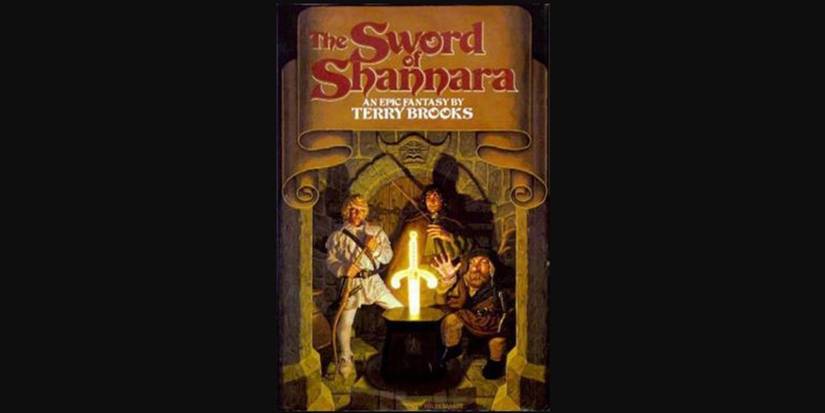
Shea Ohmsford lives a quiet life in a peaceful valley with his adopted brother, Flick. Then a tall, dark Druid named Allanon arrives with a warning. The Warlock Lord, an evil being thought long dead, has returned, and only Shea can use the legendary Sword of Shannara to stop him. So, a small group of heroes, including a prince, elves, and a dwarf, sets out on a dangerous quest together.
Honestly, reading The Sword of Shannara can feel like watching a remake of The Lord of the Rings with the names changed. There’s a Gandalf, a Fellowship, a Gollum-like creature, and even a magical object that corrupts. Terry Brooks admitted Tolkien was his main inspiration. Yet the book became a massive bestseller in 1977 and proved fantasy could sell big. Later, MTV turned the series into The Shannara Chronicles, with Manu Bennett as Allanon and Austin Butler in a lead role.
Collider Exclusive · 8 Questions · 2 Minutes What Fantasy World Do You Belong To? Middle-earth · Grand Line · The Continent · Camp Half-Blood
Pick your magic, your crew, where you want to wake up and who you would rather be fighting, and we will tell you which world you actually belong in. Four are open to you: an ancient kingdom living through its last good age, an endless sea full of pirates, a continent that pays people to kill monsters, and a summer camp where the Greek gods are extremely real and mostly a nuisance.
💍Middle-earth(Rings of Power)
👒Grand Line(One Piece)
🐺The Continent(The Witcher)
🔱Camp Half-Blood(Percy Jackson)
01
What kind of power do you want? Every one of these worlds runs on a completely different sort of magic.
02
Who is travelling with you? Nobody gets through any of these stories entirely on their own.
03
Where do you want to wake up tomorrow? The best fantasy is usually just somewhere you would genuinely like to live.
04
How are you making a living out there? Even in fantasy somebody has to pay for the horse.
05
There is something in the woods. What do you do about it? All four of these worlds keep something unpleasant out there in the dark.
06
Who is the villain of your story? The enemy tells you far more about a world than the hero ever does.
07
What do you actually believe in out there? Every world hands its heroes one rule and asks them to hold onto it.
08
A thousand years from now, how are you remembered? Eight questions in, this is the one that decides your world.
The Map Is Drawn Your World Is…
Four worlds and four completely different ideas of what a good life looks like. This is where you belong, what it would ask of you, and what you would get back in return.
Middle-earth
You belong somewhere old enough that the mountains have names and somebody can still tell you who gave them. Middle-earth is for people who think the right thing is worth doing even when it will not be finished in their lifetime.
- This is the only world on the list where doing good is understood as a very long defeat, fought anyway, by people who will never see how it ends.
- You are drawn to grandeur, to white cities and deep forges and the sense that almost everything you touch is older than your entire family line.
- The Rings of Power is set in the last good age before it all goes wrong, which gives every quiet scene in it a slightly unbearable weight.
- You would take the hard road, and you would take it on foot.
The Grand Line
You want the sea, a crew, and absolutely nobody telling you where you are allowed to go. The Grand Line is the world for people whose main ambition in life is finding out what is over there.
- One Piece has run for decades on one very simple engine, which is a group of people who each want something impossible and have decided to go and get it together.
- You collect people. Your ideal crew is a set of misfits who were each written off somewhere else before you turned up and offered them a better idea.
- The world is enormous and deliberately ridiculous, and the emotional gut punches land harder because of that rather than in spite of it.
- You would set sail knowing the map runs out, which is more or less the entire point of it.
The Continent
You would rather be feared and useful than liked and useless. The Continent is a world where the monsters are the straightforward part of the job and the people are where it all gets complicated.
- Witchers get paid to do what nobody else will and resented for existing at all, which is a trade most people would refuse and you would probably accept.
- You have no real illusions about which side is the good one, largely because on the Continent that question tends to have a disappointing answer.
- The best of these stories are not about the fighting. They are about somebody with a rigid code being repeatedly cornered into caring about people.
- You would take the coin, finish the job properly, and be out of town before the story got told wrong.
Camp Half-Blood
You want the myths to be real and loose in the actual world, and you want to find out at about thirteen that you were never anywhere near as ordinary as everybody kept telling you.
- Percy Jackson takes the oldest stories we have and drops them into car parks and diners, which makes the gods considerably funnier and a great deal worse.
- You would be the kid every school gave up on, who turns out to have been built for something nobody thought to test for.
- The series is genuinely about friendship rather than destiny, and it says so out loud every time a prophecy tries to get in the way.
- Camp Half-Blood is the real fantasy here: a place where the thing that made you difficult everywhere else is the thing that makes you belong.
KioskNews shows a cleaned-up reading view extracted from the publisher’s page — the original always lives on their site, not ours.