College student finds golf ball-sized brain tumor: "There's no way"
Niko Pitinii, a communications major at the University of Pittsburgh, had been excited to celebrate his 21st birthday with family in Las Vegas. But when the trip finally came, all he could do was sleep.
It was the first sign that something was wrong. In the weeks that followed, Pitinii battled severe fatigue. He lost weight rapidly. One day, he fainted in the shower. When he went to the emergency room, bloodwork showed nothing alarming and he chalked the episode up to the steam and hot water.
He tried to focus on daily life: He was juggling classes and working as the student equipment manager for the Pittsburgh Panthers, his school's football team.
Then, during a Panthers practice, he fainted again. His boss told him to seek immediate medical attention. Pitinii went to his primary care provider, who sent him back to the emergency room. A doctor ordered a scan of his head, stomach and lungs.
"I think they thought it was my heart," Pitinii said. "Then the results of the CT scan came back, and they're like, 'Yeah, you have a big-ass brain tumor in your head.'"
"There's no way"
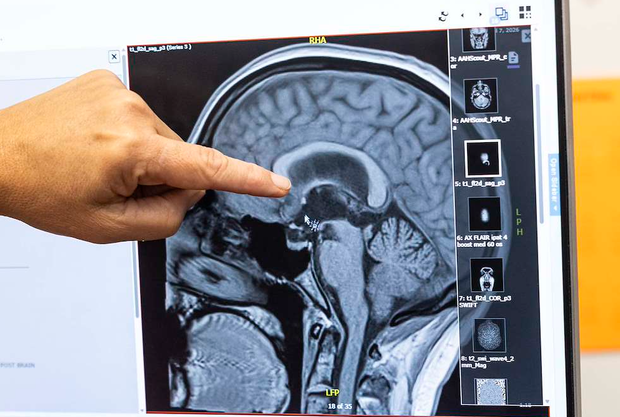
Pitinii was transferred to the Cleveland Clinic the next day. There, doctors found the tumor was so large that it was obstructing one of the ventricles in his brain, causing a buildup of spinal fluid. That fluid buildup, called hydrocephalus, was the cause of some of his symptoms, said Dr. Pranay Soni, a skull base surgeon who operated on Pitinii.
A tube was placed in Pitinii's head to drain the fluid. But that was just a stopgap measure: In a few days, Soni would need to do another operation to more permanently repair the obstruction. During that procedure, the tumor was biopsied. Doctors believed the golf ball-sized mass was benign, but needed to test it to be certain.
But hours before the procedure was set to begin, Pitinii received unexpected news from Dr. Amy Smith, who would become his oncologist.
"This doctor I had never seen before walks in ... and she starts talking about cancer, and we're like, 'What are you talking about? What do you mean, cancer?'" he recalled. "She's like, 'Yes, you have cancer.' I'm like, 'How do you know, you haven't even done the biopsy yet?' They had rerun my bloodwork, and I was pregnant!"
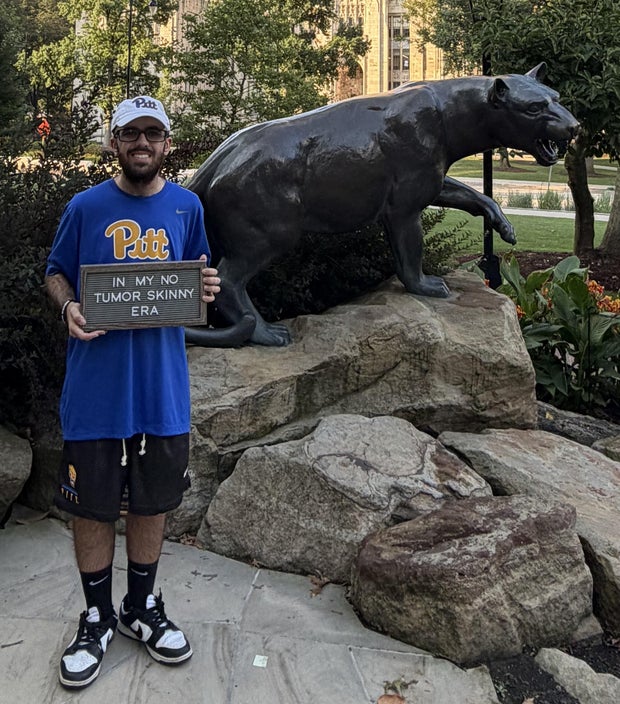
Pitinii wasn't actually pregnant — but he had high levels of beta-hCG, a hormone most frequently seen in pregnant female patients. Smith, a pediatric oncologist at the Cleveland Clinic, said the hormone is secreted by some tumors, including a rare kind of brain tumor called germinoma. Seeing it in Pitinii's bloodwork gave his care team an idea of what was going on.
Germinomas of the brain are rare, Smith said. They account for about 1% of brain cancers. Pitinii was told the cancer is very treatable — with a cure rate of 90% to 95% — but the news was still upsetting.
"It just freaked me out. Like, I'm going in to have brain surgery, and then they tell me I also have cancer on top of it all? It was just bad timing. It was a lot of information to process," Pitinii said. "I remember thinking: 'Nah, that's not real. There's no way.'"
Undergoing intensive treatment
Pitinii's surgery went smoothly. He was released from the hospital 24 hours later and was able to celebrate Christmas with his family. After the New Year, he began cancer treatment.
The biopsy had confirmed his tumor was a germinoma. Pitinii's care team recommended he begin with four rounds of chemotherapy, followed by a month of radiation.
The months that followed were exhausting. Pitinii decided to take a semester off from school so he didn't have to juggle classwork and cancer treatment. He had chemotherapy once a month from January to April. Then he had 24 targeted proton radiation sessions, ending on June 2. Throughout the process, he leaned on the clinic's social workers and other psychological staff members for emotional support.
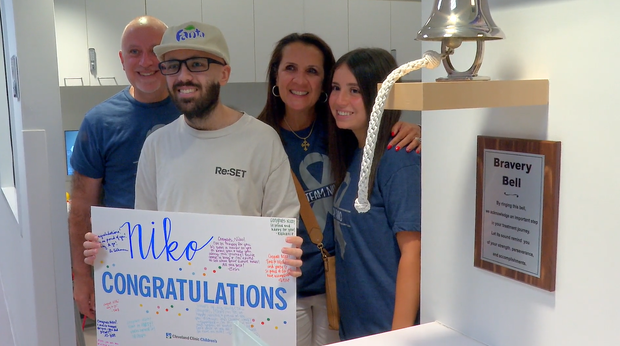
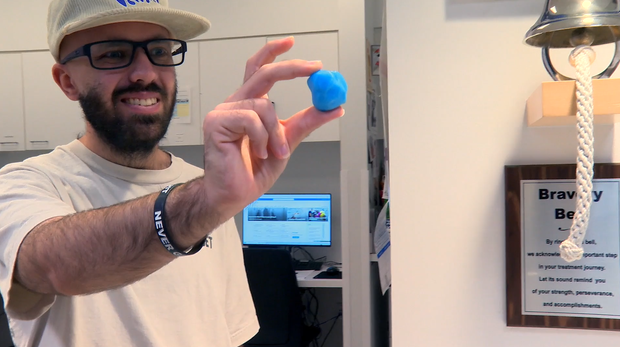
Pitinii underwent an MRI on July 7. The next day, he was told he was cancer-free. On July 9, he rang the hospital's "Bravery Bell" to commemorate the end of his cancer treatment. A social worker on his care team surprised him with a small gift: a 3-D printed model of his tumor, which Pitinii said he still has.
"Just trying to get there"
Pitinii returned to the University of Pittsburgh for the fall semester. In September, the Panthers nominated him for the Courage Award, a national honor that celebrates a person who overcomes adversity. The winner will be declared during the Capital One Orange Bowl in January.
Pitinii continues to see Smith regularly, and a recent MRI and round of bloodwork confirmed that he remains cancer-free. He will have regular check-ins with Smith, including scans, for the next 10 years. Pitinii's cancer has only a "7 to 10% chance of recurrence," Smith estimated. Even after he no longer sees Smith regularly, Pitinii will continue to follow up with Cleveland Clinic's survivorship team to stay on top of any side effects caused by his treatment.
For now, Pitinii is focusing on school again. Getting back into the swing of things hasn't been without its challenges. Pitinii lost around 60 pounds during his medical journey, and an appetite stimulant meant to help him regain weight has made it difficult to sleep. Focus and concentration are difficult sometimes, he said.
"At cancer school, they don't tell you about these things," he joked.
Pitinii is set to graduate next year. He's considering getting a master's degree in social work, so he can help other young cancer patients. But for now, most of his energy is focused on recovery.
"There's an adage that for every one day of treatment, it takes three days to recover. So I know it's going to be a while, and I know it's not going to happen as fast as I want it to. But I'm just trying to get there."
KioskNews shows a cleaned-up reading view extracted from the publisher’s page — the original always lives on their site, not ours.