8 Forgotten Psychological Thrillers Based on Books That Are Perfect From Start to Finish

Andrea M. Ciriaco is a long-time script reader and former entertainment editor who specializes in classic movies and Hollywood history. She was a student film critic at Kent State University for three years and worked at Warner Bros Studio in Burbank and The Safran Company for several years. Based on her vast taste and range of knowledge, many consider Andrea to be a walking IMDb who knows dozens of underrated movies and is a vital assesst to any trivia night. While movies are her expertise, Andrea is also a diehard fan of iconic shows including The Sopranos, Boardwalk Empire, Rod Serling's The Twilight Zone, Will & Grace and South Park. Some of her favorite filmmakers are Walt Disney,John Huston, Fritz Lang, Alfred Hitchcock, John Ford, Mel Brooks, Quentin Tarantino, Martin Scorsese and Howard Hawks.
Sign in to your Collider account
Some of the best psychological thriller movies never get the recognition they deserve, either because the box office overlooked them, bigger releases buried them, or time simply lost them. Many share a literary foundation: novels with tightly wound plots, unreliable narrators, and creeping dread that make for ideal source material. Adapting a novel for a movie is never an easy task, but when it comes to psychological thrillers, it's a bit more complicated. Too often, adaptations stumble, rushing the setup or fumbling the ending, but there is a collection of forgotten thrillers that successfully avoid these typical pitfalls.
Movies such as The Little Girl Who Lives Down the Lane and Kiss the Girls capture the unease of the page and sharpen it with powerhouse performances, an immersive atmosphere, and precise direction, building toward conclusions that feel both surprising and inevitable. From the first unsettling frame to the final, lingering image, each of these forgotten gems, including Dead Calm and Just Cause, proves that the best thrillers are sometimes the ones nobody talks about, making them great additions to anyone's watchlist.
8 'Dead Calm' (1989)

Phillip Noyce's Dead Calm is the kind of psychological thriller that proves you don't need a giant canvas to create a suffocating one. Based on Charles Williams' novel of the same name, the movie centers around a grieving couple, John (Sam Neill) and Rae Ingram (Nicole Kidman), who, during a sailing trip, rescue a mysterious stranger (Billy Zane) from his sinking boat. As they get to know their new shipmate, they become suspicious of his story and fear that they might have unknowingly let a killer on board.
Noyce beautifully captures wide shots of the empty horizon and open water to shrink the world around the characters, making the ocean feel more like a cage than an escape. Kidman delivers a fierce performance, conveying a woman who refuses to be a damsel in distress. Neill also gives an underappreciated performance, bringing quiet desperation to a man split between rescue and revenge, while Zane keeps a menacing nature beneath a boyish smile. At under ninety-five minutes, each twist grows naturally from the situation, and the pacing tightens like a rope, making Dead Calm a lean, nerve-shredding psychological thriller that is far too easy to overlook.
7 'The Pledge' (2001)
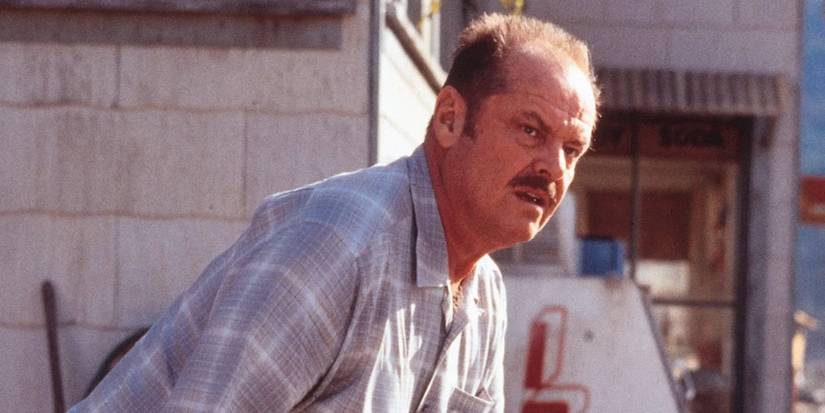
Sean Penn's The Pledge is a neo-noir psychological thriller based on the 1958 novella written by Friedrich Dürrenmatt and stars Jack Nicholson as a Nevada detective, Jerry Black, who makes a promise to a grieving mother that he will find her daughter's killer. Rather than racing towards a twist, The Pledge takes the risk of letting the obsession build quietly and never loses its grip, even as it deliberately defies all expectations, which is what ultimately earns it a place on the list.
Between the striking atmosphere and its remarkable supporting cast, including Robin Wright and Benicio del Toro, not a single scene feels wasted in The Pledge. Nicholson delivers one of his most restrained and haunting performances, effectively trading in his usual flamboyance for something fragile and unraveling that essentially highlights his underappreciated range. Because The Pledge subverts the conventions of the traditional detective story rather than filling them, audiences in 2001 most likely overlooked this diamond in the rough, but time has been kind, revealing it as a quiet and uncompromising masterpiece.
6 'Manhunter' (1986)

Michael Mann's marginalized thriller Manhunter deserves its place among the great forgotten psychological thrillers because it delivers tension and atmosphere with a precision that few films match. Based on Thomas Harris' novel Red Dragon, the movie follows William Petersen as an FBI profiler, Will Graham, who is lured out of retirement by his former boss, Jack Crawford (Dennis Farina), to catch a serial killer known as the Tooth Fairy, leading him to consult with a forensic psychiatrist and murderer, Dr. Hannibal Lecktor (Brian Cox).
Petersen's character's ability to think like the killers he hunts creates a chilling intimacy and is easily one of the film's greatest strengths that sets it apart from others. One of the main reasons why Manhunter was overlooked is because of its source material. Red Dragon is the first installment in Harris' series about Dr. Hannibal Lecter, and despite being released five years earlier, Manhunter is often overshadowed by the Oscar-winning movie The Silence of the Lambs. The film's universal notoriety and recognition in pop culture undeniably cast a large shadow over Manhunter, but today, it stands as a sleek, haunting, and nearly flawless thriller that deserves to be rediscovered.
5 'Straw Dogs' (1971)

Straw Dogs is a disturbing psychological thriller that stands out for its realism and maliciousness, daring audiences to look away and punishing them for wanting to. Directed by Sam Peckinpah, the movie is based on Gordon Williams' novel, The Siege of Trencher's Farm, and stars Dustin Hoffman as a mild-mannered American, David Sumner, who moves with his wife, Amy (Susan George), back to her Cornish hometown hoping for quiet but instead finds a community that sees him as a pushover and an outsider.
The tension in Straw Dogs builds with unnerving patience, allowing small humiliations to pile up before reaching a breaking point. Peckinpah clearly understands that dread lives in the accumulation of slights, and by the time the siege begins, the pressure has become almost unbearable. The movie is essentially about how civility can crack and how violence may wait inside people who insist they are above it. The excessive violence and brutality made Straw Dogs controversial for its time, but over the years, it has gained immense notoriety and is considered to be a sharp, merciless study of masculinity and fear.
Collider Exclusive · 8 Questions · 2 Minutes Which Classic Mystery Movie Are You? Clue · Rear Window · Se7en · Memento
Answer eight quick questions and we will tell you which one you are. Four films that solve a mystery in four completely different ways, from a comedy with three separate endings to a thriller told backwards.
🕯Clue(1985)
🪟Rear Window(1954)
📦Se7en(1995)
📸Memento(2000)
01
What kind of film night are you after? Pick the one that sounds most like you.
02
How would your friends describe you? Be honest.
03
What do you do when you are stuck at home? One answer only.
04
How do you react to a plot twist? Pick the closest answer.
05
Pick a room. No wrong answers here.
06
What is your memory like? Pick the closest answer.
07
How do you feel about endings? Think about the last film that got you.
08
What should a mystery film do to you? Last one. This is the one that decides it.
Roll Credits Your Film Is…
Clue went back into cinemas for its fortieth birthday with the three endings handed out at random, which is a good reminder that the mystery film will try anything. Here is yours, what it says about you, and the case for it being the best of the four.
Clue
You are the most fun thing in the room and you are not remotely in control of it. Clue is a murder mystery built from a board game, played at farce speed by one of the best comic ensembles ever assembled, and it refuses to commit to a single answer.
- You keep the energy up and the plan loose, and people have a much better evening because of it.
- Three different endings were sent to different cinemas in 1985, so the answer depended on which screen you walked into.
- It flopped completely, found its audience on video, and went back into cinemas for its fortieth anniversary with the endings randomised again.
- Your flaw is that chaos is excellent company and a terrible plan.
Rear Window
You watch, and you notice the thing everybody else walks past. Hitchcock trapped James Stewart in one room with a broken leg and a view of his neighbours, and built an entire thriller out of a man looking out of a window and being right.
- You are quietly the most observant person in your circle and you clock changes before anybody announces them.
- The courtyard was one of the largest sets ever built at Paramount, with thirty-one apartments and working plumbing.
- It was nominated for four Academy Awards including Best Director and is still taught as the cleanest thriller ever constructed.
- Your risk is that watching and doing something about it are not the same, and you know it.
Se7en
You take things on and you do not put them down. Fincher made a serial killer film where the detectives are losing the entire time, shot it so dark the studio complained, and refused to change an ending that everybody told him would sink the film.
- You are the one who keeps going after everybody else has accepted it cannot be solved.
- New Line wanted a different ending and Brad Pitt reportedly refused to make the film without the one they shot.
- It turned Fincher from the director who had a bad time on Alien 3 into the defining thriller director of his generation.
- Your weakness is that carrying something this long does real damage, and you are usually the last to notice.
Memento
Nobody can quite follow your thinking and you get there anyway. Nolan told the story backwards, so the audience knows as little as the man at the centre of it does, and the whole film becomes an argument about how much of what you believe you simply decided to believe.
- You work things out sideways, and explaining the route takes longer than the answer did.
- It was nominated for Best Original Screenplay and Best Film Editing in 2002 and won neither, which still annoys people.
- It cost around nine million dollars, made over five times that, and built the career that led to everything after.
- Your flaw is trusting your own version of events slightly more than the evidence supports.
4 'The Collector' (1965)

William Wyler's adaptation of John Fowles' novel, The Collector, is a thriller whose horror comes almost entirely from politeness and good manners. Terence Stamp stars as Freddie Clegg, a shy bank clerk who buys a secluded home in the country and eventually kidnaps an art student, Miranda Grey (Samantha Eggar), locking her in the cellar with the hope that she will come to love him. The power of the movie lies solely in how calm Stamp is throughout the entire ordeal, portraying his character with a blank, boyish stillness that is far more unsettling than any snarl or sudden movement.
The majority of the story unfolds in one house, and despite its massive size, Wyler manages to let the walls slowly close in as Eggar's character tests every possible escape and every psychological lever she can find. The Collector was well received by both critics and audiences and went on to earn three Oscar nominations, including Best Director and Best Actress. Despite its initial success, The Collector became forgotten alongside later films that borrowed its premise, but today, it is regarded as a tightly controlled and deeply disturbing character study with no false steps.
3 'The Little Girl Who Lives Down the Lane' (1976)

The Little Girl Who Lives Down the Lane is an underappreciated thriller based on Laird Koenig's novel of the same name that hides its menace behind a child's innocence and mature composure, ultimately solidifying its place on this exclusive list. Jodie Foster stars as Rynn Jacobs, a thirteen-year-old girl who recently settled into a rented home on the edge of a small New England town with her father who can never be disturbed. As people come and go, Rynn always has a polite answer for each of them about why her father is unavailable, leading some to wonder if he truly exists or if it's something far darker.
What makes the movie such a gripping thriller is how little it needs to incite genuine suspense and anxiety in audiences. Director Nicolas Gessner keeps the pacing tight and the atmosphere hushed, using autumn light and quiet rooms to build a mounting sense of dread and uncertainty. Foster delivers a performance of astonishing control and never lets her character's mask slip when it counts, while Martin Sheen gives an uneasy and repellent performance as Frank Hallet, whose choices force the story to make its darkest turn. Often dismissed as an oddity of its era, The Little Girl Who Lives Down the Lane ranks today as an eerie and expertly controlled thriller that deserves far more recognition than it generally receives.
2 'Kiss the Girls' (1997)

Gary Fleder's adaptation of James Patterson's novel, Kiss the Girls, is an edgy game of cat and mouse that turns a simple, terrifying idea into a relentless race to not only stop a madman but also save his victims. The movie follows Morgan Freeman as Alex Cross, a forensic psychologist who travels to North Carolina after his niece becomes one of several young women who have been kidnapped by a killer known as Casanova. When one of Casanova's victims, Kate McTiernan (Ashley Judd), manages to escape, she works with Cross and local authorities to help find him before he can claim another victim.
Fleder builds the atmosphere in Kiss the Girls with real craft, showcasing misty southern woods, shadowy basements, and rain-soaked roads which essentially creates a persistent unease while the investigation moves with a steady pace. Freeman gives Cross a quiet, grounded intelligence that anchors the entire story while Judd's performance gives the movie a second heartbeat, making her character more than a survivor to be rescued. The final act delivers its reveals without losing the story's emotional stakes, tying two investigations together in a way that feels earned, which cements Kiss the Girls as a worthwhile thriller that deserves to be rediscovered.
1 'Just Cause' (1995)

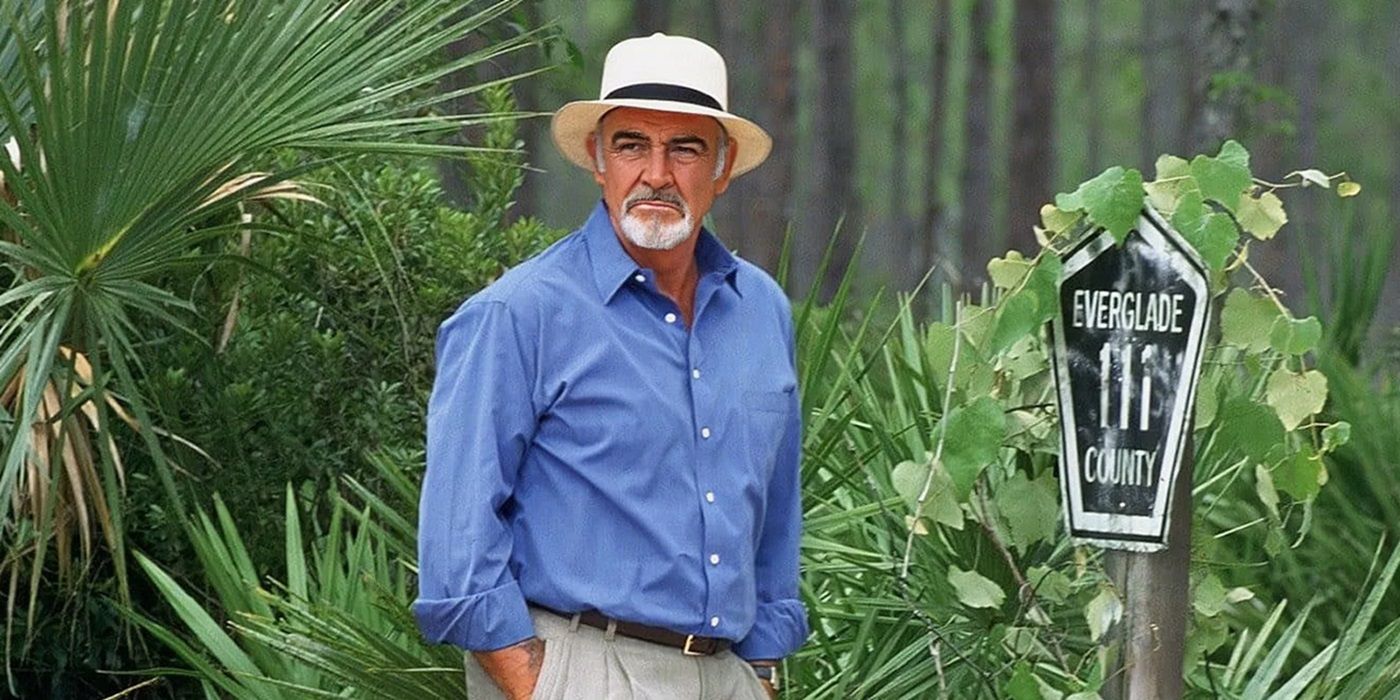
Just Cause is a psychological crime thriller that continuously pulls the rug out from under the audiences' feet and forces them to second guess themselves from start to finish. Based on John Katzenbach's novel of the same name, Sean Connery stars as Paul Armstrong, a Harvard law professor adamantly against the death penalty who revisits a murder case in Florida where the accused, Bobby Earl Ferguson (Blair Underwood), is currently on death row for a crime he claims he was coerced into admitting to.
Director Arne Glimcher grounds the story in Everglades suffocating heat and Southern gothic dread, making the sunlit roads and murky swamps feel as dangerous as a dark alleyway. Connery effectively portrays a man whose principles are always tested the moment the case stops being abstract, and his moral certainty slowly erodes into doubt. Laurence Fishburne, who plays a local detective, Tanny Brown, is a heated force who complicates every assumption Armstrong comes up with. While the entire cast deliver sensational performances, Ed Harris' portrayal of the unhinged serial killer, Blair Sullivan, gives the movie a theatrical menace that lingers long after his limited screen time, making Just Cause a sharp, unsettling thriller that rewards a second look.
KioskNews shows a cleaned-up reading view extracted from the publisher’s page — the original always lives on their site, not ours.