As typhoon risks grow, farmers in China’s Guangdong adapt to protect their livelihoods

In the first of a two-part series on climate resilience, CNA looks at how farmers in the southern Chinese province are coping with storms that can wipe out a year’s harvest, drive down prices and cause lasting damage.
New: You can now listen to articles.

This audio is generated by an AI tool.


31 Aug 2026 05:18PM
GUANGDONG: For generations, Li Ziling's family has grown longans in Maoming, a coastal city in southern China's Guangdong province.
Maoming is the world's largest producer of longans. The city produced a record 550,000 tonnes of the fruit last year, with the industry worth more than US$1.2 billion.
But Guangdong is frequently affected by typhoons, posing an added risk for Maoming's longan growers because the harvest season coincides with the period when storms are more likely to hit the province.
A single typhoon can put an entire year's crop at risk.
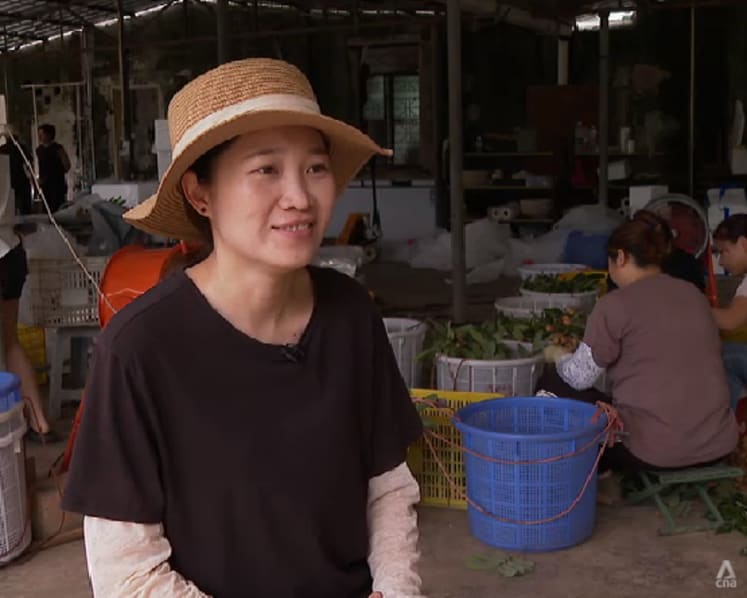
Li said last year was particularly difficult for her family.
“We lost about 200,000 yuan (US$30,000) worth of our harvest,” she told CNA.
“The impact of the typhoon is significant. Even though the damaged fruit is still on the tree, the flesh inside has already spoiled, so buyers don't want it.”
When storms damage the family's crop, Li and her relatives try to salvage what they can.
“Our whole family would take one bucket each and pick up the fallen longan fruit from the ground. We'd sell them for a few cents to people who make dried longan or other processed goods. Every little bit helps,” she said.
RACE TO SELL BEFORE STORMS
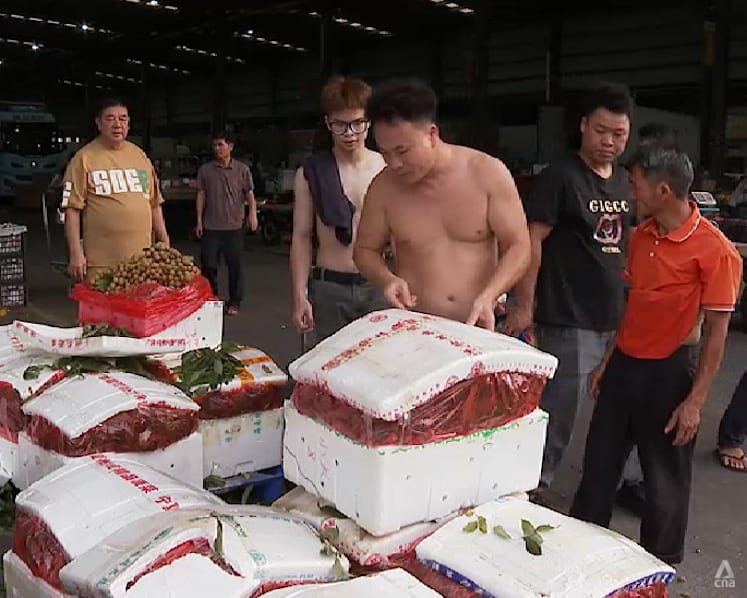
The threat of an approaching typhoon can trigger a rush among farmers to sell their produce before the storm damages their crops.
For Li and other growers, livestreaming has become one way to quickly find customers.
“Buyers will lower our prices. But if we don't sell, our losses will be even greater. When everyone is selling, prices drop. I earn less,” Li said.
“The price tonight can be very different from tomorrow night.”
Moving longan farms to areas less exposed to typhoons is not a simple solution.
Li said longan growers depend on ready buyers, while factors such as climate and growing conditions affect the fruit’s taste and moisture.
“It's impossible to move,” she said.
“If you move to an orchard 100km away, not only will there be a smaller concentration of orchards, buyers also won't want to travel there.”
The risks facing farmers in Guangdong are growing.
Ten typhoons made landfall or severely affected the province last year, matching a historical record, according to local authorities.
Guangdong's meteorological officials say the province is facing increasingly extreme weather conditions, including the threat of more powerful typhoons and record-breaking rainfall.
TWO DAYS TO PREPARE
One of the biggest tests came in September last year, when Super Typhoon Ragasa struck Guangdong, forcing around 2 million people to evacuate.
At Green Fingers Organic Farm in Zhuhai, Zhan Zhiyu and his team grow a range of fruit and vegetables, including bitter gourd, corn, radish and dragon fruit.
When Super Typhoon Ragasa approached, they had about two days to prepare.
They removed plastic sheets and insect netting from their greenhouses and harvested as many vegetables as possible.
“We only finished everything about three hours before Typhoon Ragasa made landfall,” said Zhan, who heads the farm's agricultural vegetable planting group.
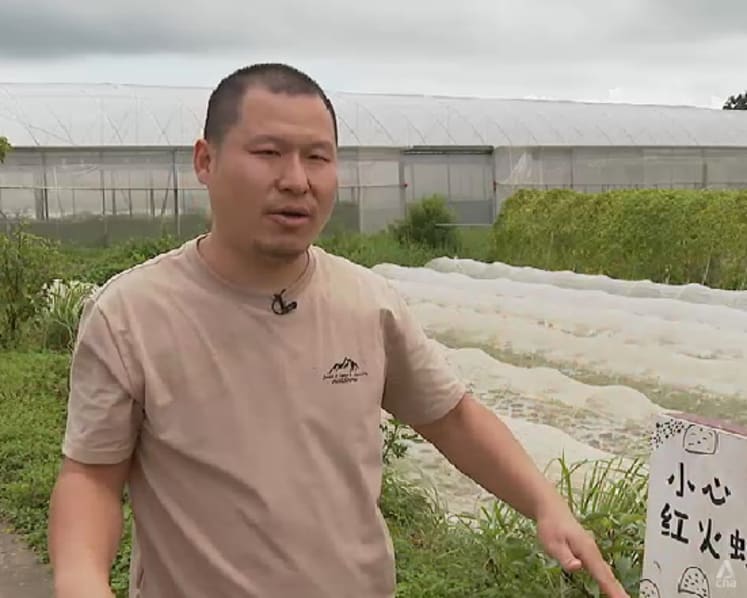
There was not enough time to dismantle one greenhouse, which was levelled by the storm.
“If we hadn't done all that preparatory work, all of our greenhouses would have been destroyed, costing us at least 3 million yuan in losses,” Zhan added.
“Losing just one greenhouse was manageable, about 300,000 to 400,000 yuan.”
The damage from a typhoon can also continue long after the storm has passed.
“Some trees might be snapped entirely. For fruit trees, once all the branches are broken, it takes about three years to grow them back to the point where they can bear fruit again,” Zhan said.
MORE THAN TYPHOONS
Farmers are also having to contend with other changes in the weather.
Zhan said unusually high temperatures can upset planting and harvesting schedules and cause farms to miss important sales periods.
“For example, last autumn was extremely hot, with temperatures often above 30°C even into October,” he said.
“Due to climate shifts, we end up missing many sales windows. Even if you're tough, you can't withstand repeated hits.”
Zhan said prolonged rainfall this year had brought another set of problems.
“There's been too much rain this year. Our land here has coastal saline-alkali soil, since we are by the sea. It gets severely compacted after prolonged rainfall,” he said, holding a fistful of soil.
“You see, the soil is very hard now, so the roots can't breathe and expand.”
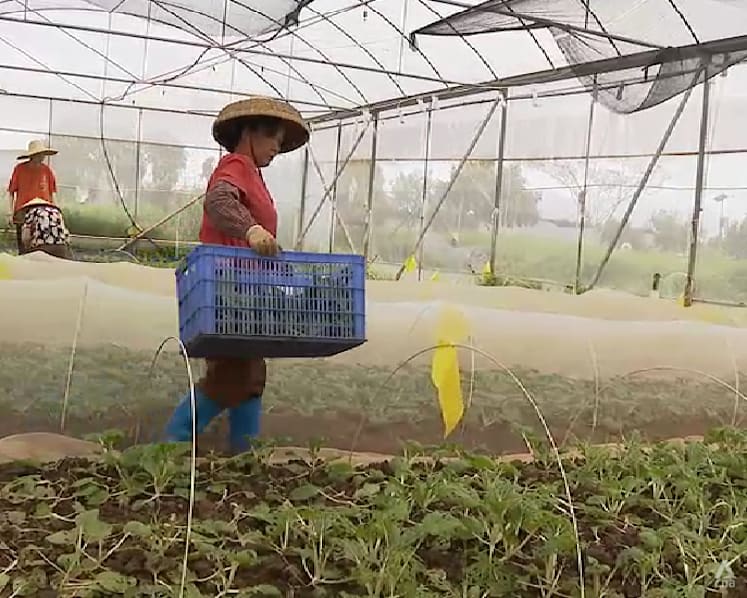
The bitter gourd plants had yellowing leaves, and the few fruit that had grown were either shrivelled or affected by fruit flies.
“Last year I could harvest a whole basket of bitter gourds in a day from the same area. This year, you might not even get that one basket,” Zhan said.
WHY FARMERS STAY
Despite the risks, Zhan said there are still strong reasons to continue farming in Guangdong.
The province's relatively warm and dry winters allow his farm to grow vegetables that cannot be produced in colder parts of China during the same period.
Winter accounts for about 70 per cent of the farm's annual production, he said.
“What we can do is maximise those strengths and continuously improve our ability to respond to climate change and extreme weather,” Zhan added.
The farm has been operating in the area for more than a decade, and many of its workers have built their lives there.
“If you think of this place as your home, you wouldn't just abandon it because of one or two typhoons a year,” he said.
KioskNews shows a cleaned-up reading view extracted from the publisher’s page — the original always lives on their site, not ours.