10 Greatest Dinosaur Thriller Movies Of All Time, Ranked
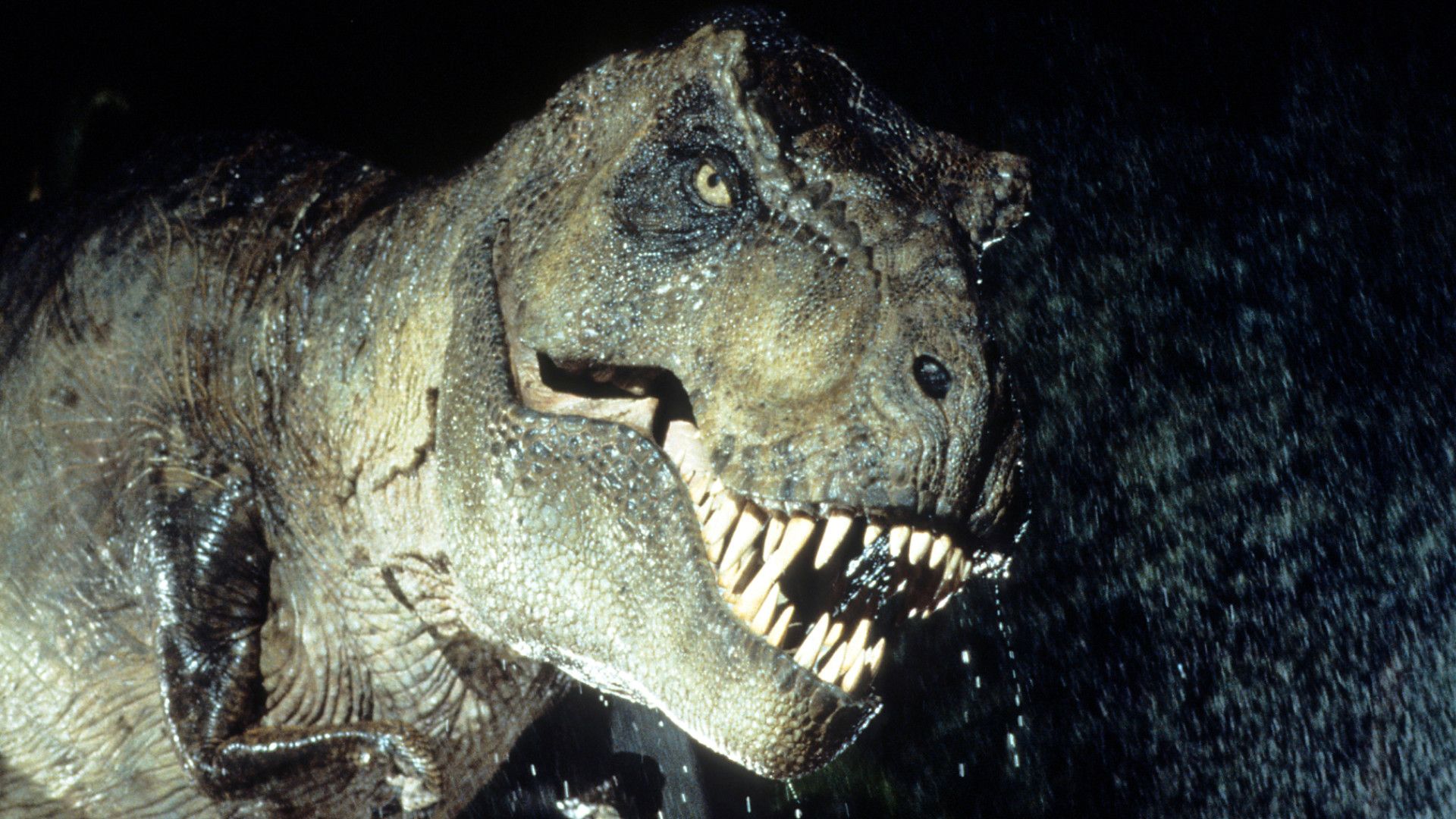
For over a century now, dinosaurs have proven to be one of the most terrifying movie monsters in the thriller genre. Dinosaur movies have evolved significantly over the years, with decades of scientific discoveries, special-effects breakthroughs, and increasingly elaborate blockbuster franchises. Yet there’s still fundamentally compelling about watching someone facing an enormous, deadly creature that human beings have never met before.
Dinosaur thrillers have existed long before Jurassic Park made computer-generated velociraptors and T. rex attacks mainstream movie spectacle. Filmmakers have been putting prehistoric creatures into adventure, horror, science fiction, and fantasy movies since the silent era, often finding ingenious ways to make audiences believe dinosaurs could coexist with modern humans.
The best examples understand that dinosaurs work most effectively when they are treated as dangerous animals rather than merely special-effects attractions. The Lost World created suspense through stop-motion animation, while The Valley of Gwangi imagined a prehistoric predator being hunted in the American West.
More recent films have experimented with the concept in wildly different ways, from the video-game-inspired survival of 65 to the suburban nightmare of The End of Oak Street. This ranking considers the movies that deliver the strongest combination of dinosaur thrills, memorable set pieces, atmosphere, characters, and sheer entertainment value.
The Valley Of Gwangi (1969)

Ray Harryhausen's The Valley of Gwangi deserves enormous credit for demonstrating just how frightening stop-motion dinosaurs could be. It depicts cowboys who discover a hidden valley populated by prehistoric creatures. This includes most notably the Allosaurus named Gwangi – who was actually based primarily on the T. rex.
Gwangi's pursuit of the cowboys remains especially spectacular because Harryhausen gives the dinosaur a surprisingly physical presence. The creature stalks, attacks, and wrestles with humans and horses with an almost tangible sense of weight.
The Valley of Gwangi eventually takes its dinosaurs into the Wild West, producing the wonderfully bizarre spectacle of cowboys attempting to capture a dinosaur. Its effects have inevitably aged, but the imagination behind them has not. For dinosaur enthusiasts, The Valley of Gwangi is essential viewing.
65 (2023)

65 has a spectacularly simple hook. A futuristic astronaut crash-lands on prehistoric Earth and discovers that humans aren't the only dangerous thing living there. Adam Driver plays Mills, a pilot stranded 65 million years in the past alongside young survivor Koa, played by Ariana Greenblatt.
The pair must navigate a hostile prehistoric environment while being hunted by dinosaurs. 65 makes the most of this relatively straightforward premise, with Mills encountering progressively larger and more dangerous creatures.
65’s limited cast gives the survival story a uniquely intimate quality that distinguishes it from many sprawling dinosaur blockbusters on this list. It certainly isn't as sophisticated as the films above it, but 65 deserves credit for putting dinosaurs front and center and refusing to overcomplicate its basic, but very fun, survival premise.
The Land That Time Forgot (1974)

Adapted from Edgar Rice Burroughs' novel, The Land That Time Forgot sends a group of survivors into a mysterious prehistoric world after their submarine becomes stranded during World War I. It somehow combines wartime adventure with dinosaurs, cavemen, volcanic landscapes, and a lost civilization.
The creatures were created using puppetry and strings, which have both upsides and downsides. While this offers a slightly more fluid movement, it’s impossible not to notice the construct. Yet, for those who can see past the slightly laughable effects, this does give the film a wonderfully old-fashioned charm and vintage fantasy-adventure atmosphere.
Rather than attempting to disguise its artificiality, The Land That Time Forgot embraces the tradition of cinematic monster adventures that came before it. It offers the perfect bookend to the era’s dinosaur movies, with the genre soon pivoting more to kids' movies.
The Lost World: Jurassic Park (1997)

Steven Spielberg's The Lost World: Jurassic Park had the unenviable task of following one of the most acclaimed movies ever made. While it doesn't quite match its predecessor, it contains some of the Jurassic Park franchise's most memorable dinosaur scenes.
Ian Malcolm returns, with Jeff Goldblum leading an expedition to Isla Sorna, where genetically engineered dinosaurs were raised before the events of the first movie. The Lost World boasts several standout sequences, including the pair of Tyrannosaurus Rexes stalking the team trapped inside a trailer hanging over a cliff.
The San Diego finale is even more audacious, transporting a T. rex into an urban environment. Watching the creature wander through suburban streets, smash vehicles, and terrorize civilians is exactly the kind of wonderfully irresponsible spectacle a dinosaur movie should provide.
The End Of Oak Street (2026)

The End of Oak Street reverses The Lost World: Jurassic Park’s finale by instead transporting suburbia into prehistoric times. Directed by David Robert Mitchell, it stars Anne Hathaway and Ewan McGregor as the parents of the Platt family, who, after a mysterious cosmic event, find their neighborhood torn away and shifted into a different time period.
It quickly becomes a dinosaur survival nightmare as the family discovers that their new surroundings are inhabited by prehistoric creatures. That contrast between familiar 1980s homes and an ecosystem millions of years removed from human civilization gives The End of Oak Street a notably strong visual hook.
Mitchell approaches the material as a sci-fi thriller rather than simply another dinosaur blockbuster. The End of Oak Street brings the genre crashing into the 21st Century while maintaining a compelling family drama dynamic.
The Lost World (1925)

Before dinosaurs were stomping through Jurassic Park, they were already terrifying audiences in The Lost World. The 1925 silent adaptation of Arthur Conan Doyle's novel is a landmark in visual-effects history, largely because of Willis O'Brien's pioneering stop-motion animation.
The Lost World depicts Professor Challenger and an expedition to a remote plateau where dinosaurs have survived into the modern era. O'Brien's creatures were astonishing for their time, particularly the scenes in which dinosaurs interact with live-action performers.
The effects may look primitive compared with modern CGI, but the fundamental filmmaking achievement remains remarkable. The Lost World was the first major dinosaur hit, directly leading to several other acclaimed movies on this list. It established the visual language later dinosaur filmmakers would build upon and is still a thoroughly entertaining watch 100 years later.
Jurassic World (2015)

Jurassic World successfully revived the Jurassic Park franchise by addressing one of the biggest problems facing any modern dinosaur movie. Namely, how to make audiences excited about dinosaurs after they've already seen them do almost everything. The answer was to make them bigger and more dangerous.
Jurassic World is set in a fully finished and open dinosaur park, seemingly not learning from previous attempts. Chris Pratt's Owen Grady works with trained velociraptors, while Bryce Dallas Howard's Claire Dearing finds herself caught in the chaos after the genetically engineered Indominus rex escapes.
Jurassic World's greatest sequence is the Indominus' assault on the park, but its climax is even more gleefully ridiculous, eventually bringing together a T. rex, Blue, and the Mosasaurus. It is blockbuster excess but executed with a riotous sense of fun.
One Million Years BC (1966)

One Million Years BC is less concerned with historical accuracy than with delivering prehistoric spectacle, and frankly, that is probably for the best. Raquel Welch stars as Loana in a fantasy version of prehistory where humans coexist with dinosaurs and other creatures.
One Million Years BC is another showcase for Ray Harryhausen, whose stop-motion dinosaurs remain the main attraction. Its most famous sequence pits a Triceratops against a Ceratosaurus in a lengthy and beautifully animated battle.
One Million Years BC's human story is comparatively thin, but Harryhausen's creatures give it a sense of wonder that has kept it alive as a cult classic. It is prehistoric pulp filmmaking at its most entertaining.
King Kong (1933)

Technically, King Kong isn't exclusively a dinosaur movie, but dinosaurs are so important to its Skull Island adventure that any King Kong movie could reasonably occupy this position. The 1933 original, however, remains the definitive choice because of its groundbreaking creature effects.
After Kong is discovered on the mysterious island, Carl Denham's expedition encounters dinosaurs, including a Tyrannosaurus Rex. The battle between Kong and the T. rex is one of the foundational monster-movie sequences, combining stop-motion animation with miniature work to create a genuinely thrilling confrontation.
The dinosaurs make Skull Island feel like a living prehistoric ecosystem rather than merely a backdrop for Kong. That world-building influence can still be seen in subsequent versions of the story. Whether the Peter Jackson remake, or the original classic, King Kong always boasts some thrilling dinosaur action.
Jurassic Park (1993)
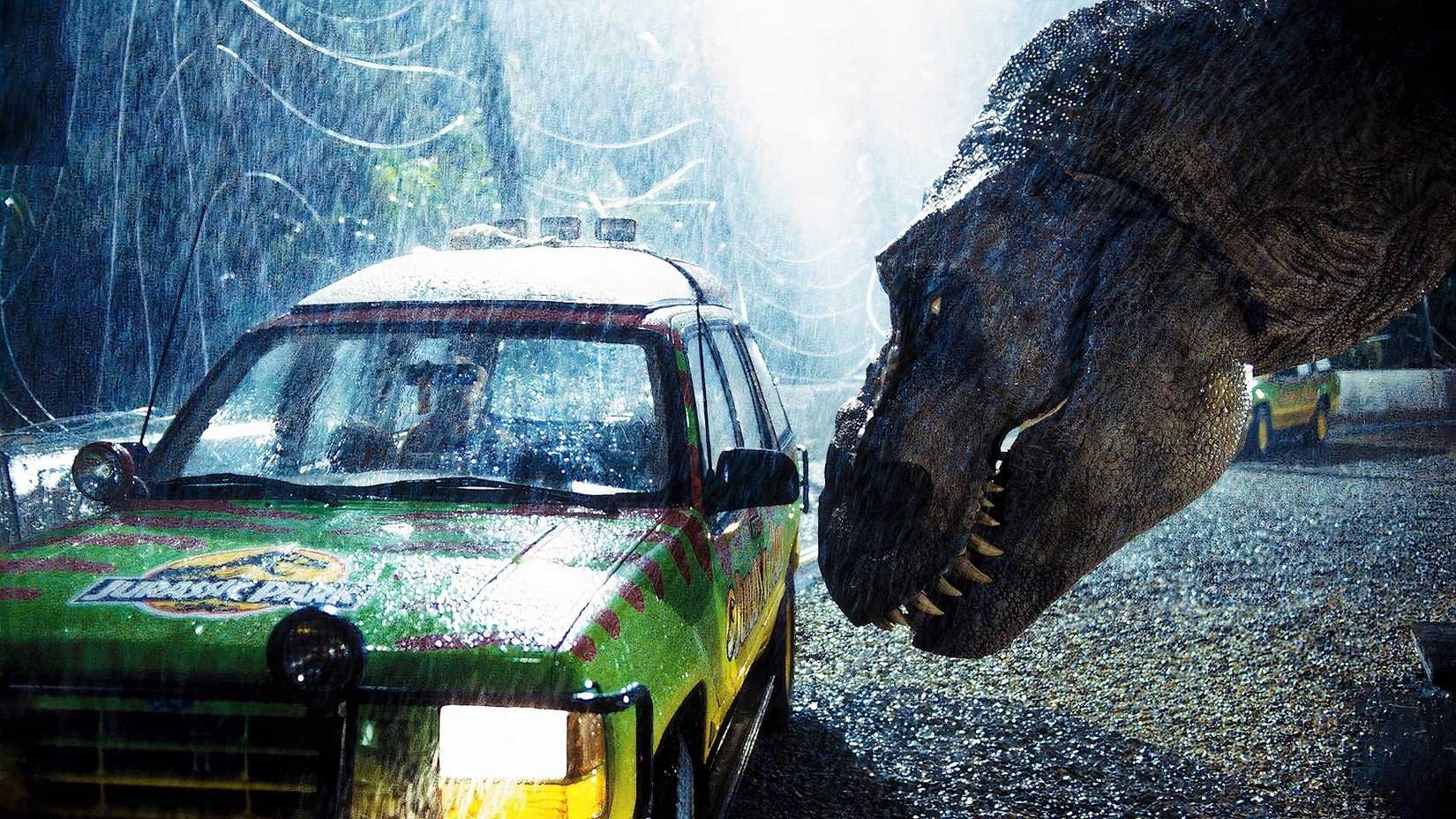
No other dinosaur thriller deserves to sit atop this list more than Steven Spielberg's Jurassic Park. As well as being one of the greatest movies ever made, Jurassic Park fundamentally changed what a dinosaur thriller could be. Based on Michael Crichton's novel, Jurassic Park combined groundbreaking digital effects from Industrial Light & Magic with Stan Winston's animatronics to create dinosaurs that still look remarkably convincing.
The T. rex attack on the park's electric fence is especially memorable, but the movie's suspense extends far beyond it. The sick Triceratops, the kitchen velociraptor sequence, and the Tyrannosaurus chase through the park all demonstrate Spielberg's understanding that anticipation can be more frightening than simply showing the monster.
Most importantly, Jurassic Park makes its dinosaurs feel like animals with their own behavior rather than disposable movie monsters. That combination of wonder, terror, humor, and technical innovation is why it remains the benchmark against which virtually every subsequent dinosaur thriller is measured.
- Release Date
- June 11, 1993
- Runtime
- 127 minutes
- Director
- Steven Spielberg
KioskNews shows a cleaned-up reading view extracted from the publisher’s page — the original always lives on their site, not ours.