Taiwan’s nuclear restart faces an environmental review dispute
Regulators have approved Ma-anshan’s initial restart plan. The environment ministry says no environmental impact assessment is needed, but critics argue the law requires one
By Romain Blachier / Contributing reporter


The Nuclear Safety Commission (NSC, 核安會) on Sept. 24 approved the re-operation plan that Taiwan Power Co (Taipower, 台電) filed in March for the Ma-anshan Nuclear Power Plant in Pingtung County, after three rounds of review and 589 comments. Taipower now has to carry out the work in the plan and its own inspections on ageing, radiation and seismic resistance, then report back to the commission for review and on-site checks. Minister of Economic Affairs Kung Ming-hsin (龔明鑫) has named 2028 as the earliest restart. The NSC has given no date.
THE DEBATE
No challenge has been identified as to whether Ma-anshan needs an environmental impact assessment (EIA) under the Environmental Impact Assessment Act (環境影響評估法) before it runs again. The Ministry of Environment says it does not. Environmental groups say it does. If a suit came after a licence, a judge would rule on the procedure once the inspections ended.
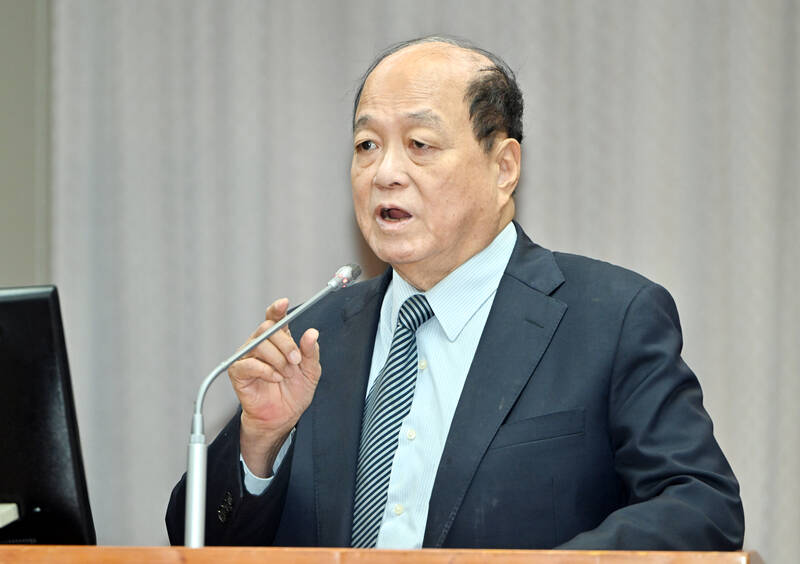
Nuclear Safety Commission Chairperson Chen Ming-chen says that the commission has already assessed the environmental effects of radiation at the Ma-Anshan Nuclear Power plant, but other experts remain skeptical and have called for an environmental review.
Photo: Tien Yu-hwa, Taipei Times
Article 29 of the act’s implementing criteria requires an assessment to build a nuclear plant, add units or decommission one, and does not mention license renewal. The ministry last amended the criteria on Feb. 5; the nuclear item still lists those three cases.
Minister of Environment Peng Chi-ming (彭?明) in May last year asked: “Why does a restart or a life extension need no EIA, when decommissioning needs one?” Peng said the act would undergo review. But on March 22 he said current law requires no assessment for a life extension and that the NSC’s substantive review already resembles one. NSC Chairperson Chen Ming-chen (陳明真) said in December last year that the commission already assessed the environmental effects of radiation and would “take full responsibility.”
In written answers on Oct. 5, Lin Chien-Yen (林正原), a researcher at the Green Citizens’ Action Alliance (綠色公民行動聯盟), said Article 5 of the act lists the development of nuclear and other energy among activities that require an assessment, and that the criteria’s silence does not take license renewal out of the system. He cited Article 6 of the Nuclear Reactor Facilities Regulation Act (核子反應器設施管制法), under which an operator wishing to resume after its license expires must obtain a replacement license, valid for up to 20 years. Lin wrote that a renewal goes through a new application and a new review, and that the law in force on the day of the application should decide whether it meets the EIA requirements.
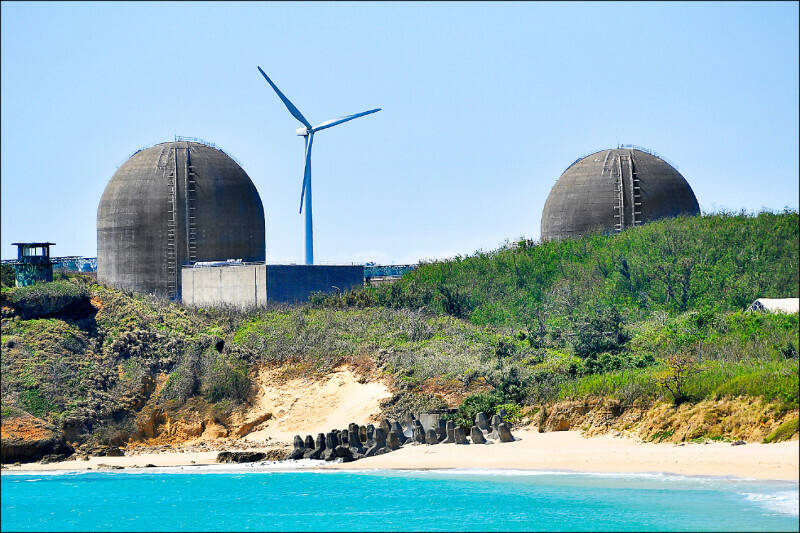
The Ma-Anshan Nuclear Power Plant in Pingtung County is pictured in this file photo. There are debates over whether the plant should undergo an environmental assessment before reopening, which Minister of Economic Affairs Kung Ming-hsin said could come as early as 2028.
Photo: TT file photo
Anton Ming-Zhi Gao (高銘志), a professor at National Tsing Hua University’s Institute of Law for Science and Technology, cites Asia Cement Corp. The Taipei High Administrative Court in 2019 revoked the 20-year extension of the company’s mining rights at a mountain in Hualien County’s Sincheng Township (新城) after four Truku residents sued. The Supreme Administrative Court on Sept. 16, 2021 made the revocation final (Interpretation No. 894). The Ministry of Economic Affairs had granted the extension without the consultation and consent that Article 21 of the Indigenous Peoples Basic Act (原住民族基本法) requires. The court ruled under the Mining Act (礦業法). Gao reads it as treating an extension as a new administrative decision, subject to the law in force on the date of application, and he applies that reasoning to the EIA Act.
Huang Ching-ting (黃靖庭), deputy secretary-general of Citizen of the Earth, Taiwan (地球公民基金會), notes that judgment 894 does not say whether an extension creates a new right or continues an old one. It applies the law in force at the time of the extension — in that case Article 21. Huang treats a nuclear license renewal as the approval of a new period of generation.
“Even decommissioning must go through an EIA,” she wrote. “Going by the meaning of the law, would extension or restart, a more intensive development than decommissioning, not need one?”
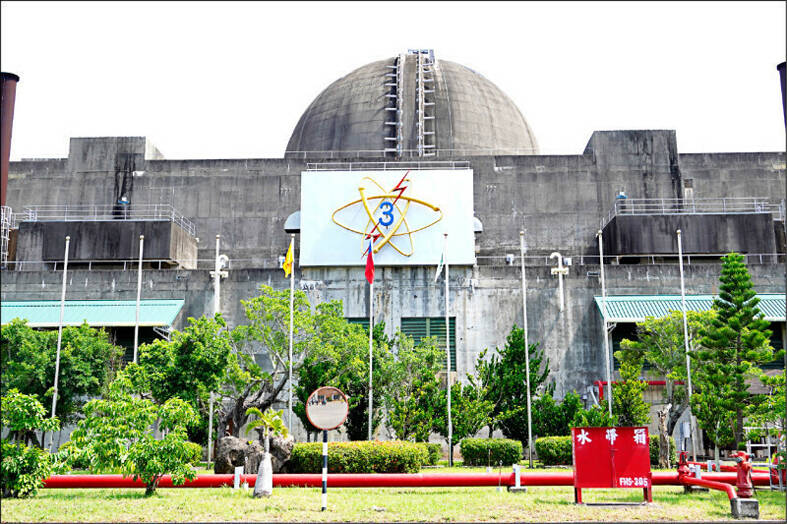
The Ma-Anshan Nuclear Power Plant in Pingtung County is pictured in this file photo.
Photo: TT file photo
Gao said a license renewal already includes an assessment of environmental effects, outside the procedure that the EIA Act sets, and a court that found the act applicable might not accept it as a substitute. He expects any suit after the NSC issues a license, at the High Administrative Court, and leaves open who would have standing, whether a court would suspend the license and what remedy it could order. The alliance did not say whether it planned a challenge. It wrote that it would follow the authorities’ decision on the EIA and the licensing procedure.
The Court of Justice of the European Union in July 2019 ruled in Inter-Environnement Wallonie (Case C-411/17) that Belgium’s 10-year extension of the Doel 1 and 2 reactors required a prior environmental assessment. The same judgment allowed a national court to maintain the extension where electricity supply faced a genuine threat. Theodoros G. Iliopoulos and Daan Bijnens of Hasselt University wrote in 2020 in the Maastricht Journal of European and Comparative Law that the court had added electricity shortage to the grounds for regularizing a project after the fact, and that the ruling moved the dispute into a second phase.
In the referendum on Aug. 23 last year, 4.34 million people voted to restart Ma-anshan and 1.51 million voted against. The yes votes did not reach a quarter of the 20.02 million eligible voters and the proposal failed.
Another referendum, to be held alongside the nine-in-one local elections on Nov. 28, asks whether the government should use nuclear power to revive the economy and abolish the “nuclear-free homeland” policy. Neither result binds the NSC.
EXPERTS should WEIGH IN
Meanwhile, the Green Citizens’ Action Alliance, Citizen of the Earth and 32 other groups on Sept. 29 said nobody should read the outcome as permission to restart and asked for geologists, seismologists and emergency-medicine specialists to participate in a safety review. Gao sat on a Taiwan People’s Party expert group on nuclear power that broadly backed a careful restart, and split with it over the EIA.
Gao said fuel supply and the US-Taiwan nuclear cooperation agreement barely come up in the legal debate over Ma-anshan. On small modular reactors (SMRs), he said the law assumes Taipower as operator and sets liabilities too heavy for a private company running one beside a data center or a chip fab. The National Atomic Research Institute (國家原子能科技研究院) estimated in April that Taiwan’s first SMR electricity would come in 2035 at the earliest.
In a 2022 study published in Energy Strategy Reviews, Gao, Yeh Tsung-Kuang (葉宗洸) and Chen Jong-Shun (陳中舜) found that the electricity mix the government announced on May 25, 2016, which removed nuclear power from last year’s targets in favor of 50 percent gas, 30 percent coal and 20 percent renewables, had not gone through a strategic environmental assessment.
Gao calls the NSC the body with the greatest legal capacity to halt the process. He sees no sign that it intends to and expects Ma-anshan to pass on safety, given its operating record. Article 16 of the NSC’s license-review rules, which the commission last amended on Oct. 8 last year, lists six documents a renewal application must include, from an integrated ageing assessment to a seismic safety evaluation. Item six lets the competent authority designate other documents, and Lin said the commission could use it to ask for environmental assessment reports. Gao considers a licence decision more likely next year than this year. The alliance estimates two to five years of work by Taipower before the commission’s next review.
Both instruments exist today. The environment ministry can amend Article 29 of the EIA criteria to state whether it covers license renewal, in the review Peng announced in May last year. The NSC can invoke item six of Article 16 before it rules. Either step fits inside the inspection years still ahead, would fix the legal basis of the license before anyone asks a judge and would give the groups opposed to the restart a procedure to take part in.
In Belgium the question went to court after the extension.
Romain Blachier works in renewable energy and teaches political science. He chairs the France-Formosa Association and is a columnist and associate fellow at the Fondation Jean-Jaures.
KioskNews shows a cleaned-up reading view extracted from the publisher’s page — the original always lives on their site, not ours.